Maddy summaryHR 5831 designates the U.S. Postal Service facility at 306 South Main Street in Waupaca, Wisconsin, as the "Master Sergeant Melvin O. Handrich Post Office Building." The bill updates all official federal references - such as laws, maps, and documents - to use this new name for the building. It does not create new policies or affect services, but formally changes the facility's official designation. The bill directly impacts how the building is identified in all federal communications and records.
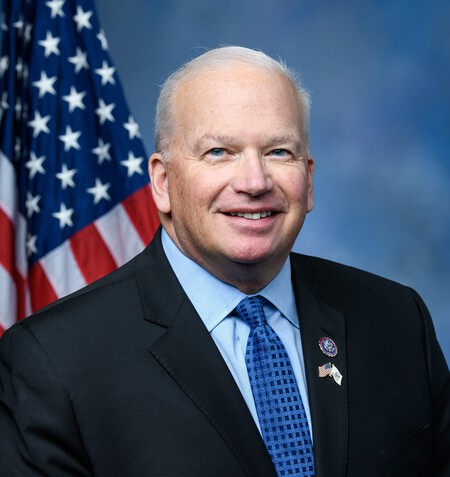
Rep. Scott Fitzgerald
Sponsored bills
Maddy summaryThis bill authorizes the establishment of two memorials honoring Wisconsin infantry regiments at Civil War battle sites. It directs the Secretary of the Interior to approve locations within Antietam National Battlefield for regiments that fought at Antietam (1862) and within Manassas National Battlefield Park for regiments that fought at the Second Battle of Bull Run (1862). The memorials must be funded and built by private entities - no federal funds may be used for design, acquisition, site preparation, or installation - and the National Park Service will assume maintenance responsibility after installation.
Maddy summaryHR 5267, the American Franchise Act, clarifies when franchisors can be considered joint employers of franchisee employees under federal labor laws. It defines "substantial direct and immediate control" over essential employment terms like wages, benefits, hours, hiring, and discipline - requiring franchisors to actively set these terms to be deemed joint employers. The bill explicitly excludes routine brand standards, training, or minimal safety requirements from constituting such control. This directly affects franchisors and franchisees by limiting joint employer liability to cases where franchisors exert significant, ongoing influence over core employment decisions. The law applies prospectively to new cases after enactment, not past disputes.
Maddy summaryThis House resolution marks the 25th anniversary of the September 11, 2001 terrorist attacks by formally honoring the memory of the nearly 3,000 victims and recognizing the sacrifices made by first responders, military personnel, and the passengers of United Airlines Flight 93. The bill acknowledges the ongoing health challenges faced by survivors and responders, highlighting the role of the World Trade Center Health Program in providing long-term medical support. It also credits charitable organizations and community groups that have continued to assist victims' families and veterans over the past two decades. Finally, the resolution urges the American public to observe the anniversary with ceremonies and reaffirms Congress's commitment to remembering the events and lessons of that day.
Maddy summaryThis bill requires the United States Postal Service to assign a single, unique ZIP Code to each of 80 specific communities across various states within one year of enactment. The legislation directly affects residents and businesses in these listed areas by ensuring they have their own distinct postal identifier rather than sharing codes with neighboring regions. The primary mechanism is a mandatory directive for the USPS to update its coding system to reflect these individual community boundaries.
Maddy summaryThis bill would prohibit any state or local government designated as a "sanctuary jurisdiction" from receiving grant funds distributed by the Department of Housing and Urban Development (HUD). A jurisdiction is defined as a sanctuary if it has laws, policies, or practices that restrict officials from sharing information about an individual's immigration status or from complying with federal requests to detain or notify about the release of individuals. The funding restriction would apply to grants distributed 180 days after the bill's enactment. To determine which jurisdictions qualify for this ineligibility, the HUD Secretary is required to consult with the Secretary of Homeland Security.
Maddy summaryHR 7008, the Stop Insider Trading Act, restricts Members of Congress, their spouses, and dependent children from purchasing certain investments like stocks in publicly traded companies. It requires 7-14 days' advance public notice before selling any such investment, including the sale date, description, and number of shares. Exceptions apply for work-related transactions (e.g., employer compensation) and reinvesting dividends. Violations trigger a fee of $2,000 or 10% of the investment’s value (whichever is greater), plus any net gain, paid from personal funds - not congressional allowances or campaign donations. The bill aims to prevent conflicts of interest by increasing transparency around congressional financial dealings.
Maddy summaryThis resolution expresses support for designating February as Serbian American Heritage Month to honor the history and contributions of the Serbian American community. It recognizes that approximately one million Americans of Serbian ancestry have served in various fields, including the military, science, business, and the arts, while highlighting specific historical events like Operation Halyard. The measure urges the public to observe this month with ceremonies and educational programs that celebrate Serbian heritage and the enduring friendship between the United States and Serbia.
Maddy summaryThe Main Street Capital Access Act reduces regulatory burdens for smaller banks, particularly those with less than $10 billion in assets. Key provisions include a 3-year phase-in period for new banks to meet capital requirements, lower leverage ratio requirements for rural banks (7.5% for the first 2 years), and a 30-day review process for business plan deviations. The bill also establishes an Office of Independent Examination Review, sets specific timelines for examinations (270 days) and reports (90 days), and creates a "least cost exception" for bank resolutions to prevent excessive concentration of the banking system. These changes aim to promote new bank formation, improve regulatory efficiency, and support community banking while maintaining financial stability.
Maddy summaryThe Anti-Fraud Fund Act of 2026 increases funding for the Health Care Fraud and Abuse Control Account by $7 billion annually from fiscal year 2027 through 2030. This additional money is intended to support the government's efforts in detecting and preventing fraud within the healthcare system. The bill modifies existing laws to ensure these funds are available for the specified period without altering other spending limits.