Patrick Underwood Federal Law Enforcement Protection Act of 2021 This bill revises the federal criminal statute that prohibits assaulting, resisting, or impeding certain federal officers or employees. Among other changes, the bill increases the applicable penalties for such offenses.
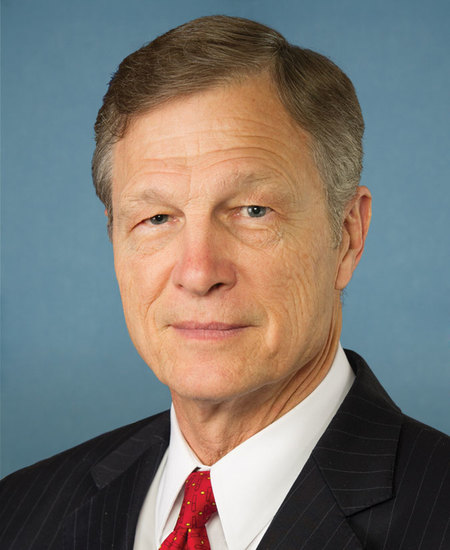
Rep. Brian Babin
Sponsored bills
No Asylum for Criminals Act of 2021 This bill bars an individual who has been convicted of a crime from receiving asylum, with limited exceptions. Specifically, the Department of Homeland Security may designate political offenses committed outside of the United States that shall not be considered a crime for this purpose. Currently, an individual shall be barred from receiving asylum for only certain types of criminal convictions, such as if the individual is convicted for (1) an aggravated felony, or (2) a particularly serious crime and as a result deemed a danger to the United States.
This joint resolution proposes an amendment to the Constitution to require that the Supreme Court consist of nine Justices.
This resolution honors Officers Brian Sicknick and Howard Liebengood of the U.S. Capitol Police, and it commends the bravery and service demonstrated by officers of the U.S. Capitol Police, the Metropolitan Police Department of the District of Columbia, and the other law enforcement agencies and protective entities that assisted in responding to the January 6, 2021, attack on the U.S. Capitol.
Protecting the Right to Keep and Bear Arms Act of 2021 This bill prohibits (1) the President or the Department of Health and Human Services from declaring emergencies or disasters for the purpose of imposing gun control; and (2) a federal officer or employee, or person operating under color of federal law, from banning the manufacture, sale, or transfer of firearms or ammunition while acting in support of relief from a major disaster or emergency.
Special Drawing Rights Oversight Act of 2021 This bill imposes additional restrictions on the U.S. government's authority to vote on Special Drawing Rights (SDR) allocations at the International Monetary Fund (IMF). (The SDR is an international reserve asset maintained by the IMF based on contributions from IMF member countries. SDRs may be exchanged between member countries and may also be exchanged for currencies.) Under current law, U.S. representatives to the IMF may not vote for SDR allocations to the United States beyond an amount authorized by statute unless Congress authorizes such a vote. This bill further reduces the allocation amount that U.S. representatives to the IMF may vote for without congressional approval. Furthermore, U.S. representatives to the IMF may not vote for SDR allocations to a country if the President finds that the country's government has (1) committed genocide in the last 10 years, or (2) repeatedly supported international terrorism.
No Social Media Accounts for Terrorists or State Sponsors of Terrorism Act of 2021 This bill bars access to certain social media platforms by individuals designated as terrorists or senior officials of a government that is a state sponsor of terrorism. Specifically, the bill requires the President to prohibit providers of social media platforms (i.e., platforms that allow users to generate and share content and that have over 100,000 active users) from making such platforms available to barred individuals or officials. The bill does, however, allow officials to use these platforms solely for legitimate emergency alert purposes. Violations of this prohibition are subject to civil and criminal penalties. In addition, the President may waive the prohibition in the interests of U.S. national security. The Department of the Treasury must report to Congress on (1) the status and impact of the prohibitions of this bill, and (2) efforts to facilitate the free flow of information and access to communications technologies by civil society and democratic activists in Iran, Syria, North Korea, Cuba, and other countries controlled by authoritarian regimes.
Keep Huawei on the Entity List Act This bill continues export controls on Huawei Technologies Co. Ltd., and it requires the Department of Commerce to designate Honor Device Co. Ltd. for inclusion on the list of entities subject to certain license requirements for exports. The bill prohibits Commerce from removing Huawei (or its subsidiaries or affiliates) from the entity list unless Commerce certifies that Huawei (1) has not engaged in activities that are contrary to U.S. national security or foreign policy interests and is unlikely to do so in the future; and (2) is not owned, controlled, or influenced by the Communist Party of China. Commerce must submit a monthly report identifying and describing all license applications to export, reexport, or transfer (in-country) certain items to Huawei or Honor, as well as whether those applications were approved or denied.
Protecting American Energy Jobs Act This bill limits the President's authority to prohibit or withdraw federal land or waters from energy production activities. Specifically, the bill requires the President and federal agencies to obtain the approval of Congress before prohibiting or substantially delaying certain new energy or mineral leases or permits on federal lands, including oil and gas leases, coal leases, hard rock leases, or critical minerals leases. In addition, the President and agencies must obtain the approval of Congress before withdrawing certain federal lands from mineral and geothermal leasing activities. Further, the bill repeals the President's authority to withdraw unleased lands on the outer Continental Shelf from oil and gas leasing. The bill nullifies Executive Order 13990 titled Protecting Public Health and the Environment and Restoring Science To Tackle the Climate Crisis; Executive Order 14008 titled Tackling the Climate Crisis at Home and Abroad; and the Department of the Interior's Secretarial Order 3395 concerning a temporary suspension of delegated authority to all of Interior's Bureaus and Offices, including the authority to approve leases.
Students Before Unions Act This bill requires local educational agencies, as a condition of receiving certain elementary and secondary school emergency relief subgrants, to publicly disclose negotiations with labor organizations (e.g., teacher unions) that are related to providing in-person instruction.