

Equal Treatment of Public Servants Act of 2021 This bill phases in a new funding formula for determining benefit amounts under the windfall elimination provision (WEP). The WEP reduces Social Security retirement and disability benefits for those who receive pensions for certain non-covered employment. The new formula adjusts an individual's total lifetime earnings based on the proportion of those earnings subject to Social Security payroll taxes. It applies to individuals who (1) become eligible for Social Security benefits after 2061, and (2) have earnings from non-covered service performed in a year after 1977. Beneficiaries who become eligible for benefits between 2023 and 2061 receive the higher of their benefit calculated under the existing WEP or the new formula. In addition, certain beneficiaries currently impacted by the WEP receive an additional payment. The Social Security Administration must include non-covered earnings in Social Security account statements and must study the feasibility of partnering with certain pension systems to address data sharing issues related to non-covered pensions.
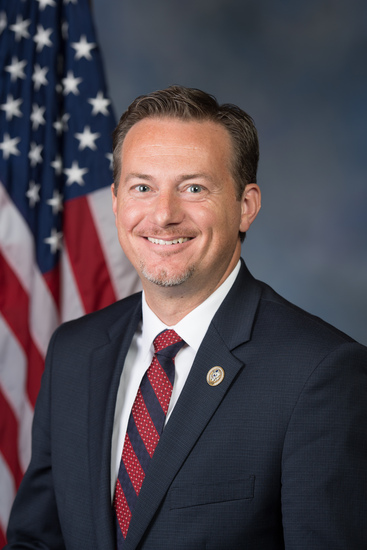
Rep. Michael Cloud
Sponsored bills
No Vaccine Mandate Act This bill prohibits certain funding made available for the Departments of Labor, Health and Human Services, and Education and related agencies from being used for implementing or enforcing a rule that requires a COVID-19 vaccine.
Maddy summaryHRES 754 is a non-binding resolution expressing the House of Representatives' opposition to proposed "punitive natural gas taxes" on U.S. businesses, families, and workers. It cites claims that such taxes would raise average energy bills by 17%, reduce GDP by $9 billion, and eliminate 90,000 jobs, while disproportionately harming low-income households. The resolution argues that opposing these taxes supports U.S. energy security, national security, and continued leadership in reducing emissions through domestic natural gas production. As a procedural resolution, it does not create law but formally states the House's position against this policy approach.
This bill prohibits the use of federal funds to require a member of the Armed Forces to receive a COVID-19 vaccination. The bill also prohibits adverse action (e.g., punishment) being taken against a member of the Armed Forces because the member refuses to receive a COVID-19 vaccination.
Championing our Parents Act of 2021 This bill prohibits the use of federal funds to facilitate certain law enforcement partnerships to address threats against school personnel.
Fire Fauci Act This bill reduces the annual rate of pay of the Director of the National Institute of Allergy and Infectious Diseases (NIAID) to $0. This reduction applies until there is a new director who is not Anthony Fauci, MD. In addition, the Government Accountability Office must audit digital correspondence, policy memoranda, and financial transactions of the Office of the Director of NIAID from October 1, 2019, through December 31, 2021.
This resolution recognizes the ultimate sacrifice of the unknown soldiers interred at Arlington National Cemetery and expresses gratitude and appreciation of all the members of the Armed Forces who have served during wars and peacetime. Additionally, the resolution commends all members of the 3d Infantry Regiment, specifically those who guard the Tomb of the Unknown Solider.
CBO Show Your Work Act This bill requires the Congressional Budget Office (CBO) to make available to Congress and the public each fiscal model, policy model, and data preparation routine that the CBO uses to estimate the costs and other fiscal, social, or economic effects of legislation. For each estimate of the costs and other fiscal effects of legislation, the CBO must also disclose, in a manner sufficient to permit replication by individuals not employed by the CBO, the data, programs, models, assumptions, and other details of the computations used to prepare the estimate. For data that may not be disclosed, the CBO must make available to Congress and the public a complete list of all data variables for the data; descriptive statistics for all data variables for the data, to the extent that the descriptive statistics do not violate the rule against disclosure; a reference to the statute requiring that the data not be disclosed; and contact information for the individual or entity who has unrestricted access to the data.
This bill prohibits the U.S. International Development Finance Corporation from engaging in certain activities involving a covered Chinese entity (i.e., an entity subject to the jurisdiction or control of China's government). Specifically, the corporation may not accept funds (or goods or services) provided by China's government or a covered Chinese entity. Also, the corporation may not provide support to any individual who advises, is on the board of, or has influence with a covered Chinese entity or specified entities, including the Chinese Development Bank. An entity receiving support from the corporation must certify that it will abide by these restrictions.
Sunshine for Regulatory Decrees and Settlements Act of 2021 This bill establishes transparency and public accountability standards for federal agencies with respect to (1) certain civil actions seeking to compel agency action, and (2) related consent decrees and settlement agreements. For example, an agency must publish a complaint filed against it within 15 days. Additionally, settlement proceedings must be conducted through mediation or an alternative dispute resolution program of the court, and those proceedings must include intervening parties. The bill also creates a presumption in favor of a motion to intervene in settlement proceedings. Further, at least 60 days prior to entering a consent decree or settlement agreement, an agency must publish, and accept and respond to public comment on, the proposed agreement or decree. An agency also must provide the court with the administrative record, a summary of the public comments, and access to the record of any public hearings on the proposed decree or agreement. The Department of Justice, or the agency litigating a matter independently, must certify to the court its approval of certain terms included in an agreement or decree, including terms that convert a discretionary authority into a nondiscretionary duty. A court may not approve a consent decree or settlement agreement unless the agency has sufficient time and procedures to comply with federal administrative procedures, other rulemaking statutes, and applicable executive orders. Finally, courts must review a consent decree or settlement if an agency files a motion to modify the decree or agreement on the basis of changed facts or circumstances.