Maddy summaryHR 6558, titled the "END the DEEP STATE Act," requires the Office of Personnel Management (OPM) to withdraw a specific proposed rule titled "Upholding Civil Service Protections and Merit System Principles" (published in the Federal Register on September 18, 2023). The bill directly affects OPM by mandating the withdrawal of this proposed rule and prohibiting the agency from finalizing, implementing, or enforcing it or any substantially similar rule. The key mechanism is a mandatory withdrawal of the 2023 proposed rule, which aimed to strengthen civil service protections and merit-based hiring standards. This is a procedural bill focused on halting a specific regulatory action, not on creating new policy.
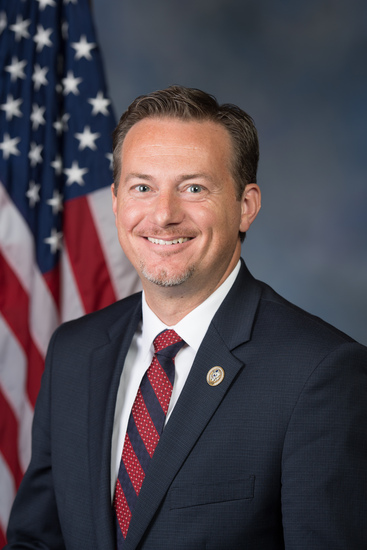
Rep. Michael Cloud
Sponsored bills
Maddy summaryHR 6504, the Protect American Gun Exporters Act, blocks the Department of Commerce from implementing a pause on new export licenses for specific firearm exports (items under Commerce Control List numbers 0A501, 0A502, 0A504, and 0A505). The bill directly affects U.S. gun exporters by preventing the Commerce Secretary from enforcing the October 2023 pause or similar restrictions on these exports. Key provisions prohibit the Secretary from taking any action to carry out the pause unless it follows standard regulatory processes, including a required impact analysis and compliance with the Administrative Procedure Act and Congressional Review Act. This bill does not create new export rules but stops the existing pause on certain firearm exports.
Maddy summaryH.J.Res. 66 disapproves a specific rule issued by the Consumer Financial Protection Bureau (CFPB) regarding small business lending under the Equal Credit Opportunity Act (Regulation B). The resolution, if passed, would prevent this CFPB rule from taking effect by declaring it "have no force or effect." The rule in question (88 Fed. Reg. 35150) aimed to clarify how lenders must evaluate small business loan applications under existing equal credit laws. This disapproval directly affects the CFPB's regulatory authority and would block the rule's implementation for small business lenders and financial institutions.
Maddy summaryHR 6383 prohibits the Department of Homeland Security (DHS) from using federal funds to implement or enforce a "remain in Texas policy." This policy would require migrants released by DHS or HHS to stay in Texas after entering the U.S. The bill's key mechanism is a funding ban, blocking DHS from enforcing such requirements without congressional approval. It directly affects migrants subject to release by DHS/HHS and DHS operations. The policy change is purely procedural, restricting how federal funds can be used for migration management in Texas.
Maddy summaryThis bill prohibits federal funding for two specific initiatives: the Justice40 Initiative (focused on delivering 40% of climate benefits to disadvantaged communities) and the American Climate Corps (a program announced in a September 2023 White House fact sheet to create climate jobs for young people). It blocks all federal budget allocations for these programs, directly affecting their implementation. The bill does not create new programs or alter existing laws, but prevents the use of taxpayer funds to support these two named initiatives.
Maddy summaryThis resolution (HRES 859) is a ceremonial House measure honoring U.S. veterans on Veterans Day 2023. It formally recognizes veterans' service and sacrifice, calling on the American public to observe Veterans Day to acknowledge their role in protecting U.S. freedoms. The resolution does not create new policies, allocate funds, or affect specific groups - it is purely symbolic. It was introduced by 33 bipartisan House members and passed by the House without committee action.
Maddy summaryThis bill prohibits federal funding for Planned Parenthood Federation of America and its affiliates, clinics, or related entities. It directs that funds previously allocated to Planned Parenthood must instead support other providers - including community health centers, hospitals, and clinics - that offer women’s health services like contraception, cancer screenings, and prenatal care. The bill explicitly states it does not reduce overall federal funding for women’s health care or affect existing abortion-related funding restrictions in appropriations laws. It ensures continued access to these services through alternative providers, particularly in underserved communities.
Maddy summaryHRES 771 is a non-binding resolution expressing the U.S. House of Representatives' support for Israel following Hamas' October 7, 2023, attack. It condemns Hamas' actions, affirms Israel's right to self-defense, and calls for the immediate release of hostages. The resolution also urges enforcement of existing laws restricting aid to terrorists and sanctions against Iran for supporting Hamas. It does not create new policies or allocate funds, as it is a symbolic statement of congressional support.
Maddy summaryHR 6040 prohibits federal funding for research on gender transition treatments for minors under 18, including studies on hormonal or surgical procedures. It specifically bans funds for research aiming to affirm a minor’s gender identity if it differs from their sex assigned at birth, defined as reproductive biology and genetics at birth. The bill directly affects researchers and institutions seeking federal grants for this type of study. It does not restrict medical care for minors but limits government support for related research. This is a funding restriction, not a ban on clinical practices.
Maddy summaryHJRES 11 proposes a constitutional amendment that would limit Members of Congress to serving a maximum of three terms in the House of Representatives and two terms in the Senate. If passed and ratified, it would prevent any member who has already served the maximum terms from running for re-election, including time spent filling vacancies (for more than one year in the House or three years in the Senate). This amendment directly affects current and future members of Congress by changing eligibility rules for re-election. The proposal is currently a joint resolution in the House, requiring ratification by three-fourths of state legislatures to become part of the Constitution.