Maddy summaryHR 2645 would amend the Antiquities Act to impose a six-month expiration on national monuments established by presidential proclamation, or until the end of the current congressional session, whichever comes first. If Congress does not extend a monument during this period, the same land cannot be designated as a national monument for 25 years. This bill directly affects the President's authority to create new national monuments and the land within those designations. The change would require congressional action to maintain monument status rather than allowing it to remain in effect indefinitely.
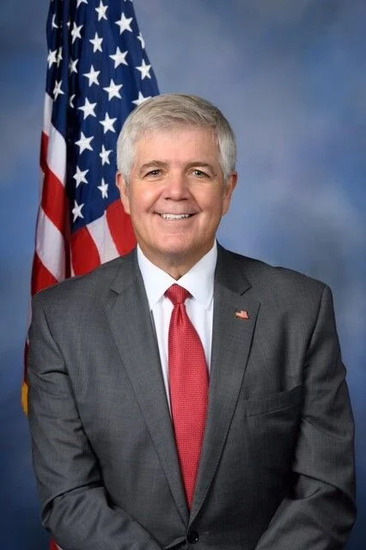
Rep. Cliff Bentz
Sponsored bills
Maddy summaryThe FARMLAND Act of 2025 strengthens oversight of foreign ownership of U.S. agricultural land, particularly from countries like China and other "foreign entities of concern" as defined in the law. It requires agricultural land buyers to conduct due diligence and certify compliance, creates civil penalties for false or missing reports, and prohibits foreign persons from participating in Farm Service Agency programs. The bill mandates annual reports to Congress on foreign ownership of farmland by specific countries and requires development of a centralized database tracking foreign ownership. It also expands the Committee on Foreign Investment in the United States' authority to review certain real estate transactions involving foreign entities of concern.
Maddy summaryHJRES 79 is a congressional resolution seeking to disapprove an Environmental Protection Agency (EPA) rule that would have reclassified certain large industrial facilities emitting hazardous air pollutants as "area sources" under the Clean Air Act. The rule, published in the Federal Register on September 10, 2024, aimed to shift these facilities from stricter regulatory requirements for "major sources" to less stringent standards for "area sources." If approved, the resolution would block the rule from taking effect, preserving current regulatory obligations for affected industrial facilities. This bill directly impacts the EPA's authority to regulate air pollution and the specific facilities subject to the proposed reclassification.
Maddy summaryHR 2398, the Rural Veterinary Workforce Act, amends federal tax law to exempt certain student loan repayment or forgiveness assistance from income tax for veterinarians working in rural areas. It specifically expands existing tax exclusions to include programs under the National Agricultural Research, Extension, and Teaching Policy Act (7 U.S.C. 3151a) and similar state-level programs designed to increase rural veterinary access. This change directly affects veterinarians participating in qualifying loan repayment or forgiveness programs in states prioritizing rural veterinary services. The policy change modifies IRS tax treatment to reduce the financial burden on veterinarians serving underserved rural communities.
Maddy summaryHR 2165, the Choice in Automobile Retail Sales Act of 2025, amends the Clean Air Act to prevent the Environmental Protection Agency (EPA) from writing future tailpipe emissions regulations that mandate specific vehicle technologies (like electric or hydrogen systems) or limit the availability of new vehicles based on engine type (e.g., gasoline vs. electric). The bill requires the EPA to update its regulations within 24 months to ensure new rules comply with these restrictions. This directly affects the EPA’s regulatory authority and automakers, as it limits how emissions standards can be structured. The law aims to preserve consumer choice in vehicle types by preventing regulations from favoring one engine technology over others.
TAP Promotion Act This bill requires that pre-separation counseling under the Transition Assistance Program include a presentation that promotes the benefits available to veterans from the Department of Veterans Affairs (VA). The bill also requires the VA to annually report on the presentation to (1) identify veterans service organizations that participate, (2) provide the number of members of the Armed Forces who attend, and (3) provide any recommendations for changes to the presentation.
Maddy summaryHRES 254 is a non-binding resolution recognizing the 250th anniversary of the United States Marine Corps, to be observed on November 10, 2025. The resolution honors the Corps' founding at Tun Tavern in Philadelphia on November 10, 1775, its history of service in major conflicts, and its values of honor, courage, and commitment. It encourages public participation in commemorative events and local recognition of Marines' contributions to national defense.
Maddy summaryThe Innovative FEED Act of 2025 establishes a new regulatory category for "zootechnical animal food substances" - additives in animal feed that affect digestive byproducts, reduce foodborne pathogens, or alter an animal's gut microbiome without providing nutrition. These substances would be regulated as food additives (not drugs) under the Federal Food, Drug, and Cosmetic Act, requiring manufacturers to submit specific safety and efficacy data for approval. The bill mandates labeling stating "Not for use in the diagnosis, cure, mitigation, treatment, or prevention of disease in animals" and allows optional claims about intended effects on animal body function. It explicitly excludes existing drugs, hormones, ionophores, and other substances from this category, ensuring no mandatory use of these additives.
Maddy summaryThis bill delays two Medicare billing deadlines for ground ambulance services from 2025 to 2028. It amends the Social Security Act to extend the timeline for implementing specific billing rules under Section 1834(l). The change directly affects Medicare ambulance providers by postponing compliance deadlines for billing requirements. No new services or funding are created - only a technical extension of existing timelines.
Maddy summaryHR 2217, the Down East Remembrance Act, designates six specific creeks in North Carolina with new names honoring individuals, using precise geographic coordinates for each location. The bill updates all official federal references (including maps, laws, and documents) to these creeks to reflect their new names. This is a commemorative measure with no policy changes, directly affecting only the designated geographic areas and federal records referencing them.