

Maddy summaryThe DOMINANCE Act aims to reduce U.S. reliance on strategic competitors like China for critical minerals by building international partnerships to secure diversified supply chains. It establishes a Minerals Security Partnership to coordinate diplomatic, development, and financial support for critical mineral projects with allies, creates a new Office of Energy Security Compacts to develop multi-year agreements with partner countries, and sets up a new Assistant Secretary position for Energy Security at the State Department. The bill also includes education programs like the Critical Mineral Mining Fellowship Program to build U.S. workforce capacity in mining. These measures are designed to enhance U.S. national security and economic competitiveness by ensuring reliable access to critical minerals needed for defense, technology, and energy systems.
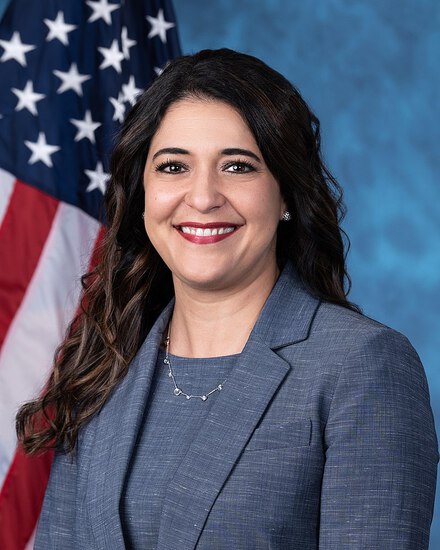
Rep. Stephanie I. Bice
Sponsored bills
Maddy summaryThis bill, known as the Robert Lodge Medal of Honor Act, authorizes the President to award the Medal of Honor to Robert Lodge. It directly affects Lodge by recognizing his acts of valor as an Air Force member during the Vietnam War on May 10, 1972. The legislation specifically overrides existing time limits that usually prevent such awards decades after service. By doing so, it ensures Lodge receives the nation's highest military decoration for his bravery.
Maddy summaryThe Pregnancy Loss Mental Health Research Act of 2026 directs the National Institutes of Health to expand research on mental health issues following pregnancy loss, including miscarriage, stillbirth, and abortion. This legislation authorizes $4.5 million for fiscal years 2027 and 2028 to fund studies on the causes, diagnosis, and treatment of these conditions, as well as a long-term national study to track their prevalence and duration. Additionally, the bill modifies existing public health grants to allow funding for mental health services specifically for individuals who have experienced pregnancy loss, while prohibiting the use of these funds by entities that perform abortions except in cases of rape, incest, or life-threatening medical emergencies.
Maddy summaryH.Res. 1320 is a non-binding resolution that calls on all Americans to honor military personnel who died while serving in the pursuit of freedom and peace on Memorial Day 2026. The bill does not create new laws or change any policies; instead, it serves as a formal expression of gratitude and remembrance from the House of Representatives. Because it is a commemorative resolution rather than a procedural or funding measure, it has no direct legal effect on individuals or government operations.
Maddy summaryThis bill, titled the Protect Domestic Oil and Gas Small Business Act of 2026, exempts small oil and gas wells from specific environmental regulations under the Clean Air Act. It directly affects owners and operators of marginal wells, defined as sites producing 15 barrels of oil or less per day, or 90,000 cubic feet of natural gas or less per day. The legislation removes requirements for monitoring, reporting, and leak detection for these smaller operations, while also mandating that the EPA approve any state plan revisions granting this exemption within 180 days. Additionally, the bill requires the EPA to update its regulations to reflect these changes and to terminate any ongoing enforcement actions against marginal wells that were initiated before the law takes effect.
Maddy summaryThis bill authorizes the U.S. Mint to produce commemorative $5 gold and $1 silver coins marking the 25th anniversary of the September 11, 2001, terrorist attacks. The coins must feature designs honoring victims and first responders (including the inscription "Never Forget") and will be sold only during 2027-2028. All surcharges ($35 per gold coin, $10 per silver coin) collected from sales will fund the National September 11 Memorial and Museum at the World Trade Center, with no net cost to the federal government. The coins are legal tender but primarily intended for collectors, not circulation.
Maddy summaryThe CARE for RPA Crews Act directs military department secretaries to create a new status identifier for remotely piloted aircraft crews conducting combat operations. This status would hold equivalent merit to the existing combat status identifier currently used by traditional military personnel. The law requires this new system to be established within 180 days of the bill's enactment. By granting this recognition, the legislation aims to formally acknowledge the combat roles played by drone operators.
Maddy summaryThe STOP GAMES Act of 2026 aims to speed up the approval of new drugs by restricting the ability to file petitions intended to delay the process. It empowers the Food and Drug Administration to deny petitions that lack valid scientific grounds or are submitted with the primary purpose of causing delays, such as those filed too late, too frequently, or without supporting data. Additionally, the bill requires courts to dismiss lawsuits challenging drug approvals if the parties have not first exhausted administrative remedies by filing a petition. The legislation also mandates that the FDA report to Congress on the number of petitions filed, the resources they consume, and the specific delays they cause to drug approvals.
Maddy summaryThis bill prohibits Members of Congress and their survivors from receiving federal retirement benefits if they are convicted of specific sexual offenses committed on or after the law's enactment. It also bars pension payments for individuals who are under indictment for these crimes and willfully remain outside the United States for more than a year to avoid prosecution. Additionally, the legislation allows funds that would have gone to a convicted member's pension to be redirected to pay court-ordered restitution to victims of the sexual offenses.
Maddy summaryHR 7418 (the STEADFAST Act) converts the federal presidential campaign funding program into a state grant program to improve election security. It provides funds to states for updating voting systems, enhancing cybersecurity, securing physical storage of equipment, and implementing paper ballots with verification features. States must certify they prohibit noncitizen voting, require specific photo ID at polls, and report how funds are spent. Funding comes from taxpayer-designated contributions to a new Election Security Fund, with 5% allowed for administrative costs.