Maddy summaryThis concurrent resolution formally recognizes the persistent wage gap between Black women and white, non-Hispanic men in the United States. It highlights data showing that Black women earn significantly less than their male counterparts and reaffirms Congress's support for existing laws that prohibit pay discrimination based on sex or race. The document does not create new laws or change policy but serves as a symbolic statement to raise awareness about the economic disparities faced by Black women.
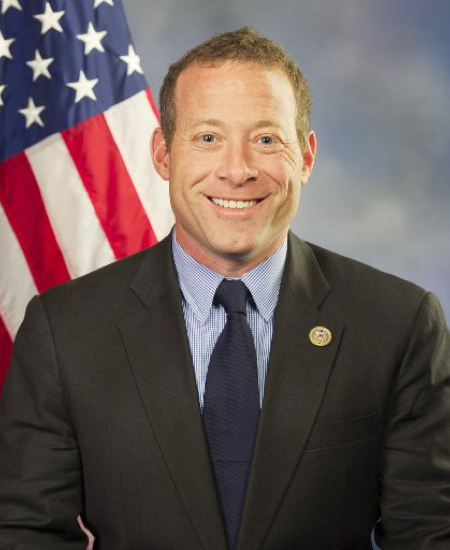
Rep. Josh Gottheimer
Sponsored bills
Maddy summaryThis resolution expresses the sense of the House of Representatives in support of keeping the Delaware Water Gap National Recreation Area in its current designation rather than redesignating it as a national park and preserve. The bill directly affects the area's management structure and the surrounding communities in New Jersey and Pennsylvania by opposing changes that could restrict recreational activities like hunting and fishing. It argues that maintaining the existing status preserves the cooperative relationship between federal agencies and local municipalities while avoiding potential economic strain on the region. Additionally, the resolution directs that no funds be used to support any efforts to change the area's classification.
Maddy summaryThis bill establishes a temporary funding mechanism for the United States Victims of State Sponsored Terrorism Fund by requiring the Treasury Department to loan $3 billion annually to the fund for fiscal years 2027, 2028, and 2029. The borrowed money must be distributed immediately to victims as part of the annual payment and cannot be saved for future use. Interest on these loans will be set by the Treasury based on market rates and will be repaid only from future fines and penalties collected from state sponsors of terrorism after the fund ends. The authority to make these loans expires on September 30, 2029, and the funds are treated as direct spending rather than new appropriations.
Maddy summaryThe AIR CARE for Vets Act of 2026 directs the Department of Veterans Affairs to run a five-year pilot program using specialized software to detect respiratory disorders and lung diseases in veterans receiving care at VA facilities. To implement this, the VA will lease FDA-approved four-dimensional functional lung imaging software from eligible developers to analyze lung function data. The program is funded with up to $25 million over five years, and the VA must submit a report to Congress two years after the pilot ends to evaluate its effectiveness.
Maddy summaryThis bill reauthorizes funding for the C.W. Bill Young Cell Transplantation Program, setting $31 million for fiscal year 2025 and $33 million annually for fiscal years 2027-2031. It also extends the deadline for the national cord blood inventory program from 2026 to 2031. The legislation directly affects stem cell research programs and cord blood banks by maintaining federal funding levels and prolonging the inventory program’s timeline. These provisions ensure continuity for existing research infrastructure and blood bank operations without introducing new policy changes.
Maddy summaryThis bill reauthorizes federal programs focused on preventing and responding to tick-borne diseases through 2026-2030, extending existing efforts beyond their previous expiration. It updates the National Strategy for Vector-Borne Diseases to emphasize identifying, reporting, preventing, and responding to these illnesses. The bill modifies two sections of the Public Health Service Act to continue funding for health departments working on vector-borne disease control. It directly affects public health programs and state/local health departments managing tick-borne disease prevention and response.
Maddy summaryThe AADAPT Act reauthorizes and expands Project ECHO grants to improve Alzheimer’s and dementia care through technology-enabled training. It specifically funds grants for healthcare providers in rural, frontier, or medically underserved areas to enhance early diagnosis, quality care, and provider retention for dementia patients. The bill authorizes $1 million annually (2027-2032) for these dementia-focused training programs, requiring funds to supplement - not replace - existing resources. This directly supports primary care providers licensed to serve underserved communities, using collaborative online learning to address care gaps.
Maddy summaryHR 2821, the FDA Modernization Act 3.0, requires the FDA to update regulatory language within one year of enactment. It directs the agency to replace all references to "animal tests" with "nonclinical tests" in 22 specific sections of the Code of Federal Regulations related to drug development and approval processes. The bill also adds a definition for "nonclinical test" into relevant FDA regulations to align with prior legislative changes. This update applies directly to pharmaceutical manufacturers and FDA reviewers who follow these regulatory guidelines during drug development. The changes aim to modernize terminology without altering current testing requirements.
Maddy summaryThe Protecting America's Food Supply Act of 2026 requires the Department of Health and Human Services to evaluate imported food products based on their health risks, safety history, import volume, and the coordination between U.S. and foreign regulators. Within one year of enactment, the agency must publish a detailed report on its findings, including specific targets and actual numbers for foreign facility inspections by the Food and Drug Administration. The report will also analyze trends by food type and country of origin to determine if current inspection methods align with existing food safety laws. This legislation aims to increase transparency and oversight of the food supply chain by making inspection data publicly available on a government website.
Maddy summaryThis bill renames the Department of Veterans Affairs community-based outpatient clinic in Newton, New Jersey, as the "Anthony 'Tony' J. Gallopo VA Clinic." It directly affects the clinic's official designation and all federal references to it, including documents and maps. The change takes effect upon the bill's enactment, with no policy or funding changes involved. As a ceremonial naming bill, it honors Anthony "Tony" J. Gallopo but does not alter VA services or benefits.