

Maddy summaryThis bill amends U.S. Customs and Border Protection (CBP) authority to allow CBP officers to conduct joint operations with foreign governments to monitor and disrupt international drug trafficking, human smuggling, and other threats (like terrorism) entering the U.S. It directly affects CBP personnel operating abroad and partner governments. Key provisions include authorizing CBP to provide support like threat monitoring, emergency humanitarian aid (e.g., search and rescue), and law enforcement training in foreign countries, while establishing a claims process for incidents involving CBP operations overseas. Claims must be filed within two years of an incident, and the authority to pay such claims expires five years after the bill’s enactment.
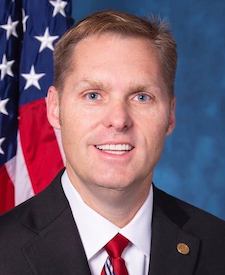
Rep. Michael Guest
Sponsored bills
Maddy summaryThe Generative AI Terrorism Risk Assessment Act requires the Department of Homeland Security (DHS) and the Director of National Intelligence to produce an annual report for five years on terrorism threats posed by terrorist groups using generative AI (such as AI that creates text, images, or videos). Each report must analyze past incidents where such AI was used to spread extremist content, recruit members, or develop weapons, and include countermeasures to address these threats. DHS must coordinate reports to protect privacy and civil liberties, post unclassified summaries online, and brief Congress within 30 days of submission. The law also directs DHS to share AI-related terrorism threat information with state and local fusion centers and incorporate their input into assessments. This bill directly affects DHS, intelligence agencies, and state/local fusion centers.
Maddy summaryThis bill amends Section 2119 of Title 18 (carjacking statute) to clarify the legal definition of the offense. It removes the phrase "with the intent to cause death or serious bodily harm" from the main definition, replacing it with "knowingly," and refines the death penalty provision to specify that death must result from a carjacking taken with the intent to cause death or serious bodily harm. The change streamlines the statute by focusing on the act of taking a vehicle "knowingly" rather than requiring proof of intent to cause harm as a core element. This technical amendment affects how federal prosecutors define and prosecute carjacking cases under existing law.
Maddy summaryHR 1514 establishes the Mississippi River Basin Fishery Commission within the Department of the Interior to coordinate management of interjurisdictional fisheries across 31 U.S. states, two Canadian provinces, federal agencies, and tribal nations. The Commission oversees six sub-basin management plans, develops strategies to control invasive carp (like bighead and silver carp), and administers grant programs for conservation projects. It provides $30 million annually (2027-2029) and $50 million annually (2030-2032) to fund collaborative efforts, with grants prioritizing projects aligned with the existing MICRA Joint Strategic Plan. The Commission’s authority is nonbinding, requiring consensus among member entities but not overriding state or federal management laws.
Maddy summaryHR 2212 establishes a new DHS Intelligence Rotational Assignment Program for intelligence analysts. The bill requires the DHS Secretary to create this program within one year, allowing analysts in DHS intelligence components and the Secret Service's Office of Strategic Intelligence and Information to rotate between positions. This aims to build broader expertise by enabling analysts to gain experience across different DHS intelligence roles. The program must follow coordination requirements already set for DHS's existing rotation program. It directly affects DHS intelligence analysts and Secret Service strategic intelligence personnel.
Maddy summaryHR 6029 amends the Bank Secrecy Act to exempt cash reward payments by nonprofit crime stopper organizations from currency transaction reporting requirements. Specifically, it directs the Treasury Secretary to exempt transactions between a bank and a crime stopper organization when the payment is for a cash reward offered for crime information. This change would eliminate the need for banks to file currency transaction reports for these specific payments. The exemption applies only to nonprofit organizations operating as crime stopper programs that provide cash rewards for crime tips.
Maddy summaryHR 6018, the Bringing Assistance for Rural Needs During Shutdowns Act, ensures that Farm Services Agency (FSA) services remain operational during government shutdowns. This means FSA employees - providing critical support like farm loans, disaster assistance, and crop insurance - would continue working without furloughs. The bill directly affects rural farmers and communities relying on these services, preventing disruptions to essential agricultural aid. By classifying FSA services as "essential" under federal law (specifically, as covering "safety of human life or protection of property"), it guarantees uninterrupted access to these programs during shutdowns.
Maddy summaryHRES 864 is a ceremonial resolution honoring U.S. veterans on Veterans Day 2025. It does not create new laws or policies but formally recognizes veterans' service and sacrifice, calling on all Americans to observe Veterans Day. The resolution references historical context about Veterans Day's origins (from Armistice Day to honoring all veterans) but contains no concrete policy changes. It directly addresses the general public, urging them to participate in the observance. As a non-binding resolution, it affects no specific individuals or groups through legislative action.
Maddy summaryHRES 866 is a non-binding House resolution condemning the systematic persecution of Christians in Nigeria by groups like Boko Haram and Fulani militants, and criticizing Nigeria's government for failing to protect Christian communities or acknowledge the violence. It calls on the U.S. government to support President Trump in using diplomatic, economic, and security tools to pressure Nigeria to end impunity for attacks, protect Christians, return displaced persons, and repeal blasphemy laws. The resolution specifically demands action against religiously motivated violence, including the release of those imprisoned for their faith, and urges coordination with international partners for humanitarian aid. It does not create new laws but expresses congressional support for U.S. policy actions targeting Nigeria's religious freedom violations.
Maddy summaryHR 5969, the LABEL Act, requires abortion-inducing drugs to include specific labeling identifying both the drug dispenser's name/address and the prescriber's name. It directly affects pharmacies, clinics, and prescribers distributing these drugs by mandating this labeling on all such products. The bill prohibits states from imposing stricter labeling rules than this federal standard. It defines "abortion-inducing drug" as one intended or used to end a pregnancy (excluding drugs for miscarriage management or ectopic pregnancy treatment). This is a labeling requirement, not a restriction on drug access or use.