

Maddy summaryThis bill requires the Treasury Secretary to regularly report to Congress about foreign countries that impose taxes on U.S. businesses or individuals considered unfair (extraterritorial or discriminatory taxes). For countries identified in these reports, it authorizes the U.S. to increase tax rates on income and withholdings from those countries, starting at 5% and increasing up to 20% over time. The bill also allows the U.S. to prohibit federal government purchases from entities in those countries and to consider these tax policies when negotiating tax treaties or trade agreements. It would directly affect U.S. businesses and individuals doing business with countries that have these tax policies, as well as those countries' businesses operating in the U.S.
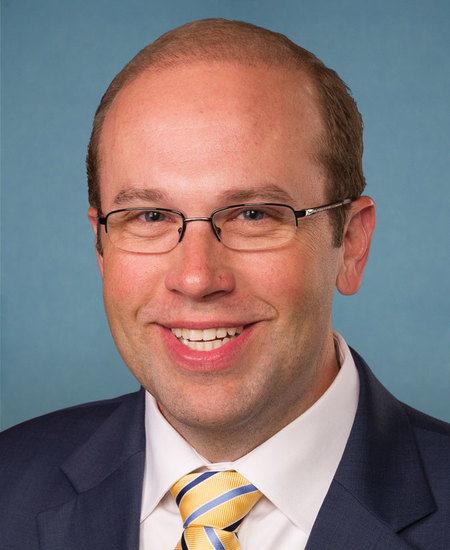
Rep. Jason Smith
Sponsored bills
Maddy summaryHR 551, the "Make the Migrant Protection Protocols Mandatory Act of 2025," would require U.S. border officials to apply the Migrant Protection Protocols (MPP) to all eligible asylum seekers at the southern border, rather than allowing discretion. The bill amends the Immigration and Nationality Act to change the language from "may" to "shall" in Section 235(b)(2)(C), meaning officials must send asylum seekers back to Mexico to await their immigration hearings. This directly affects asylum seekers who would no longer have the option of remaining in the U.S. during processing. The key mechanism is a technical legal change to make the existing MPP policy mandatory for all applicable cases.
Maddy summaryThis bill creates special tax rules for certain Taiwanese residents with income from U.S. sources, primarily addressing double taxation concerns. It reduces withholding tax rates on interest, dividends, and royalties from 30% to 10% (or 15% for certain dividends) for qualified Taiwanese residents, and eliminates tax on certain wages paid to Taiwanese workers in the U.S. It also sets a $30,000 annual limit on tax-free income from entertainment or athletic activities. To qualify, individuals must meet specific residency and ownership criteria, and the bill requires reciprocal tax benefits from Taiwan before taking effect. This legislation is designed to facilitate economic activity between the U.S. and Taiwan without requiring a formal tax treaty.
This joint resolution recognizes the sacrifice of veterans of the Vietnam War and commends them for their sacrifice to the United States. The joint resolution also urges the President to formally acknowledge the widespread mistreatment of such veterans as part of the ongoing Vietnam War Commemoration and issue a formal apology to the veterans and their families. Additionally, the joint resolution expresses urgent support for increased education to better reflect the sacrifice and treatment of Vietnam veterans.
Maddy summaryHR 431, the "Pony Up Act," requires the United States Postal Service (USPS) to reimburse citizens for fees or penalties incurred due to late delivery of their bills or payment notices. If a bill notice is delivered late (defined as USPS receiving mail more than 12 days before the due date but delivering it less than 6 days before the due date), USPS must pay the full amount of late fees charged to the citizen. Citizens can apply for reimbursement online, by mail, or in person at post offices, with appeals available to a Judicial Officer if denied. The bill also mandates annual USPS reports to Congress on mail delivery delays, including data on different mail classes and presorting effects. This directly affects citizens who face late fees due to USPS delivery errors.
Maddy summaryHR 28, the *Protection of Women and Girls in Sports Act of 2025*, amends Title IX to prohibit federally funded schools from allowing male-identified individuals (based on biological sex at birth) to compete on women’s or girls’ sports teams. It explicitly states that such participation would violate federal civil rights law, with exceptions only for training/practice that doesn’t displace female athletes from roster spots, competitions, scholarships, or other benefits. The bill mandates a Comptroller General study to define "other benefits" lost by girls when males compete in single-sex sports, including impacts on psychological well-being, scholarship access, and safe participation environments. This bill directly affects all athletic programs receiving federal funding, requiring compliance with its biological-sex-based eligibility rules.
Maddy summaryThis bill directs the Department of Homeland Security to implement the Migrant Protection Protocols (MPP) as outlined in a 2019 policy memo. It requires migrants seeking asylum at the U.S. border to remain in Mexico while their cases are processed, rather than being allowed to stay in the U.S. pending a hearing. The bill does not create new rules but mandates the reinstatement of a policy that was previously in effect from 2019 to 2021. This would directly affect asylum seekers arriving at the U.S.-Mexico border. The policy change would apply to all migrants covered by the existing MPP framework.
Maddy summaryThis bill, the Paperwork Burden Reduction Act (HR 3797), amends IRS rules to reduce administrative paperwork for employers and health insurers. It allows these entities to provide health insurance coverage statements electronically upon request instead of mailing physical copies by January 31 each year. Specifically, they must give clear notice that individuals can request copies, then send the statement within 30 days of the request or by January 31 of the following year. The change applies to statements for calendar years after 2023, directly affecting businesses required to report health coverage under IRS codes 6055 and 6056.
Maddy summaryThis bill amends the Social Security Act to prevent child welfare involvement driven by poverty. It requires states to provide nonrecurring short-term support services (like housing, utility, transportation, or food assistance for immediate crises) to help families avoid separation due to poverty. These services can count toward existing family support programs, and states must adopt policies and staff training to address poverty-related reports without separating children from parents. The law directly affects state child welfare systems and families facing poverty-related investigations. It takes effect for future fiscal years, with state flexibility for implementation.
Maddy summaryHR 485, the Protecting Health Care for All Patients Act of 2023, prohibits federal health programs from using quality-adjusted life years (QALYs) or similar measures to decide coverage, payment, or incentives. It directly affects Medicare, Medicaid, CHIP, and other federal health programs by banning the use of QALYs - metrics that weigh health outcomes against cost - when determining patient coverage or reimbursement. The bill amends key sections of the Social Security Act to require states and federal agencies to comply with this prohibition in all program rules and administration. This policy change aims to prevent decisions based on metrics that might limit access to care for certain patients, particularly those with chronic conditions or disabilities.