

Maddy summaryHR 6504, the Protect American Gun Exporters Act, blocks the Department of Commerce from implementing a pause on new export licenses for specific firearm exports (items under Commerce Control List numbers 0A501, 0A502, 0A504, and 0A505). The bill directly affects U.S. gun exporters by preventing the Commerce Secretary from enforcing the October 2023 pause or similar restrictions on these exports. Key provisions prohibit the Secretary from taking any action to carry out the pause unless it follows standard regulatory processes, including a required impact analysis and compliance with the Administrative Procedure Act and Congressional Review Act. This bill does not create new export rules but stops the existing pause on certain firearm exports.
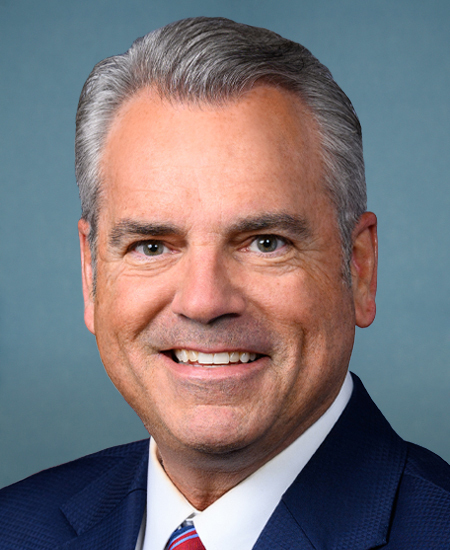
Rep. Mark Alford
Sponsored bills
Maddy summaryHR 4480, the SERV Act, requires the Small Business Administration (SBA) to submit annual reports detailing its outreach efforts and programs for veteran entrepreneurs, including Veteran Business Outreach Centers and Boots to Business. It also mandates a GAO report analyzing credit access barriers for veteran-owned small businesses, examining credit sources, default rates, and obstacles like military deployment impacts. The bill defines "covered individuals" to include veterans, service-disabled veterans, Reservists, and their spouses. These provisions aim to improve transparency and identify gaps in support for veteran entrepreneurs through data collection, without creating new funding or programs.
Maddy summaryHRES 683 is a non-binding resolution expressing the House's support for diplomatic efforts to encourage Mexico to fulfill annual water delivery commitments under the 1944 U.S.-Mexico treaty. The treaty requires Mexico to deliver an average of 350,000 acre-feet of water annually (over a 5-year cycle) to the U.S., but Mexico has historically delayed deliveries until the cycle ends. The resolution specifically acknowledges water shortages faced by South Texas farmers and urges Mexico to meet its annual obligations, while supporting negotiations for more reliable water agreements. It does not create new legal requirements but formally encourages diplomatic action to address the delivery delays.
Maddy summaryHR 6486, the Supporting Community Lenders Act, creates a new Coordinator position within the Small Business Administration's Office of Capital Access. This Coordinator will focus on supporting community financial institutions (CFIs) - small banks and credit unions serving underserved communities - to improve their ability to provide capital to small businesses. Key duties include developing programs for CFIs, building partnerships with federal agencies like the FDIC and Treasury, running outreach and training, and submitting annual reports to Congress. The bill directly affects CFIs and small businesses in communities with limited banking access by establishing a dedicated federal role to strengthen their support.
Maddy summaryThis bill appropriates $14.3 billion in supplemental security funding to Israel following the October 7, 2023 attacks. The funding includes $4 billion for Iron Dome and David's Sling defense systems, $1.35 billion for the Iron Beam defense system development, and $3.5 billion for foreign military financing. The bill requires regular reporting to Congress on security assistance provided to Israel and designates all funds as "emergency requirements" under federal budget law. It also modifies existing laws to facilitate the transfer of defense articles and services to Israel, aiming to strengthen Israel's defense capabilities against rocket threats.
Maddy summaryThis resolution (HRES 845) formally censures Representative Rashida Tlaib (D-MI) for specific statements she made regarding the October 7, 2023, Hamas attack on Israel. The resolution cites her October 8 comments falsely linking U.S. aid to the attack, her October 18 defense of a false claim about an Israeli hospital bombing, and her November 3 social media post featuring the phrase "from the river to the sea," which the resolution characterizes as a call for Israel's destruction. As a procedural resolution, it does not enact new policy but serves as a formal House condemnation of her conduct. The censure is directed solely at her statements, not at any legislative action or policy change.
Maddy summaryThe SHIP Act imposes sanctions on foreign entities that knowingly handle Iranian petroleum, targeting those involved in port operations, transportation, refining, or ship-to-ship transfers of Iranian oil. Starting 90 days after enactment, the President must block assets, deny visas, and impose penalties on individuals or companies engaging in these activities, including family members or owners of sanctioned entities. It requires annual reports tracking Iran's oil exports, revenues, and key players like shipping companies and ports. The sanctions terminate if the President certifies Iran has stopped supporting terrorism and dismantled weapons programs.
Maddy summaryHR 6152, the Adopt GREET Act, requires the Environmental Protection Agency (EPA) to adopt and use the GREET model - a scientific tool developed by Argonne National Laboratory - for calculating lifecycle greenhouse gas emissions of transportation fuels. The bill mandates the EPA update this methodology every five years, starting 90 days after enactment, and specifically requires the first update to use the GREET model. This directly affects the EPA in its regulatory work and fuel pathway developers seeking approval for new fuels under existing EPA rules. The law ensures EPA analyses of fuel emissions align with the most current scientific model, with reporting requirements if updates are delayed.
Maddy summaryThis resolution (HRES 839) condemns antisemitism at U.S. colleges and universities and urges campus leaders to publicly oppose hate speech targeting Jewish students, faculty, and staff. It encourages university presidents, administrators, and faculty to speak out against speech that promotes violence or discrimination based on religion, national origin, or ancestry. The resolution specifically calls on institutions to support Jewish student organizations and ensure Jewish members can study and work without fear. As a non-binding resolution, it does not create new laws but expresses congressional support for addressing antisemitism on campuses.
Maddy summaryThe Combatting the Persecution of Religious Groups in China Act (HR 6069) directs the U.S. government to impose sanctions under the Global Magnitsky Act and immigration restrictions on senior Chinese officials responsible for severe religious freedom violations, such as arbitrary imprisonment, forced labor, or restrictions against religious minorities like Christians, Uyghurs, and Falun Gong practitioners. It requires the Department of State to develop programs supporting religious minorities in China and combat Chinese transnational repression targeting diaspora communities. The bill also mandates that the U.S. continue designating China as a "Country of Particular Concern" for religious freedom under the International Religious Freedom Act until the Chinese government ceases its severe violations. These provisions use existing U.S. legal frameworks to pressure China through diplomatic and financial measures.