

Maddy summaryHRES 1537 is a non-binding House resolution condemning Hamas' October 7, 2023, attacks on Israel, which killed over 1,200 people and took 251 hostages, including 7 Americans still held captive. It calls on Hamas to immediately surrender, cease attacks, and release all hostages unconditionally, while reaffirming Israel's right to self-defense. The resolution also urges international organizations to condemn Hamas' actions and address the global surge in antisemitism following the attacks. As a symbolic statement, it does not create new laws or alter policy but expresses congressional position. The bill specifically references the ongoing captivity of seven U.S. citizens: Edan Alexander, Itay Chen, Sagui Dekel-Chen, Gadi Haggai, Judith Weinstein Haggai, Omer Neutra, and Keith Siegel.
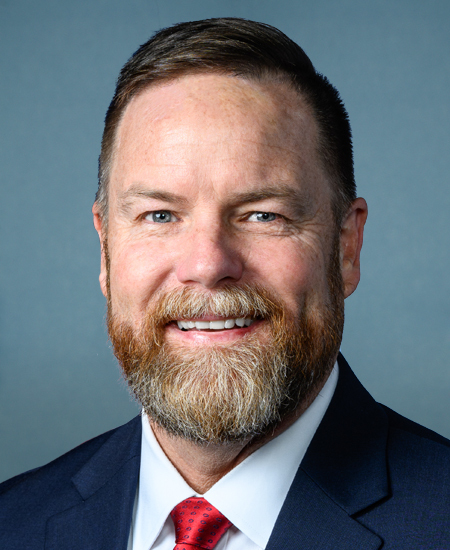
Rep. Aaron Bean
Sponsored bills
Maddy summaryHRES 1516 is a resolution passed by the U.S. House of Representatives to commend Big Brothers-Big Sisters of America on its 120th anniversary. It recognizes the organization’s work in providing youth mentorship that helps young people graduate from school and plan for their future. The resolution highlights how the organization, operating in over 5,000 communities nationwide, has supported millions of young people through long-term mentor relationships. As a symbolic gesture, it does not create new laws or policies but expresses congressional support for the organization’s mission.
Maddy summaryHRES 1518 designates November 12 as Creutzfeldt-Jakob Disease (CJD) Awareness Day. The resolution supports raising public awareness about CJD, a rare, fatal brain disorder affecting approximately 1-2 people per million annually in the U.S., which causes rapid neurological decline and death within months to a year. It highlights the disease's impact on patients and families and emphasizes the need for ongoing research into prion diseases like CJD, which share similarities with Alzheimer's and related dementias. As a symbolic resolution (not a law), it does not create new programs or funding but aims to increase recognition of this rare condition.
Maddy summaryHR 9714, the CBO Oversight Act, requires the Congressional Budget Office (CBO) to provide testimony at two annual hearings before the House and Senate Budget Committees upon request by their chairs. This bill directly affects the CBO and the Budget Committees by mandating regular testimony sessions each year. The key provision adds a new section to the 1974 Budget Act, requiring the CBO Director to testify at these hearings, which can address any topic the committees choose, including reviewing the accuracy of the CBO's previous year's budget baseline projections. The bill does not change the CBO's analytical work but establishes a formalized process for congressional oversight of its budget estimates.
Maddy summaryThe Think Differently about Education Act of 2023 requires schools and state education agencies to notify parents of children with disabilities at the start of each school year about their right to include experts (such as therapists or specialists) on their child's Individualized Education Program (IEP) team. This amendment to the Individuals with Disabilities Education Act (IDEA) ensures parents are informed about available resources to support their child's educational planning. The bill directly affects parents of children with disabilities and the educational agencies managing IEPs. It adds a mandatory annual notification step without altering the IEP process itself.
Maddy summaryHR 3433, the "Give Kids a Chance Act of 2024," requires pharmaceutical companies developing certain cancer drugs to conduct pediatric studies if the drugs target molecular pathways relevant to childhood cancers. It directly affects drug manufacturers submitting new applications for cancer treatments, particularly those combining previously approved adult cancer drugs or containing a single new active ingredient. The bill amends FDA regulations to mandate these pediatric investigations only when specific conditions are met, such as when a drug's molecular target is relevant to pediatric cancer growth. The FDA must issue implementing guidance within 12 months, and reports to Congress will track implementation and effectiveness starting 2 years after enactment.
Maddy summaryHJRES 136 is a resolution seeking to block an Environmental Protection Agency (EPA) rule that would have set new emissions standards for light and medium-duty vehicles sold in 2027 and later model years. The EPA rule, published in April 2024, aimed to require vehicle manufacturers to meet stricter pollution limits for these vehicles. If passed, this resolution would cancel the rule, preventing the EPA from enforcing the new standards. It uses a congressional process that allows Congress to reject agency rules with a simple majority vote.
Maddy summaryHRES 1485 designates the third Friday of September each year as "National POW/MIA Recognition Day" to honor prisoners of war and missing-in-action military personnel. The resolution expresses the House's support for this designation and encourages Americans to observe the day through community commemorations, displaying the POW/MIA flag, and performing acts of service for families of those affected. It does not create new laws or alter existing policies but builds on the existing National POW/MIA Flag Act (Public Law 116-67) that requires the POW/MIA flag to be flown on federal properties. The resolution focuses on symbolic recognition and public engagement rather than substantive policy changes.
Maddy summaryThis bill restricts federal funding for jurisdictions that limit cooperation with federal immigration enforcement. It defines a "sanctuary jurisdiction" as any state or local government that prohibits sharing immigration status information or complying with federal detainer requests (except for crime victims/witnesses). Starting after enactment, such jurisdictions lose eligibility for federal funds intended to provide food, shelter, healthcare, legal services, or transportation to undocumented immigrants. The law directly affects cities and states with specific immigration policies, not the immigrants themselves.
Maddy summaryHR 9745, the Lifesaving Gear for Police Act of 2024, removes barriers for state and local law enforcement agencies to access existing federal equipment. It prohibits federal agencies from enforcing any regulations (since May 15, 2015) that limit the transfer of Department of Defense or other federal equipment to police departments, unless Congress passes those rules into law. The bill also requires agencies to return or replace equipment recalled since 2015 under those regulations, provided the agency requests it, meets existing eligibility rules, and the equipment is available. This directly affects police departments that previously had equipment seized or denied under the blocked regulations. The law focuses on restoring access to current equipment-sharing programs, not creating new funding or gear.