Maddy summaryThis bill makes it a federal crime to recklessly dispose of fetal remains (deceased fetal tissue from abortion) in landfills or navigable waters, punishable by up to 3 years in prison or fines. It directly affects medical facilities, clinics, or individuals handling such remains, but explicitly states it does not apply to women disposing of their own fetal remains. Key provisions define "fetal remains" (excluding cremated tissue), "landfill," and "navigable waters" to clarify the scope. The law aims to prevent improper disposal while protecting women from prosecution for their own actions. It creates a new federal offense under Title 18 with specific geographic and procedural boundaries.
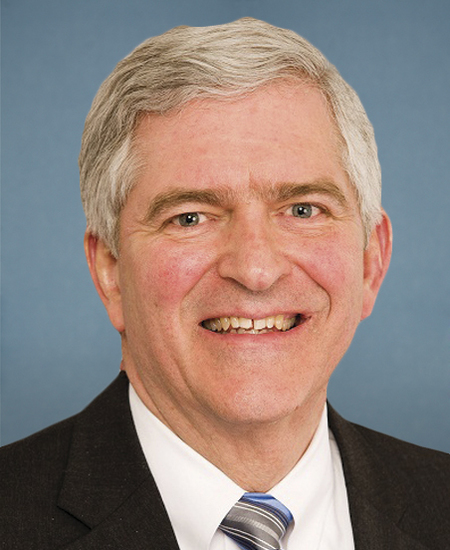
Rep. Daniel Webster
Sponsored bills
Maddy summaryHJRES 28 proposes a constitutional amendment to permanently fix the number of justices on the U.S. Supreme Court at nine. This would require ratification by 38 state legislatures (three-fourths of states) within seven years to become part of the Constitution. The amendment directly affects the structure of the Supreme Court, which has had nine justices since 1869 but could otherwise be altered by future congressional action. It does not change current court operations or create new laws, but instead seeks to make the nine-justice composition a permanent constitutional requirement.
Maddy summaryThis bill prohibits federal funding from being provided to Planned Parenthood Federation of America or its related clinics. It redirects funds previously allocated to Planned Parenthood to other eligible providers like community health centers, hospitals, and clinics that offer women's health services. These services include contraception, cancer screenings, prenatal care, STI testing, and family planning - particularly in underserved areas. The bill explicitly states it does not reduce overall federal funding for women's health care or affect existing abortion-related funding restrictions.
Maddy summaryHR 627 requires states receiving Medicaid funds for family planning services to submit standardized abortion data to the CDC annually, covering 10 specific variables like maternal age, gestational age, race, procedure type, and whether the child survived. States must report by December 31 of the previous year, with delayed submissions allowing retroactive payments but false reporting risking one year of lost Medicaid funding. This creates a uniform national system to replace inconsistent state reporting, aiming to fill gaps where some states currently report no data. The bill directly affects states administering Medicaid family planning programs, linking their funding eligibility to data submission.
Maddy summaryThe RIFLE Act of 2025 amends federal firearm licensing laws to create a more structured process for addressing violations by licensed firearm businesses. It establishes graduated penalties for violations, with non-willful violations requiring notification and a reasonable timeframe to correct, while willful violations could lead to license suspension (up to 30 days for first-time offenders) or revocation. The bill adds procedural protections including written notice requirements, administrative hearings with due process, and a 90-day period to liquidate inventory after license expiration or revocation. It also requires the Attorney General to reconsider denied applications from former licensees and reverse certain past license revocations made under specific ATF orders. The bill aims to balance enforcement with due process for firearm licensees while maintaining public safety standards.
Maddy summaryHR 632 prohibits federal funding (directly or indirectly) for colleges and universities that host or are affiliated with campus health clinics providing abortion drugs or abortions to students or employees. Institutions must annually certify to federal education and health agencies that no such services are offered at their campus sites. The bill defines "abortion drugs" broadly as any medication intended to terminate pregnancy (excluding cases for live birth, miscarriage management, or ectopic pregnancy treatment). This policy directly affects institutions receiving federal funds, requiring them to ensure campus health services comply with the prohibition to maintain eligibility.
Maddy summaryHR 7 prohibits federal funds from being used for abortions or health insurance plans covering abortion, with exceptions for pregnancies resulting from rape, incest, or when a woman's life is endangered. It blocks federal premium tax credits under the Affordable Care Act for health plans covering abortion (except in specified cases) and requires clear disclosure of abortion coverage and related surcharges in plan materials. The bill allows individuals or employers to purchase separate abortion coverage using non-federal funds, such as out-of-pocket payments, without affecting federal subsidies. It directly affects federal health programs, ACA marketplace plans, and health insurance issuers offering coverage that includes abortion services.
Supporting the Health of Aquatic systems through Research Knowledge and Enhanced Dialogue Act of 2025 or the SHARKED Act of 2025 This bill requires the Department of Commerce to establish a task force to address and report to Congress about critical needs with respect to shark depredation. (Shark depredation is the partial or complete removal of a hooked fish by a shark directly from a fishing line before the line is retrieved.) The duties of the task force are, among other responsibilities, to (1) develop ways to improve coordination and communication across the fisheries management and shark research communities; (2) identify research priorities and funding opportunities; (3) develop recommended management strategies to address shark depredation; and (4) coordinate the development and distribution of educational materials. The bill specifies that the task force must include representatives of each Regional Fishery Management Council, each Marine Fisheries Commission, the fish and wildlife agencies of coastal states, and the National Marine Fisheries Service. The task force must also include researchers and others with relevant expertise. The task force must report its findings to Congress within two years after the bill's enactment and every two years thereafter until the task force is terminated. The task force sunsets within seven years after the date of its establishment.
Birthright Citizenship Act of 2025 This bill limits birthright citizenship by redefining what it means to be subject to the jurisdiction of the United States. Currently, a person born in the United States and subject to U.S. jurisdiction is entitled to citizenship. Under the bill, a person is subject to U.S. jurisdiction if he or she is born to a parent who is (1) a U.S. citizen or national, (2) a lawful permanent resident residing in the United States, or (3) a non-U.S. national ( alien under federal law) with a lawful immigration status who is performing active service in the Armed Forces. The bill does not affect the citizenship or nationality status of any person born before the bill's enactment date.
Maddy summaryThis bill amends U.S. immigration law to deny entry to noncitizens convicted of or admitting to certain violent crimes, and to make them deportable. It directly affects noncitizens who have been convicted of or admitted to sex offenses, domestic violence, stalking, child abuse/neglect, or violating protection orders involving threats of violence. Key provisions add these offenses as grounds for denying entry (inadmissibility) under Section 212(a)(2) and as grounds for deportation (deportability) under Section 237(a)(2). The law specifies that domestic violence and protection order violations are included regardless of whether the jurisdiction received specific federal grant funding.