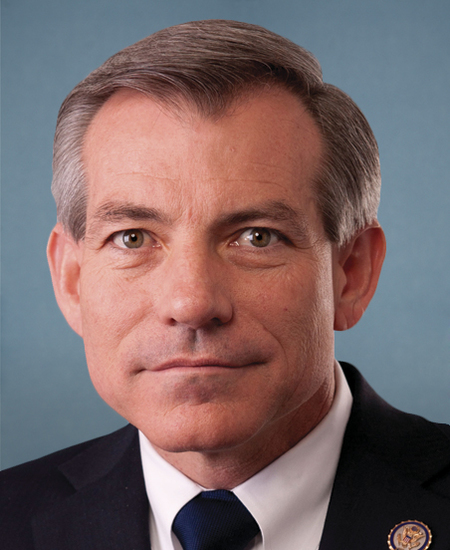
Photo of David Schweikert
R United States House · District 1 · Arizona

Rep. David Schweikert

Compare
Total votes
2,837
all sessions
Attendance
99%
23 missed
Near the chamber average
With party
92%
of cast votes
Near the chamber average
Bipartisan score
4%
crosses aisle rarely
Near the chamber average
Sponsored
505
bills & resolutions
Lower than 90% of chamber peers
Committees
4
assignments
505 bills and resolutions

Sponsored bills

Total
505
Primary
85
Co-sponsor
420
This page
505
matching current filters
Co-sponsor HR 1156
Passed · Texas House · Co-sponsor
Pandemic Unemployment Fraud Enforcement Act

Maddy summaryHR 1156, the Pandemic Unemployment Fraud Enforcement Act, extends the time limit for prosecuting fraud related to pandemic unemployment programs. It adds a 10-year window for criminal or civil actions against individuals who falsely claimed benefits under Pandemic Unemployment Assistance (PUA), Federal Pandemic Unemployment Compensation (FPUC), or Mixed Earner Unemployment Compensation (MEUC). The law applies only to fraud committed during these specific pandemic-era programs and does not revive cases where the original statute of limitations had already expired before this bill passed. This change gives authorities more time to pursue fraud cases without altering the programs' core eligibility rules.

Passed Mar 13, 2025 1 co-sponsor
Co-sponsor HR 2025
In committee · Texas House · Co-sponsor
Northeastern Arizona Indian Water Rights Settlement Act of 2025

Maddy summary# Summary of the Water Rights Settlement Act This comprehensive legislation resolves long-standing water rights claims for three Native American tribes in the Colorado River Basin: 1. **Navajo Nation, Hopi Tribe, and San Juan Southern Paiute Tribe** - The act establishes specific water allocations and delivery systems for these tribes, including the implementation of the "iiná bá - paa tuwaqat'si" pipeline (a major water delivery infrastructure project). 2. **Water Rights Settlement** - The legislation satisfies tribal water rights claims through: - Quantification of water entitlements - Specific delivery mechanisms - Accounting rules for Colorado River water (distinguishing between Upper Basin and Lower Basin water) - Implementation of the "iiná bá - paa tuwaqat'si" pipeline system 3. **Reservation Creation** - The legislation ratifies a treaty creating the San Juan Southern Paiute Reservation (approximately 5,400 acres within the Navajo Reservation), establishing it as a reservation held by the U.S. in trust for the San Juan Southern Paiute Tribe. 4. **Key Implementation Provisions**: - Detailed accounting rules for Colorado River water (Section 17) - Limited waiver of sovereign immunity for enforcement purposes (Section 18) - Authorization for use of Navajo-Gallup Water Supply Project facilities (Section 20) - Specific requirements for Upper Basin water use in the Lower Basin 5. **Legal Framework**: - Includes comprehensive waivers of claims and releases of liability - Establishes an "Enforceability Date" with specific conditions for implementation - Includes specific provisions to ensure the settlement doesn't prejudice other water rights claims - Addresses unique circumstances of this settlement (Section 21(f)) This legislation represents a major settlement of water rights claims that has been negotiated between the federal government, the states, and the tribes, with specific implementation mechanisms and accounting rules for Colorado River water. It resolves critical water supply needs for these tribes while addressing complex legal and operational aspects of water rights in the Colorado River Basin.

In committee Mar 11, 2025 1 co-sponsor
Co-sponsor HR 1990
In committee · Texas House · Co-sponsor
American Innovation and R&D Competitiveness Act of 2025

Maddy summaryHR 1990, the American Innovation and R&D Competitiveness Act of 2025, amends tax rules for businesses to make research and development (R&D) costs more flexible. It allows companies to deduct R&D expenses immediately as business costs (instead of capitalizing them) or to spread these costs over a minimum 60-month period. The bill clarifies which R&D expenses qualify, excludes land improvements and mineral exploration costs, and ensures companies can claim R&D tax credits without conflict with expense treatment. This directly affects businesses that conduct R&D, changing how they account for these costs on tax returns starting for 2022 taxable years.

In committee Mar 10, 2025 1 co-sponsor
Co-sponsor HR 2002
In committee · Texas House · Co-sponsor
MATCH IT Act of 2025

Maddy summaryThe MATCH IT Act of 2025 establishes national standards to improve patient matching accuracy in healthcare, directly affecting hospitals, clinics, health IT vendors, and federal agencies like CMS and HHS. It requires the Secretary of Health and Human Services to develop a uniform definition for measuring patient match rates within 180 days, accounting for duplicate records, overlaid records, and mismatch rates. The bill mandates health IT vendors to incorporate a standardized data set into their systems to support 99.9% matching accuracy, with Medicare providers earning voluntary bonus payments for achieving at least 90% matching accuracy through anonymous reporting. This aims to reduce medical errors, prevent unnecessary tests, and cut costs linked to patient misidentification, which currently cost the healthcare system over $6.7 billion annually.

In committee Mar 10, 2025 1 co-sponsor
Co-sponsor HR 1882
In committee · Texas House · Co-sponsor
Saving Gig Economy Taxpayers Act

Maddy summaryThis bill modifies tax reporting rules for gig economy platforms (like Uber or DoorDash) by reinstating a pre-American Rescue Plan threshold. It requires third-party payment platforms to report income to the IRS only if a gig worker earns over $20,000 in a year or completes more than 200 transactions. This directly affects low-earning gig workers who would no longer receive tax forms for smaller earnings. The change simplifies reporting for platforms and reduces administrative burden on workers with minimal income from these platforms.

In committee Mar 5, 2025 1 co-sponsor
Co-sponsor HJRES 65
In committee · Texas House · Co-sponsor
Providing for congressional disapproval under chapter 8 of title 5, United States Code, of the rule submitted by the Internal Revenue Service relating to Rules for Supervisory Approval of Penalties.

Maddy summaryHJRES 65 is a congressional resolution disapproving an Internal Revenue Service (IRS) rule published in the Federal Register on December 23, 2024 (89 Fed. Reg. 104419). The resolution blocks the IRS rule that established procedures for supervisory approval of penalties imposed on taxpayers. If passed, this resolution would immediately invalidate the IRS rule, preventing it from taking effect. The bill directly affects the IRS’s penalty enforcement process and taxpayers subject to IRS penalties. This is a procedural disapproval measure, not a new tax law.

In committee Feb 27, 2025 1 co-sponsor
Co-sponsor HR 1707
In committee · Texas House · Co-sponsor
Grown in America Act of 2025

Maddy summaryHR 1707, the Grown in America Act of 2025, creates a new tax credit for agricultural businesses that use predominantly domestically produced inputs. The credit equals 25% of a business's domestic agricultural input costs (capped at $100 million annually), but only if the business meets a 3-year average threshold for domestic sourcing (starting at 50% in 2026 and rising to 85% after 2033). It directly affects food and agricultural producers who source inputs like crops or fish raised in the U.S. for products sold domestically without further processing. The bill defines "domestic agricultural input costs" as expenses for U.S.-produced commodities used in U.S.-made food products, excluding certain commodities listed by the Secretary of Agriculture.

In committee Feb 27, 2025 1 co-sponsor
Co-sponsor HR 1684
In committee · Texas House · Co-sponsor
PAST Act of 2025

Maddy summaryThe PAST Act of 2025 amends the Horse Protection Act to ban harmful practices known as "soring," which deliberately cause pain to horses to exaggerate their gait for shows. It specifically prohibits devices like action devices (e.g., boots causing friction) and weighted shoes on Tennessee Walking Horses, Racking Horses, and Spotted Saddle Horses at events. The bill increases penalties, including escalating disqualifications for repeat offenses (180 days → 1 year → 3 years) and raises fines for violations to $5,000 per offense. It also requires stricter licensing for inspectors and mandates public posting of violation records to help event organizers enforce rules.

In committee Feb 27, 2025 1 co-sponsor
Co-sponsor HR 1628
In committee · Texas House · Co-sponsor
761st Tank Battalion Congressional Gold Medal Act

Maddy summaryThis bill awards a Congressional Gold Medal to the 761st Tank Battalion (known as the "Black Panthers"), the first predominantly Black armored unit in World War II's European Theater. It recognizes their combat service from 1944-1946, including key roles in the Battle of the Bulge and breaking the Siegfried Line, despite facing racial prejudice during and after the war. The medal will be displayed at the National Museum of African American History and Culture, with bronze duplicates available for sale to cover costs. The bill commemorates the battalion's 130,000 enemy casualties inflicted, 50% casualty rate, and their 1978 Presidential Unit Citation. It does not create new laws or affect current policies.

In committee Feb 26, 2025 1 co-sponsor
Co-sponsor HR 1502
In committee · Texas House · Co-sponsor
North Platte Canteen Congressional Gold Medal Act

Maddy summaryHR 1502 authorizes the creation of a Congressional Gold Medal to honor the volunteers and communities (primarily from Nebraska, Colorado, and Kansas) who supported the North Platte Canteen during World War II. The bill directs the Treasury Secretary to design and strike the medal, which will be presented to the individuals who contributed to the canteen’s operations and then permanently displayed at the Lincoln County Historical Museum in North Platte, Nebraska. It also permits the sale of bronze duplicates to cover production costs, with proceeds going to the U.S. Mint. This is a commemorative measure recognizing historical service, not a policy change affecting current laws or programs.

In committee Feb 21, 2025 1 co-sponsor
Showing 101 to 110 of 505 bills
Previous 1 … 10 11 12 … 51 Next