

Issue · Budget & Taxes
Budget & Taxes (Procurement)
Every budget & taxes bill, vote, and legislator stance in Texas, automatically classified by Maddy, our AI policy reader.
Total bills
37
89th Legislature (2025)
Top supporter
César Blanco
100% support rate
Top opponent
Brent Money
0% support rate
Ranked legislators
10
5 support · 5 oppose
Key legislators
Who's moving procurement in Texas
| Legislator | Party | Stance | Support rate | Decisive votes |
|---|---|---|---|---|
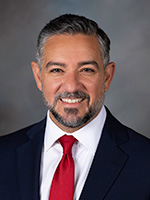
César Blanco
Senate · District 29
|
D |
Strong +
|
100% | 6 |

Aicha Davis
House · District 109
|
D |
Strong +
|
100% | 5 |

Ana Hernandez
House · District 143
|
D |
Strong +
|
100% | 5 |

Ana-Maria Rodriguez Ramos
House · District 102
|
D |
Strong +
|
100% | 5 |

Ann Johnson
House · District 134
|
D |
Strong +
|
100% | 5 |

Brent Money
House · District 2
|
R |
Strong −
|
0% | 5 |

Brian Harrison
House · District 10
|
R |
Strong −
|
0% | 5 |

Carrie Isaac
House · District 73
|
R |
Strong −
|
0% | 5 |

Daniel Alders
House · District 6
|
R |
Strong −
|
0% | 5 |

David Lowe
House · District 91
|
R |
Strong −
|
0% | 5 |
Showing 11–20 of 37
bills
All budget & taxes bills
SB 33: Relating to certain prohibited transactions and logistical support between a governmental entity and an abortion assistance entity or abortion provider for the procurement of an abortion or related services.
SB 1482: Relating to the rural sheriff's office and constable's office salary assistance grant programs.
Topics
✓ Budget & TaxesSupports Budget & TaxesBill creates state grant program (25% funding) for rural law enforcement salaries, increasing state spending on essential services.
✓ Criminal JusticeSupports Criminal JusticeFunds rural law enforcement salaries via state grants, supporting operational capacity of sheriff's and constable's offices per bill's salary minimums and 25% state funding requirement.
✓ Labor & EmploymentSupports Labor & EmploymentSets mandatory minimum salaries for rural law enforcement staff, establishing wage floors under county employment standards per bill's salary requirements.
HB 3013: Relating to a restriction on the use of public money by a school district regarding the passage of a bond proposal.
Topics
✗ Budget & TaxesOpposes Budget & TaxesRestricts school districts from using public funds for bond advocacy, limiting government spending on third-party promotion. Directly restricts budget allocation per bill language.
✗ EducationOpposes EducationRestricts school districts from using public funds for bond advocacy, limiting financial influence on bond proposals per bill's prohibition on taxpayer spending for third-party promotion.
HB 343: Relating to providing a cost-of-living adjustment applicable to certain benefits paid by the Employees Retirement System of Texas.
Topics
✓ Budget & TaxesSupports Budget & TaxesBill increases state spending on retirement benefits via automatic inflation adjustments, directly funding essential employee/retiree programs under government expenditure management.
✓ Labor & EmploymentSupports Labor & EmploymentAutomatically adjusts retirement benefits for state employees to maintain purchasing power against inflation, expanding financial security and protecting worker benefits post-employment.
SB 574: Relating to an annual adjustment for inflation to the monthly amount of longevity pay for state employees.
Topics
✓ Budget & TaxesSupports Budget & TaxesBill mandates annual inflation-based increases to state employee longevity pay, directly increasing government spending on salaries per budget/fiscal management criteria.
✓ Labor & EmploymentSupports Labor & EmploymentMandates annual inflation-adjusted pay increases for state employees, preserving purchasing power of longevity benefits and strengthening wage compensation.
SJR 62: Proposing a constitutional amendment establishing the Texas Health Care Workforce Education Fund to provide funding to eligible institutions of higher education to address Texas' health care workforce needs and drive the state economy.
Topics
✓ Budget & TaxesSupports Budget & TaxesProposes dedicated fund via legislative appropriations for health care workforce education, advancing public service funding through state budget allocation.
✓ EducationSupports EducationFunds higher education institutions for healthcare workforce training via dedicated constitutional fund, directly supporting education finance.
✓ HealthcareSupports HealthcareProposes dedicated funding for healthcare workforce education at universities to address staffing shortages, directly supporting healthcare sector development and provider training.
✓ Labor & EmploymentSupports Labor & EmploymentFunds health care workforce training via education, directly supporting labor workforce development as indicated in bill subjects (I0495).
SB 1930: Relating to the use of proceeds from the sale of saltwater fishing stamps issued by the Parks and Wildlife Department.
Topics
✓ Budget & TaxesSupports Budget & TaxesDirects existing fishing stamp revenue to fund specific coastal fisheries programs, ensuring dedicated funding for essential environmental programs.
✓ EnvironmentSupports EnvironmentBill directs saltwater fishing stamp revenue to restore habitats, repair hatcheries, and fund conservation programs, directly advancing environmental protection and resource conservation.
HB 1806: Relating to certain prohibited transactions and logistical support between a governmental entity and an abortion assistance entity or abortion provider for the procurement of an abortion or related services.
Topics
✗ Budget & TaxesOpposes Budget & TaxesDefunds abortion-related services using public funds, restricting state budget allocation per State Finances subject (I0748).
✗ HealthcareOpposes HealthcareProhibits public funding for abortion-related services, restricting access to reproductive healthcare under public health programs.
SB 730: Relating to certain prohibited transactions and logistical support between a governmental entity and an abortion assistance entity or abortion provider for the procurement of an abortion or related services.
Topics
✗ Budget & TaxesOpposes Budget & TaxesProhibits public funds for abortion services, restricting state budget allocation per State Finances subject (I0748)
✗ HealthcareOpposes HealthcareProhibits public funds for abortion-related services, restricting access to reproductive healthcare under healthcare policy.