Maddy summarySJRES 47 is a joint resolution seeking congressional disapproval of a Department of Justice rule about home confinement for federal prisoners under the CARES Act. The rule, published in April 2023, would have established guidelines allowing the Justice Department to use home confinement as an alternative to prison for certain inmates during the pandemic. If passed, this resolution would cancel the rule, preventing it from taking effect. It follows the standard process under Chapter 8 of Title 5, U.S. Code, for Congress to reject agency regulations.
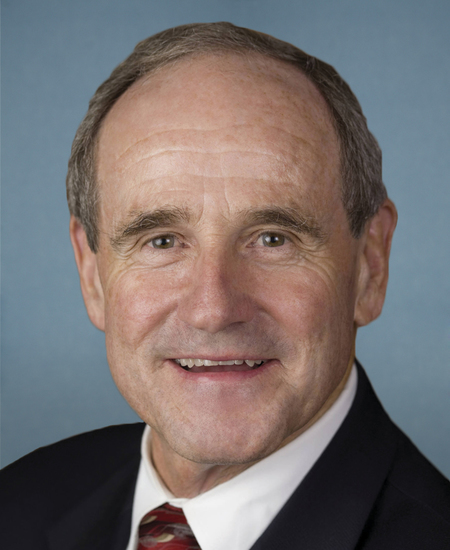
Sen. James E. Risch
Sponsored bills
This concurrent resolution expresses the sense of Congress that a carbon tax would be detrimental to families and businesses and would severely harm the economic and national security of the country.
Maddy summarySJRES 42 is a resolution seeking congressional disapproval of a Food and Nutrition Service (FNS) rule that updated how discrimination complaints are processed in federal food assistance programs (like SNAP). The rule applied the Supreme Court's Bostock v. Clayton County decision - which prohibits workplace discrimination based on sexual orientation or gender identity - to the handling of program discrimination complaints. If passed, this resolution would block the FNS rule from taking effect, preventing it from changing existing complaint procedures. The measure uses the Congressional Review Act process to overturn the rule without altering program benefits or eligibility.
Maddy summarySRES 434 is a non-binding Senate resolution commemorating the 200th anniversary of the Monroe Doctrine, first articulated by President James Monroe in 1823. It does not create new laws or affect any specific groups; instead, it formally recognizes the historical significance of the doctrine's principles. The resolution reasserts the U.S. position opposing external powers extending "malign influence" in the Western Hemisphere, citing recent U.S. military posture statements about Chinese and Russian activities in Latin America and the Caribbean. It serves as a symbolic reaffirmation of the doctrine's enduring influence on U.S. foreign policy, without implementing any concrete policy changes.
Maddy summarySRES 435 is a Senate resolution designating October 30 through November 4, 2023, as "National Veterans Small Business Week." It formally recognizes the contributions of veterans who own small businesses, highlighting their role in the economy (over 1.7 million veteran-owned businesses employing 2.9 million people). The resolution expresses support for veterans' entrepreneurship, encourages policies reducing regulatory burdens for small businesses, and thanks veterans for their service through business ownership. This is a symbolic recognition with no new legal requirements or funding.
This resolution recognizes October 2023 as National Women's Small Business Month, honoring the role of women small business owners and entrepreneurs and encouraging the support and creation of women-owned small businesses.
Maddy summaryThe Don’t DO IT Act would require the federal government to deny right-of-way applications for solar and wind energy projects on federal land if a state legislature has passed specific legislation disapproving that project. The Secretary of the Interior must deny the application upon receiving notice from the state Governor that the state legislature enacted disapproval legislation. This directly affects renewable energy developers seeking federal land permits and grants states authority to block such projects within their borders. The bill does not change federal approval standards for other projects or mandate state disapproval - it only triggers a federal denial when a state specifically disapproves a project.
Maddy summaryThis bill amends federal funding rules to support stillbirth prevention programs. It allows funds under the Social Security Act to cover evidence-based activities like tracking fetal movements, improving birth timing for high-risk pregnancies, smoking cessation support, and community home visits. The bill directly affects pregnant individuals, particularly those in higher-risk groups identified in the findings (such as Black mothers, those with medical conditions like diabetes, or those aged 35+). Key provisions update funding language to explicitly include stillbirth prevention research and programs, aiming to address disparities where stillbirth rates are significantly higher among certain demographics. The bill focuses on concrete policy changes to expand access to proven prevention strategies.
Maddy summaryThe FIRESHEDS Act establishes a new framework for managing wildfire risk on federal lands by creating "fireshed management areas" through agreements between federal agencies and state governors. These areas, designated in the top 10% of wildfire exposure risk, allow faster implementation of projects like fuel reduction, prescribed burns, and fire breaks without full environmental reviews under NEPA. The law prioritizes protecting communities, infrastructure, and watersheds while requiring annual progress reports to Congress. It applies to National Forest System lands and public lands, with specific exclusions for wilderness areas and roadless zones.
Maddy summaryThis bill requires the U.S. Forest Service to increase transparency for its Legacy Road and Trail Remediation Program. It mandates that the agency annually publish regionally (across the Forest Service's 9 regions) a detailed list of projects considered for funding, including project descriptions, public comments received, project rankings, and proposed outcomes. The Forest Service must also solicit and consider public input during project selection by publishing project lists and accepting comments. This directly affects the Forest Service’s funding decisions and provides the public with clearer access to how remediation projects are chosen and prioritized.