Maddy summaryHR 1321, the "More Homes on the Market Act," increases the tax exclusion for gains from selling a primary residence. It doubles the exclusion amount from $250,000 to $500,000 for single filers and from $500,000 to $1,000,000 for married couples filing jointly. The bill also adds automatic annual inflation adjustments to these amounts starting in 2023, ensuring the exclusion keeps pace with rising costs. This change directly affects homeowners who sell their primary residence and meet the ownership and use requirements under current tax law. The policy modifies the Internal Revenue Code to make selling a home less financially burdensome for qualifying homeowners.
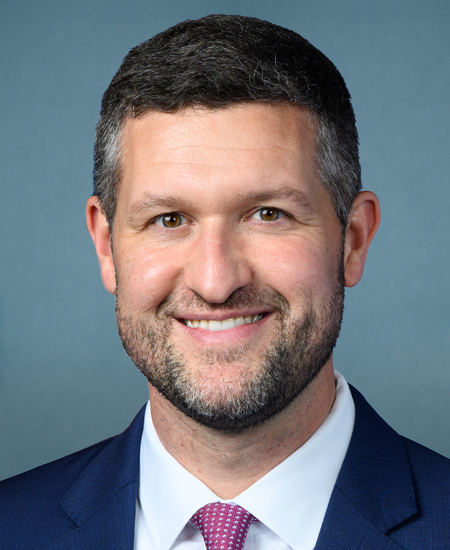
Rep. Patrick Ryan
Sponsored bills
Maddy summaryThe Military Spouse Hiring Act expands the Work Opportunity Tax Credit to include military spouses. Employers who hire a spouse of an active-duty military member - certified by a local agency as meeting eligibility requirements on the hiring date - can claim this tax credit. The credit reduces the employer's federal tax liability for hiring such individuals. This provision applies to new hires after the bill's enactment date.
Maddy summaryThe DERAIL Act requires the Secretary of Transportation to update federal regulations within 90 days to define a "high-hazard flammable train" as any train carrying at least one tank car of flammable liquid or gas, plus additional safety-related materials. Railroad carriers must report within 24 hours after a derailment involving toxic-by-inhalation materials to the National Response Center, state officials, local authorities, and Tribal governments. The report must specify all toxic-by-inhalation materials on the train. This bill directly affects railroad companies and the Department of Transportation by establishing new safety reporting standards for hazardous material incidents.
Maddy summaryThis bill establishes pay equity for federal firefighters by adjusting how their retirement benefits are calculated and setting a standard workweek. It requires retirement annuities to include overtime hours worked as part of a firefighter's regular schedule (e.g., overtime during standard shifts), rather than excluding them. The bill also mandates a maximum 60-hour regular workweek for federal firefighters, set by the Office of Personnel Management within one year of enactment. These changes directly affect federal firefighters, aiming to improve pay comparability with municipal firefighters and other federal employees while supporting recruitment and retention.
Maddy summaryThe Richard L. Trumka Protecting the Right to Organize Act of 2023 strengthens workers' rights to organize unions by making it harder for employers to interfere with organizing efforts. Key provisions include changing the definition of "employee" to make it more difficult to classify workers as independent contractors, prohibiting employers from threatening to permanently replace striking workers, and requiring employers to provide voter lists for union elections. The bill also creates a new electronic voting system for union elections, strengthens whistleblower protections for workers reporting labor violations, and increases penalties for unfair labor practices. These changes directly affect workers seeking to form unions, employers who may interfere with organizing, and labor organizations. The bill aims to make it easier for workers to exercise their right to collective bargaining under the National Labor Relations Act.
Maddy summaryHR 1202, the REDI Act, amends the Higher Education Act to allow medical and dental residents to temporarily pause federal student loan payments without accruing interest during their internship or residency programs. This directly affects borrowers with federal student loans who are enrolled in qualifying medical or dental training programs. The key provision adds a new rule (paragraph 6) ensuring these borrowers qualify for a deferment period where they don't pay principal and interest accrues at 0%. The change modifies existing loan rules to explicitly include medical/dental residents under the "in-school" deferment category. This policy change provides immediate financial relief during a critical training phase for healthcare professionals.
This bill authorizes the Department of Agriculture to waive the matching funds requirement for grants under the specialty crop research initiative. Currently, entities that receive grants under the initiative must provide nonfederal matching funds (including funds from an agricultural promotion, research, and information program) equal to not less than the amount of the grant.
Maddy summaryThe RISEE Act of 2023 creates a National Oceans and Coastal Security Fund to support coastal communities and ecosystems. It allocates 37.5% of offshore wind revenue directly to eligible coastal states using a formula based on tidal shoreline length, coastal population density, and distance from offshore wind projects. States must use these funds for coastal protection, habitat restoration, infrastructure, or fisheries research, with strict annual reporting requirements to the Department of the Interior. The bill prohibits using these funds for litigation or creating marine monuments, ensuring resources directly support coastal community needs.
Maddy summaryThis bill directs the Joint Committee of Congress on the Library to obtain a statue of Shirley Chisholm and place it permanently in the U.S. Capitol within two years of enactment. It authorizes the Architect of the Capitol to handle the agreement for the statue under the Committee's terms, with necessary funding approved as needed. The bill does not change laws or affect specific people or groups; it is a procedural measure to honor Shirley Chisholm, the first Black woman elected to Congress, through a permanent Capitol display.
Maddy summaryHR 1088, the Shirley Chisholm Congressional Gold Medal Act, authorizes a posthumous Congressional Gold Medal to honor Congresswoman Shirley Chisholm, the first African-American woman elected to Congress (1968) and the first Black candidate for a major party's presidential nomination (1972). The bill directs the Treasury Secretary to design and strike a gold medal featuring Chisholm's image, which will be presented by Congress and then permanently displayed at the Smithsonian Institution. Duplicate bronze medals may be sold to the public to cover production costs, with proceeds deposited into the U.S. Mint fund. This bill commemorates Chisholm's legacy and achievements without creating new laws or affecting any current policies.