Maddy summaryThis bill proposes a constitutional amendment to allow states to quickly fill vacancies in the U.S. House of Representatives caused by a Representative's death. Under the plan, each elected Representative must submit a list of at least five qualified backup candidates before taking office. If a Representative dies, the state governor would choose one of these designees within ten days to serve in the seat until a special election is held. The amendment aims to maintain congressional continuity by ensuring immediate replacement rather than leaving the seat vacant for months.
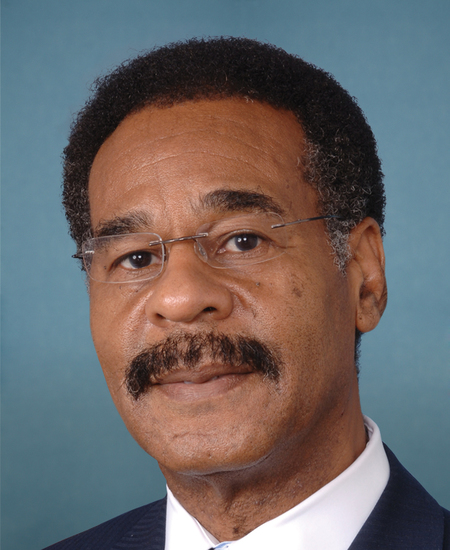
Rep. Emanuel Cleaver
Sponsored bills
Maddy summaryThe Living Wage for Federal Contractors Act mandates that employees working on federal contracts receive a basic hourly wage that starts at $17.00 and increases annually to $25.00, with future adjustments tied to inflation. This requirement applies to all workers performing services or labor on federal contracts, including those at any subcontracting tier, while offering a slightly lower initial rate for tipped employees. To enforce compliance, the bill allows the government to terminate contracts for wage violations, requires contractors to repay double the amount of unpaid wages, and prohibits future contract awards to firms repeatedly found in violation. Additionally, the legislation updates existing wage standards under the Davis-Bacon and Service Contract Acts to ensure they align with the new federal living wage floor.
Maddy summaryThis bill, titled the Encouraging Public Service in Our National Parks and Public Land Act, requires the Secretary of the Interior to make specific federal recreational lands and waters free of admission fees on designated dates throughout the year. The key provision mandates that these free access days include Martin Luther King Jr. Day, the first day of National Park Week, Juneteenth, Great American Outdoors Day, National Public Lands Day, and Veterans Day. Additionally, the legislation grants the Secretary the authority to establish extra fee-free days beyond those listed. These changes directly affect visitors to national parks and other federal recreational areas by providing them with guaranteed free entry on these holidays and observances.
Maddy summaryThe Protect Local Funding Act prohibits federal agencies from finalizing, implementing, or enforcing a specific proposed rule regarding federal financial assistance scheduled for publication in May 2026. This legislation directly affects the Office of Management and Budget and other federal agencies by legally blocking them from acting on that particular regulation. By preventing the enforcement of this rule, the bill aims to stop a specific administrative action that could impact how federal funds are distributed. The measure does not alter existing funding programs but rather serves as a procedural barrier to a future regulatory change.
Maddy summaryThe USDA Field Office Stability Act prohibits the Secretary of Agriculture from closing or relocating specific county and field offices of the Natural Resources Conservation Service, Farm Service Agency, and Rural Development. This restriction applies unless an office is located within 20 miles of another office in the same state or is moved for routine leasing purposes within the same county. Additionally, the bill requires these agencies to maintain sufficient staffing levels to ensure their local service centers remain open and accessible to the public during standard business hours.
Maddy summaryThis resolution honors the efforts of Kansas City, Missouri, Kansas, and surrounding communities in preparing for the 2026 World Cup. It recognizes the work of local residents, first responders, public works officials, and volunteers who helped create a safe and accessible environment for the event. The measure also affirms a commitment to hosting global events in cities of various sizes rather than only in large metropolitan areas.
Maddy summaryThis resolution commemorates the 10th anniversary of the 2016 Pulse nightclub shooting in Orlando, Florida, which was an act of domestic terrorism. It formally honors the names of the victims and expresses condolences to their families while acknowledging the bravery of law enforcement and emergency responders who responded to the tragedy. The document also reaffirms support for the LGBTQ+ community and calls for continued efforts to improve gun safety and mental health legislation.
Maddy summaryThis resolution honors the life, military service, and congressional career of the late Representative Charles Bernard Rangel, specifically recognizing his contributions to the alliance between the United States and South Korea. The measure formally acknowledges his bravery during the Korean War, noting his Purple Heart and Bronze Star Medal awards for leading soldiers out of an encirclement, and highlights his decades of work strengthening U.S.-South Korea ties through trade policy and veteran advocacy. Additionally, the text expresses gratitude for a similar resolution passed by the South Korean National Assembly and reaffirms the House's commitment to honoring Korean War veterans and the enduring bilateral relationship.
Maddy summaryThis resolution expresses support for designating July 3 through July 10, 2026, as "National Extreme Heat Awareness Week" to educate the public on the dangers of extreme heat. The bill highlights how high temperatures threaten public safety, infrastructure, and agriculture, noting that heat is the leading weather-related cause of death in the United States. It encourages federal, state, and private entities to hold ceremonies and activities during this week to raise awareness about preventing heat-related illnesses and promoting community preparedness.
Maddy summaryThe Keep Public Funds in Public Schools Act of 2026 eliminates a federal tax credit that allowed parents to deduct contributions to scholarship granting organizations from their income. By removing these specific tax breaks, the bill prevents the use of public tax dollars to support private school vouchers and scholarship programs. This change directly affects families who currently rely on these tax incentives to fund education outside the public school system. The provisions take effect for taxable years beginning after December 31, 2026.