

Maddy summaryThis House resolution marks the 25th anniversary of the September 11, 2001 terrorist attacks by formally honoring the memory of the nearly 3,000 victims and recognizing the sacrifices made by first responders, military personnel, and the passengers of United Airlines Flight 93. The bill acknowledges the ongoing health challenges faced by survivors and responders, highlighting the role of the World Trade Center Health Program in providing long-term medical support. It also credits charitable organizations and community groups that have continued to assist victims' families and veterans over the past two decades. Finally, the resolution urges the American public to observe the anniversary with ceremonies and reaffirms Congress's commitment to remembering the events and lessons of that day.
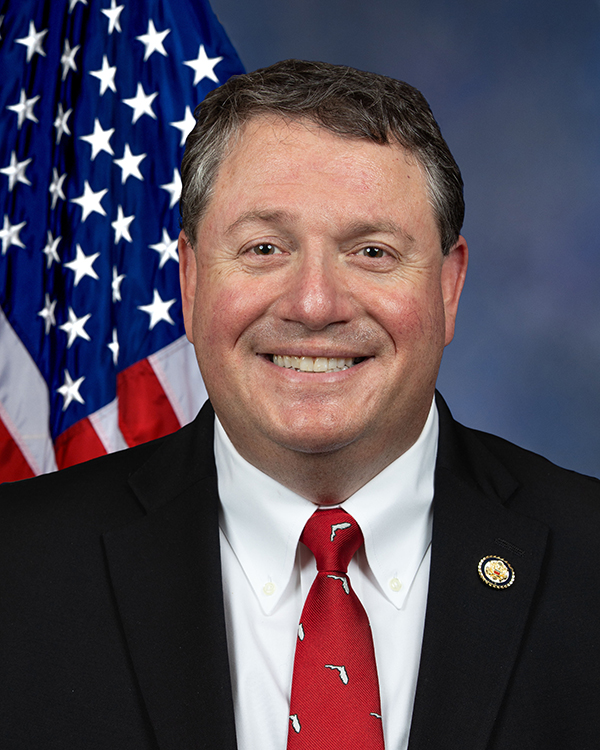
Rep. Randy Fine
Sponsored bills
Maddy summaryThe End Gas Station Heroin Act amends the Controlled Substances Act to place 7-hydroxymitragynine and mitragynine pseudoindoxyl in Schedule I, while exempting naturally occurring kratom products that meet specific low-concentration limits. The bill also creates a new enforcement mechanism for emerging synthetic opioids by treating them as Schedule I controlled substances when they are manufactured or distributed commercially. This provision applies to synthetic opioids that are more potent than morphine and not approved for medical use, but it explicitly prohibits criminal or civil penalties for simple possession or personal use.
Maddy summaryThe Ending Restaurant Purchases with SNAP Act of 2026 would prohibit the use of Supplemental Nutrition Assistance Program (SNAP) benefits to buy meals at restaurants and other private food service establishments. The bill achieves this by removing specific legal provisions from the Food and Nutrition Act of 2008 that currently allow states to run optional restaurant programs for eligible groups such as the elderly, disabled, and homeless individuals. If enacted, these changes would take effect 180 days after the date of enactment, directly affecting SNAP recipients who rely on these state-level options for dining out.
Maddy summaryH.Res. 1497 is a House resolution that commemorates the fifth anniversary of the Abbey Gate bombing, in which 13 U.S. servicemembers were killed during the withdrawal from Afghanistan. The bill lists the names of the fallen soldiers and formally condemns the Biden-Harris administration for what it describes as dereliction of duty and the forfeiture of military property to the Taliban. It asserts that the withdrawal was a disastrous failure that ignored security warnings and left Americans at risk, while also criticizing the lack of accountability from officials involved in the decision-making process.
Maddy summaryThe Foreign Funding Transparency Act requires certain large tax-exempt organizations to publicly report the total amount of money they receive from foreign nationals. Specifically, organizations with annual gross receipts of at least $200,000 or assets of at least $500,000 must disclose these contributions on their annual tax returns. The report must break down the funds by the specific foreign country of the donor, based on the donor's citizenship or the country where the donor was created or organized. This reporting obligation applies to returns filed for taxable years beginning one year after the law is enacted.
Maddy summaryThe Stopping Foreign Influence in Elections Act of 2026 imposes new financial penalties on specific tax-exempt organizations that accept money from foreign nationals and subsequently donate to political committees. This law directly affects larger non-profits with significant assets or revenue, requiring them to pay fines ranging from 100% to 200% of the donation amount if they fail to screen donors properly. The bill also mandates that organizations making repeated violations lose their tax-exempt status for two years. These rules apply to contributions made after one year following the bill's enactment.
Maddy summaryHR 2555, the Freedom of Association in Higher Education Act of 2025, protects students who join or form single-sex social organizations (like fraternities or sororities) at colleges. It prohibits colleges receiving federal funds from taking negative actions against these students or organizations solely because they limit membership to one sex - such as denying housing, financial aid, leadership roles, or recognition. The bill ensures students can join such groups without coercion and stops colleges from imposing unfair recruitment rules on single-sex organizations compared to others. It does not require colleges to recognize single-sex groups, allow organizations to set their own membership rules, or override Title IX protections.
Maddy summaryThe No Antisemitism in Education Act of 2026 requires schools and universities receiving federal funds to treat antisemitism with the same seriousness as other forms of discrimination prohibited by Title VI of the Civil Rights Act. Under this law, institutions must use the official definition of antisemitism found in a prior presidential executive order to investigate complaints and enforce their own policies. The bill explicitly states that these requirements do not violate free speech rights or override existing state laws, ensuring that Jewish students and staff are protected from harassment and exclusion on campus.
Maddy summaryThis bill, known as the Ban Birth Tourism Act of 2026, aims to prevent non-immigrants from entering the United States specifically to give birth and secure citizenship for their children. It directly affects foreign nationals who plan to visit the U.S. with the primary goal of having a child there to obtain a U.S. passport. Under the new rules, immigration officials can deny entry to anyone suspected of engaging in birth tourism or deport those who have already entered for that purpose. The law defines birth tourism as entering the country with the main intent of obtaining citizenship for a child or being likely to give birth within 10 months of arrival to achieve that status. Decisions on whether someone is engaging in birth tourism will be based on the reasonable judgment of government officials such as those at the Department of Homeland Security.
Maddy summaryThis bill prohibits the United States from providing any voluntary or assessed funding to the United Nations Relief and Works Agency for Palestine Refugees in the Near East. The restriction applies directly to the U.S. government's financial contributions to the agency, effectively cutting off official U.S. support. However, the law allows for humanitarian aid to individuals who receive help from UNRWA if that aid is delivered through other organizations that do not promote violence, terrorism, or antisemitism. Ultimately, the legislation mandates a complete halt to direct U.S. funding for UNRWA while permitting indirect assistance under specific conditions.