Issue · Technology

Technology

Every technology bill, vote, and legislator stance in Tennessee, automatically classified by Maddy, our AI policy reader.

Total bills
156
119th Congress
Top supporter
Steve Cohen
75% support rate
Top opponent
Andrew Ogles
22% support rate
Ranked legislators
7
2 support · 5 oppose
Key legislators

Who's moving technology in Tennessee

Legislators moving technology in Tennessee
Legislator Party Stance Support rate Votes
Steve Cohen
Steve Cohen House · District 9
D
Support
75% 253
Matt Van Epps
Matt Van Epps House · District 7
R
Mixed
56% 151
Andrew Ogles
Andrew Ogles House · District 5
R
Oppose
22% 243
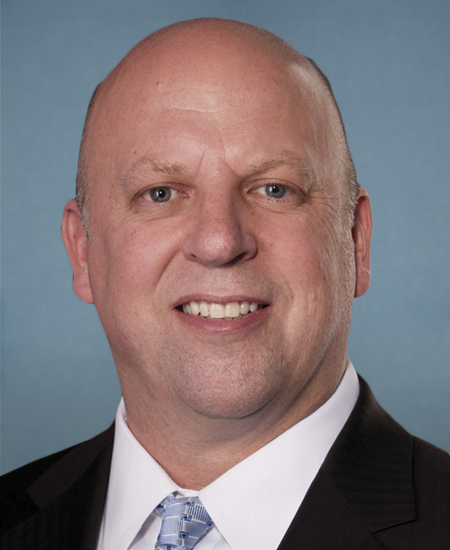
Scott DesJarlais
Scott DesJarlais House · District 4
R
Oppose
25% 255
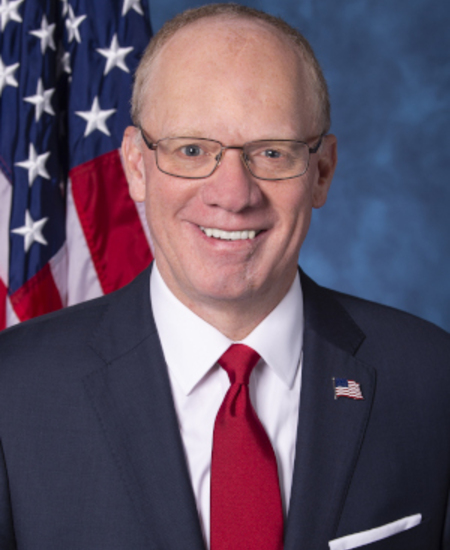
John W. Rose
John W. Rose House · District 6
R
Oppose
29% 250
Marsha Blackburn
Marsha Blackburn Senate
R
Oppose
30% 208
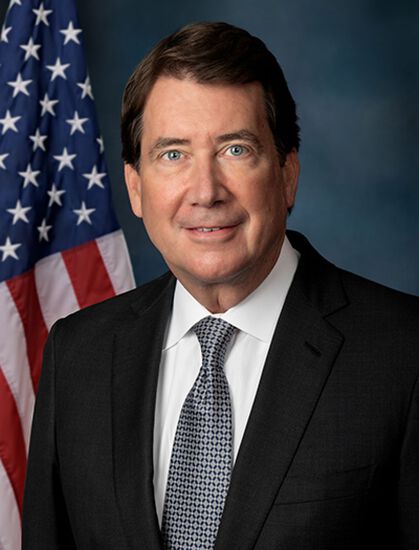
Bill Hagerty
Bill Hagerty Senate
R
Oppose
31% 227
Showing 1–10 of 156 bills

All technology bills

in committee · United States · House Sep 8, 2026

HR 10309: HOMEFRONT Act of 2026

The HOMEFRONT Act of 2026 prohibits U.S. courts from recognizing or enforcing foreign judgments based on censorship laws if the underlying conduct would be protected by the First Amendment in the United States. The bill places the burden of proof on the party seeking enforcement to demonstrate that the foreign court's jurisdiction and the specific judgment comply with U.S. constitutional standards and Section 230 of the Communications Act. It also bars federal, state, and local government officials from assisting foreign governments in enforcing such laws against U.S. persons and prevents the extradition of individuals for speech protected domestically. Additionally, the legislation grants affected individuals a private right of action to seek damages and requires the Attorney General to submit annual reports on foreign censorship impacts while directing the Federal Trade Commission to maintain a database of targeted speech instances.
in committee · United States · Senate Aug 5, 2026

S 5252: BLADE Act

The BLADE Act directs the Department of Commerce to identify foreign entities, particularly those from China and Russia, that are conducting unauthorized "model extraction attacks" to steal capabilities from U.S. closed-source artificial intelligence models. The bill requires the government to publish a public list of these attackers and mandates their addition to the Entity List, which restricts their access to certain technologies and exports. Additionally, it authorizes the President to impose financial sanctions on identified individuals and entities, with specific exceptions for humanitarian assistance and national security activities.
in committee · United States · Senate Aug 4, 2026

S 5225: K–12 AI Literacy and Readiness Act of 2026

The K-12 AI Literacy and Readiness Act of 2026 allows federal education funds to be used for teaching artificial intelligence to students and training educators on how to use it responsibly. By amending the Elementary and Secondary Education Act, the bill permits schools to spend money on AI curricula that focus on safe and effective usage, as well as professional development for teachers and staff. This change directly affects state and local school districts by expanding the list of allowable expenses to include specific instruction on AI tools and the skills needed to teach them. The legislation defines artificial intelligence using the same standard established in the National Artificial Intelligence Initiative Act of 2020 to ensure consistency across programs.
in committee · United States · Senate Jul 23, 2026

S 5111: Strengthening EFIN Confirmation for User Reliability and Electronic (SECURE) Tax Filing Act

The SECURE Tax Filing Act requires the Treasury Department to validate electronic filing identification numbers before they are used to submit tax returns. This validation system will confirm that an ID is active and that the person using it is authorized to file on behalf of taxpayers. The law mandates that tax preparation software must check this status in real-time before allowing any electronic filing to occur. Additionally, the Treasury must create an implementation plan within 180 days and submit regular reports on the system's performance and security. These changes directly affect tax professionals, software developers, and taxpayers who rely on electronic filing services.
in committee · United States · Senate Jul 23, 2026

S 5098: Enhancing K–12 Cybersecurity Act

The Enhancing K-12 Cybersecurity Act creates a new public website and database to help schools and school districts find cybersecurity tools, training, and federal funding opportunities. It also establishes a voluntary registry where schools can report cyber incidents to help identify trends and improve national monitoring. Additionally, the bill authorizes a program to deploy specific cybersecurity strategies and services to protect school systems from threats like ransomware. The Director of the Cybersecurity and Infrastructure Security Agency is tasked with running these initiatives in partnership with various government agencies and school leaders. Congress has authorized $10 million for each of fiscal years 2027 and 2028 to fund these efforts.
in committee · United States · House Jul 15, 2026

HR 9697: Cyber Letters of Marque and Reprisal Act

This bill, known as the Cyber Letters of Marque and Reprisal Act, authorizes the President to issue official commissions to private individuals or companies, allowing them to conduct specific cyber operations against foreign entities identified as cyberthreats. Under these commissions, private actors could perform tasks such as collecting intelligence, seizing stolen digital assets, and disrupting malicious infrastructure outside U.S. borders, provided they do not target American citizens or organizations. To participate, recipients must post a security bond, maintain detailed activity logs for at least five years, and may be required to forfeit a portion of recovered funds to support a bounty program for future operations. The legislation also grants holders immunity from lawsuits for actions explicitly authorized by their commission and establishes a framework for awarding bounties to both commissioned agents and private informants who assist in recovering funds from cybercriminals.
in committee · United States · Senate Jul 13, 2026

S 4950: ITS Codification Act

The Institute for Telecommunication Sciences Codification Act formally establishes the Institute for Telecommunication Sciences (ITS) as a test center within the National Telecommunications and Information Administration. This new entity will serve as a laboratory for the executive branch to study radio frequency emissions, analyze spectrum sharing between federal and non-federal users, and test technologies that enhance electromagnetic spectrum access. Additionally, the bill requires the ITS to launch an initiative focused on developing emergency communication and tracking technologies for locating individuals in confined or shielded environments where standard radio signals fail. To support this goal, the institute will collaborate with private sector partners and other federal agencies to assess needs and create technical standards, with a requirement to submit a progress report to Congress within 18 months of the law's enactment.
Sub-Topics Telecommunications
in committee · United States · Senate Jun 24, 2026

S 4882: ICTS Supply Chain Security Act of 2026

The ICTS Supply Chain Security Act of 2026 establishes a new Assistant Secretary of Commerce and an Office within the Bureau of Industry and Security to oversee the security of information and communications technology supply chains. This new office is tasked with administering regulations that prohibit U.S. persons from acquiring or using specific hardware and software designed or manufactured by entities controlled by designated countries of concern, such as China, Russia, and Iran, if those items pose risks to national security or critical infrastructure. The law includes exceptions for open-source software and expressive materials like news and media, while also providing the Secretary of Commerce with the authority to issue licenses or impose mitigation measures for certain transactions. Penalties for violating these prohibitions include fines of up to $1.5 million or five times the transaction value, and potential imprisonment of up to 20 years for willful violations. The Act also mandates annual reporting to Congress and sets a five-year expiration date for the new prohibitions.
in committee · United States · Senate Jul 27, 2026

S 4709: UNLOCK AUKUS Act

The UNLOCK AUKUS Act amends federal export control laws to allow the transfer of specific defense articles and services to partners under the AUKUS security pact. By modifying the Arms Export Control Act, the bill removes certain restrictions that previously limited what technology and equipment could be shared with these allied nations. This change directly impacts the U.S. Department of State and the Department of Defense, enabling them to facilitate the collaboration required for next-generation nuclear-powered submarine programs. The legislation does not alter the core requirements for these transfers but adjusts the regulatory framework to support the partnership's goals.
in committee · United States · House Jun 11, 2026

HR 9307: Web of Biological Data Act of 2026

The Web of Biological Data Act of 2026 directs the Department of Energy to create a centralized online platform called the Web of Biological Data to help researchers access and analyze biological information using advanced tools like artificial intelligence. This system will serve as a single entry point for federally funded data, featuring strict cybersecurity measures and tiered access controls to protect sensitive information. The bill establishes a phased rollout, beginning with a pilot version within two years that focuses on specific data types and user-friendly design, followed by a full expansion five years later that includes broader data compatibility and bioinformatic tools. To ensure the project's success, the legislation creates an advisory board with members from industry, academia, and government, and mandates regular reports to Congress on progress and security assessments. Funding is authorized to support the initial development, testing, and long-term maintenance of the platform while preserving existing privacy and ethical protections for biological data.
Showing 1 to 10 of 156 bills
1 2 3 16 Next