

Maddy summaryThis bill creates a program to correct burial markers for American-Jewish servicemembers who died in World War I or II and were mistakenly buried under Latin crosses (a Christian symbol) in overseas U.S. military cemeteries. The American Battle Monuments Commission will run this 10-year program, authorizing $500,000 annually to contract with qualified nonprofit organizations to identify affected veterans and contact their families. It directly affects Jewish veterans buried overseas with incorrect markers and their descendants, ensuring their religious heritage is properly recognized. The program requires nonprofits to verify burial records and facilitate marker corrections, with priority given to organizations experienced in Jewish military history.
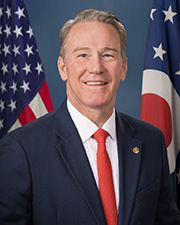
Sen. Jon Husted
Sponsored bills
Maddy summaryThe SIMS Act prohibits companies from creating or operating chatbots that simulate minors engaging in sexually explicit conduct or conversations. This law applies to any person offering such software in the United States and defines a minor as anyone under 18 years old. While the ban covers simulations of real or fictional minors, it includes specific exemptions for law enforcement agencies investigating child sexual exploitation. Violations can result in criminal fines of up to $100,000 or civil penalties, and the Attorney General is required to submit annual reports on enforcement actions and investigations related to the new rules.
Maddy summaryThe Upward Mobility Act of 2026 would establish a 5-year pilot program allowing up to 5 states to consolidate multiple antipoverty programs (including nutrition assistance, housing subsidies, child care, and employment services) into a single grant. The program aims to reduce "benefit cliffs" by limiting how much direct assistance benefits decrease as people earn more, measured by a "Marginal Effective Tax Rate." States would apply for the program, and the Secretary would approve based on how well the plan would improve employment outcomes and reduce reliance on benefits. The pilot would require states to measure specific outcomes like employment rates, earnings, and reduction in per-capita direct assistance to determine effectiveness.
Maddy summaryThe Safer Choice Program Authorization Act of 2026 authorizes the Environmental Protection Agency to continue its voluntary Safer Choice program, which helps consumers and businesses identify products containing safer chemical ingredients. The bill establishes specific criteria for certification, requiring that products be safe for human health and the environment while maintaining performance, and mandates full disclosure of intentionally added ingredients. To support these evaluations, the legislation creates a framework for using independent third-party experts to review complex products while protecting confidential business information. Additionally, the act requires the EPA to publish annual reports on program progress and maintain a public database of certified products, with funding authorized through fiscal year 2034.
Maddy summaryThis Senate resolution honors the life and legacy of Donald W. Riegle, Jr., a former U.S. Senator from Michigan who passed away in April 2026. The bill formally acknowledges his nearly three decades of public service, including his roles as a Representative and Senator, and highlights his significant contributions to legislation on banking, housing, and veterans' health. It also expresses the Senate's condolences to his family and directs officials to share the resolution with the House of Representatives and send a copy to Riegle's family. Finally, the Senate will stand in adjournment as a mark of respect for the former senator when the session concludes.
Maddy summaryThe CONNECT Act amends the John H. Chafee Foster Care Program to specifically support older youth who have been in foster care at age 14 or older. It requires the federal government to issue guidance within a year that outlines how states and tribes can use federal funds to help these young people build lasting relationships with mentors, peers, and family members. The bill also mandates that agencies provide written information about available services and ensure youth participate in creating their own permanency plans. Additionally, it sets standards for documenting these support activities and establishing minimum training requirements for mentors and peer supporters.
Maddy summaryThis resolution designates the week of May 3 through May 9, 2026, as Children's Mental Health Awareness Week to highlight mental health challenges faced by youth. It aims to raise public awareness about the importance of early detection, treatment, and prevention strategies while encouraging communities to reduce stigma and participate in related activities. The bill also recognizes factors like outdoor recreation, healthy diet, socialization, and sleep as vital to children's mental well-being and calls for mental health to be treated as a national priority.
Maddy summaryThis resolution honors the life and legacy of John Seymour, a late U.S. Senator from California, by formally acknowledging his public service and contributions. The document details his career highlights, including his roles as Mayor of Anaheim, his work in securing the relocation of the Los Angeles Rams, and his legislative achievements such as passing a major transportation bill. It also lists his committee assignments and advocacy for issues like special education, women's rights, and environmental protection. Finally, the resolution requests that the Senate Secretary communicate this tribute to the House of Representatives and send a copy to Seymour's family.
Maddy summaryThe Jewish American Security Act aims to combat antisemitism by strengthening protections for Jewish students, securing Jewish communities, and increasing transparency regarding online hate speech. To support Jewish students, the bill requires schools receiving federal funds to designate coordinators for civil rights complaints, issue annual reminders about anti-discrimination policies, and publish detailed data on bias-related incidents. For community safety, the legislation increases funding for security grants for religious institutions and mandates joint annual threat assessments from federal agencies to track domestic and transnational antisemitic violence. Additionally, the act requires major online platforms to submit regular transparency reports detailing how they detect, remove, and moderate antisemitic content on their sites.
Maddy summaryThis Senate resolution designates May 2026 as National Foster Care Month to raise awareness about the challenges faced by the approximately 331,747 children currently in the U.S. foster care system. The bill highlights key issues such as high rates of placement instability, educational disruptions, and the specific needs of youth aging out of care without permanent family connections. While the measure does not create new laws or funding, it formally encourages Congress to implement policies that support family reunification, prevent unnecessary entries into the system, and improve outcomes for foster youth. Additionally, the resolution establishes May 31, 2026, as National Foster Parent Appreciation Day to honor the caregivers and social workers who support these children.