

Safety, Accountability, and Federal Enforcement of Limos Act of 2021 or the SAFE Limos Act This bill sets out requirements to improve the safety of limousines. Within two years of the bill's enactment, the Department of Transportation (DOT) must apply to newly manufactured limousines specified motor vehicle safety standards related to the installation of seat belts and other occupant crash protections. In addition, DOT must report on the feasibility, benefits, and costs of retrofitting limousines to meet those standards. DOT must also develop additional motor vehicle safety standards to improve limousine safety. This includes standards related to (1) side impact protection, roof crush resistance, and other aspects of crashworthiness; (2) evacuation in the event the exit in the passenger compartment is blocked; and (3) the use of event data recorders. Additionally, the bill requires that individuals who remodel new limousines submit to DOT and annually update a plan for mitigating limousine safety risks. The plan must include, among other topics, verification that the remodeled limousines meet applicable safety standards. Further, individuals who modify used vehicles into limousines must certify that the modified vehicles meet such standards. The bill also requires limousine operators to disclose the date of, results of, and any corrective action needed to pass the most recent vehicle inspection. The Federal Trade Commissions shall enforce the disclosure requirements.
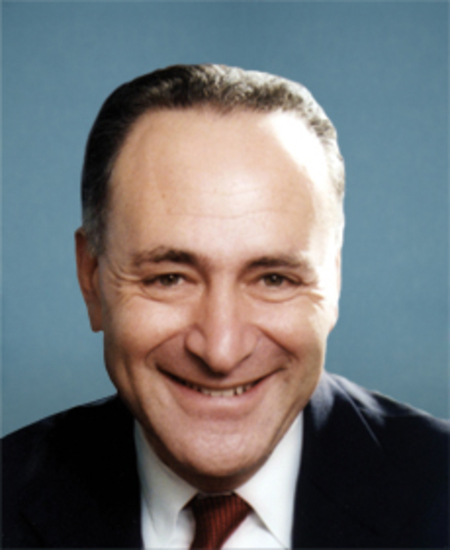
Sen. Charles E. Schumer
Sponsored bills
Home Lead Safety Tax Credit Act of 2021 This bill allows owners of eligible dwelling units a new tax credit through 2024 for 50% of the lead hazard reduction activity costs for each such unit, up to an aggregate of $4,000 per unit. An eligible dwelling unit is any unit located in the United States that was placed in service before 1978. The bill (1) specifies the types of lead hazard reduction activity costs eligible for the credit, including risk assessment and abatement costs; and (2) limits the amount of the credit in any taxable year to $3,000 for specified abatement measures and $1,000 for interim lead control measures.
Fair Care for Vietnam Veterans Act of 2021 This bill provides a presumption of service-connection for hypertension and monoclonal gammopathy of undetermined significance (MGUS) for veterans who served in Vietnam between January 9, 1962, and May 7, 1975. Under a presumption of service-connection, specific conditions diagnosed in certain veterans are presumed to have been caused by the circumstances of their military service. Health care benefits and disability compensation may then be awarded.
This resolution makes temporary appointments to the Senate Select Committee on Ethics with respect to specified matters before the committee. Specifically, the bill replaces Senator Chris Coons and Senator James Lankford with Senator Ben Ray Luján and Senator John Boozman with respect to these matters, and it provides that Senator Brian Schatz and Senator James Risch shall act as chairman and vice chairman, respectively, for these matters only.
Lymphedema Treatment Act This bill provides for Medicare coverage of lymphedema compression treatment items. Specifically, the bill provides for coverage of (1) standard and custom fitted gradient compression garments that are prescribed by a physician or other specified health care professional to treat lymphedema, and (2) other devices determined to be effective in the prevention or treatment of lymphedema.
Child Care for Working Families Act This bill provides funds and otherwise revises certain child care and early learning programs for low- to moderate-income families. Specifically, the bill provides funds for the Child Care and Development Block Grant program and reestablishes it as a child care and development assistance program. The bill also allocates program funds for states to provide services and supports to infants, toddlers, and children with disabilities. Further, the bill revises the program to require each state to create a tiered and transparent system for measuring the quality of child care providers, which must include evidence-based standards and payment rates that are based on a certain cost estimation model; ensure that copayments are based on a sliding scale and that no family receiving assistance pays more than 7% of its household income on child care; and use quality child care amounts for certain activities, such as increasing the supply of child care providers. The bill also provides funds and establishes grants for states to create preschool programs for low- to moderate-income children between the ages of three and five years. The Department of Health and Human Services (HHS) must make grants to Head Start agencies to provide children with access to full-school-year and full-school-day services, provide access to additional service hours for migrant and seasonal agencies, or enhance the quality of existing services. Finally, the bill requires, and provides funds for, HHS to assist Head Start agencies with ensuring their teachers and staff are paid a living wage.
Clean Energy for America Act This bill provides tax incentives for investment in clean electricity, clean transportation, clean fuel production, energy efficiency, and sets forth workforce development requirements for the energy sector. The bill also terminates certain fossil fuel provisions and requires contractors on federal energy projects to ensure that not less than 15% of total labor hours be performed by qualified apprentices.
This resolution extends condolences to the family and friends of former Vice President Walter Mondale. The resolution acknowledges Mondale's lifetime service to the United States, including as a U.S. Senator and as the first presidential candidate from a major party to select a woman, Geraldine Ferraro, as his running mate.
Fourth Amendment Is Not For Sale Act This bill generally prohibits law enforcement and intelligence agencies from obtaining U.S. customer or subscriber records or any illegitimately obtained information from a third party in exchange for anything of value (e.g., purchasing such information). Records or information obtained in violation of this bill are inadmissible as evidence in any trial, hearing, or other legal proceeding.
Minority Business Resiliency Act of 2021 This bill permanently authorizes the Minority Business Development Agency (MBDA) and requires the MBDA to promote and administer programs that assist the development of minority business enterprises (MBEs). Specifically, the bill requires the MBDA to (1) provide assistance to MBEs in domestic and foreign markets by making available specified resources, (2) promote the position of MBEs in local economies, and (3) collect data on the causes of MBE success or failure and research how economic conditions affect the development of MBEs. The bill establishes formal processes for the MBDA Business Center Program and the MBDA Rural Business Center Program through which business centers provide programs and services to support MBEs. The bill also establishes new initiatives to promote economic resiliency for minority businesses, including (1) an annual forum to review problems and programs relating to capital formation by MBEs, (2) a study and report on alternative financing solutions for MBEs, and (3) entrepreneurship education grants for certain institutions of higher education to develop and implement entrepreneurship curricula. Further, the bill establishes grants for (1) certain nonprofit organizations that provide services to MBEs as one of their primary activities, and (2) MBEs for the purpose of supporting MBEs or helping MBEs remain in business. The Government Accountability Office must report on the programs carried out pursuant to the bill.