

No Taxpayer Funding for Abortion and Abortion Insurance Full Disclosure Act of 2021 This bill modifies provisions relating to federal funding for, and health insurance coverage of, abortions. Specifically, the bill prohibits the use of federal funds for abortions or for health coverage that includes abortions. Such restrictions extend to the use of funds in the budget of the District of Columbia. Additionally, abortions may not be provided in a federal health care facility or by a federal employee. Historically, language has been included in annual appropriations bills for the Department of Health and Human Services (HHS) that prohibits the use of federal funds for abortions—such language is commonly referred to as the Hyde Amendment. Similar language is also frequently included in appropriations bills for other federal agencies and the District of Columbia. The bill makes these restrictions permanent and extends the restrictions to all federal funds (rather than specific agencies). The bill's restrictions regarding the use of federal funds do not apply in cases of rape, incest, or where a physical disorder, injury, or illness endangers a woman's life unless an abortion is performed. The Hyde Amendment provides the same exceptions. The bill also prohibits qualified health plans from including coverage for abortions. Currently, qualified health plans may cover abortion, but the portion of the premium attributable to abortion coverage is not eligible for subsidies.
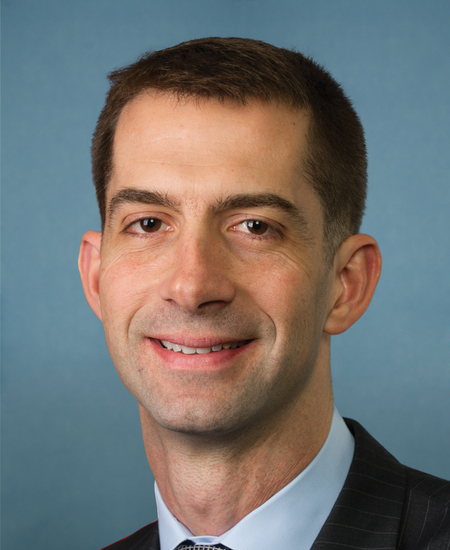
Sen. Tom Cotton
Sponsored bills
Sarah's Law This bill requires U.S. Immigration and Customs Enforcement (ICE) to detain an alien who is unlawfully present in the United States and has been charged with a crime that resulted in the death or serious bodily injury of another person. ICE shall make reasonable efforts to obtain information about the identity of any victims of the crimes for which such alien was charged or convicted. ICE shall provide the victim, or a relative or guardian of a deceased victim, with information about such alien, including name, date of birth, nationality, immigration status, criminal history, and a description of any related removal efforts.
Protecting Life and Integrity in Research Act of 2021 This bill prohibits the Department of Health and Human Services from conducting or supporting any research that involves the use of human fetal tissue from an induced abortion. The bill also prohibits soliciting or acquiring a donation of human fetal tissue from an induced abortion, other than for purposes of an autopsy or burial. The bill applies requirements on the research of transplantation of fetal tissue for therapeutic purposes to research on fetal tissue in general.
Protecting Individuals with Down Syndrome Act This bill creates new federal crimes related to the performance of an abortion on an unborn child who has Down syndrome. It subjects a violator to criminal penalties—a fine, a prison term of up to five years, or both. It also authorizes civil remedies, including damages and injunctive relief. A woman who undergoes such an abortion may not be prosecuted or held civilly liable.
Abortion Is Not Health Care Act of 2021 This bill prohibits a tax deduction for medical expenses relating to an abortion, with specified exceptions for rape or incest, or to protect the life or health of the mother.
Prenatal Nondiscrimination Act or PRENDA This bill creates new federal crimes related to the performance of sex-selection abortions (i.e., abortions based on the sex or gender of an unborn child). It subjects a violator to criminal penalties—a fine, a prison term of up to five years, or both. It also authorizes civil remedies, including damages and injunctive relief. A woman who undergoes a sex-selection abortion may not be prosecuted or held civilly liable.
Protecting Life in Foreign Assistance Act This bill prohibits the use of federal funds for purposes outside the United States related to abortion. Specifically, the bill prohibits funding to certain foreign or domestic organizations that perform or promote abortions, furnish or develop items intended to procure abortions, or provide financial support for an entity that conducts such activities. Current U.S. policy prohibits the provision of federal funds to a foreign nongovernmental organization unless it agrees to not perform or actively promote abortions.
This resolution expresses the sense of the Senate that (1) clean water is a national priority, and (2) the 2020 final rule titled The Navigable Waters Protection Rule: Definition of "Waters of the United States" should not be withdrawn or vacated.
Duck Boat Safety Enhancement Act of 2021 This bill sets forth requirements related to the safety of amphibious passenger vessels. The U.S. Coast Guard must implement regulations related to the safety of amphibious passenger vessels, including during severe weather emergencies. The Coast Guard may require operators of amphibious passenger vessels to provide reserve buoyancy for such vessels through passive means, including watertight compartmentalization, built-in flotation, or other means, to ensure that such vessels remain afloat and upright in the event of flooding, including when carrying a full complement of passengers and crew. Additionally, the Coast Guard must implement interim safety policies or other measures to require operators of amphibious passenger vessels operating in U.S. waters comply with certain requirements, including to remove the canopies of such vessels for waterborne operations, or to install in such vessels canopies that do not restrict either horizontal or vertical escape by passengers in the event of flooding or sinking. The bill also sets forth requirements for vessels that are not in compliance with the regulations and interim safety policies.
Justice for Victims of Sanctuary Cities Act of 2021 This bill provides a private right of action against state and local jurisdictions with certain policies that limit cooperation with federal immigration enforcement efforts, and contains additional provisions related to such jurisdictions. Currently, such cooperation is generally not required. An individual (or certain relatives of such an individual) who is the victim of any felony for which an alien has been arrested, convicted, or sentenced to a prison term of at least one year may sue a state or local jurisdiction if the jurisdiction failed to comply with (1) certain Department of Homeland Security (DHS) requests related to arresting and detaining aliens, and (2) a DHS request to detain the alien in question or provide a notification about the release of the alien. A jurisdiction that accepts certain federal grants may not assert immunity in such a civil action. A jurisdiction (or employee of a jurisdiction) that complies with certain DHS detainer requests shall be deemed to be acting as an agent of DHS. A complying jurisdiction or employee of the jurisdiction shall not be liable in any lawsuit relating to compliance with such requests. In a lawsuit against an employee of the jurisdiction, the United States shall be substituted in as the defendant, and remedies shall be limited to provisions for bringing tort claims against the federal government.