

Maddy summaryThis bill requires the Secretary of Homeland Security to submit biennial reports to Congress assessing terrorism threats from foreign terrorist organizations and designated global terrorists operating in countries designated as major non-NATO allies. The reports must detail which terrorist groups are present in these allied nations, their activities including use of artificial intelligence and emerging technologies, efforts by allied governments to disrupt them, and the U.S. government's capability to monitor and prevent these threats. Classified assessments will be provided to congressional committees along with briefings, using existing definitions for terms like foreign terrorist organizations and major non-NATO allies established by current laws.
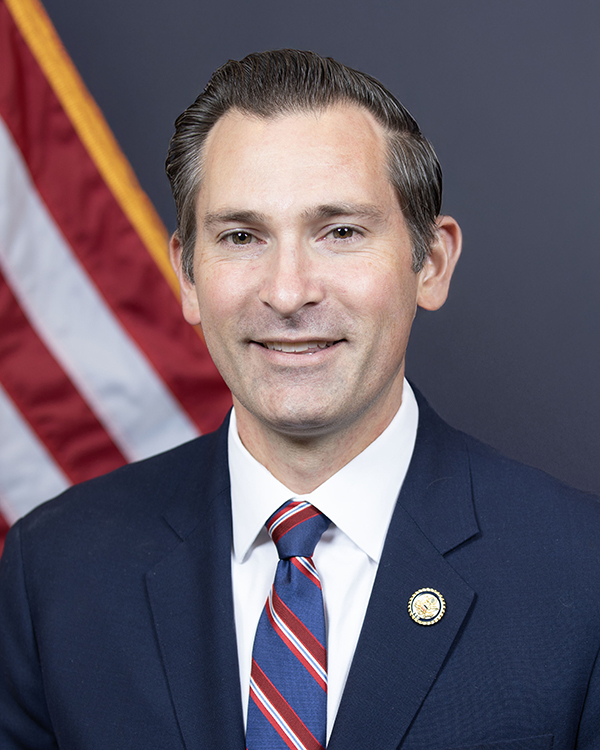
Rep. Matt Van Epps
Sponsored bills
Maddy summaryThe Critical Infrastructure Airspace Defense Act grants owners and operators of designated high-risk facilities, such as nuclear power plants and key electrical substations, the legal authority to detect, track, and disable unauthorized drones threatening their security. To exercise this power, personnel must complete a federally mandated training and certification program that establishes standards for legal and technical proficiency before they can use approved counter-drone technologies. The legislation also creates a $250 million grant program to help these facilities purchase and install the necessary equipment while providing liability protection for authorized actions taken to mitigate threats. Additionally, the bill requires the Department of Homeland Security to issue implementing regulations within 180 days and mandates regular reports on the program's activities to Congress.
Maddy summaryThe Jewish American Security Act aims to combat antisemitism by strengthening protections for Jewish students, securing Jewish communities, and increasing transparency regarding online hate speech. For educational institutions receiving federal funds, the bill mandates the creation of specific coordinators to handle discrimination complaints, requires annual training on handling antisemitism, and establishes a new federal clearinghouse to share best practices for campus safety. To support physical security, the legislation expands grant funding for nonprofit organizations and directs the Attorney General to provide resources for law enforcement agencies protecting houses of worship. Additionally, the act requires major online platforms with over 50 million monthly users to submit detailed reports to the Federal Trade Commission on how they detect, remove, and moderate antisemitic content.
Maddy summaryThe Declaration of Independence Reaffirmation Act of 2026 directs Congress to formally reaffirm the Declaration of Independence as an organic law of the United States. This legislative measure is intended to commemorate the 250th anniversary of American independence by restating the document's principles regarding natural rights, equal citizenship, and government by consent. The bill includes the full text of the Declaration of Independence as part of its provisions. It does not create new legal obligations or alter existing laws but serves as a symbolic recognition of the document's foundational role in American political order.
Maddy summaryHR 5351, the NSF AI Education Act of 2025, creates new funding mechanisms to expand artificial intelligence education. It authorizes scholarships and fellowships covering tuition, fees, and stipends for undergraduate and graduate students in AI-related fields, with priority for programs teaching AI in K-12 schools, advanced manufacturing, and agriculture. The bill also establishes up to eight regional "Centers of AI Excellence" at community colleges and career schools to develop AI curricula, build industry partnerships, and create student job pathways. Additionally, it funds research grants to develop K-12 AI teaching materials and supports professional development for educators and industry professionals to integrate AI into classrooms.
Maddy summaryThis bill redesignates the existing National Parks and Public Land Legacy Restoration Fund as the America's Legacy Restoration Fund to address deferred maintenance on federal lands. It directs revenue from recreation fees and a portion of energy development income into the fund, which must be used primarily for repairing critical infrastructure like roads, trails, and buildings managed by agencies such as the National Park Service and the Forest Service. The legislation establishes strict rules requiring that most funds go toward non-transportation projects, mandates transparency through public dashboards tracking project status, and sets aside a small percentage for matching private donations. Additionally, the bill increases entrance fees for foreign visitors to ensure they contribute to the fund, while prohibiting the use of these specific funds for land acquisition or employee bonuses.
Maddy summaryThis bill requires the Department of Homeland Security (DHS) to create a strategy to modernize the National Terrorism Advisory System (NTAS) within one year of enactment. The strategy must address key areas like designating a DHS office to oversee NTAS, updating alert protocols and criteria, improving public access to alerts, and ensuring alerts effectively reach the public and emergency responders. DHS must also gather input from stakeholders and law enforcement during this process, with a separate report due from the Comptroller General two years later. The bill focuses on improving how terrorism alerts are structured and communicated, directly affecting DHS operations and the delivery of threat information to the public and emergency services.
Maddy summaryThe GHOSTRUCK Act modifies federal regulations to allow motor carriers to add edits or annotations to electronic logging device records under specific conditions. This change permits employees or authorized agents to make these adjustments only if they are physically located in North America and the driver subsequently approves the changes. The bill directly affects trucking companies and drivers by establishing new rules for how digital driving logs can be modified after the fact.
Maddy summaryThe Web of Biological Data Act of 2026 directs the Department of Energy to create a centralized online platform called the Web of Biological Data to help researchers access and analyze biological information using advanced tools like artificial intelligence. This system will serve as a single entry point for federally funded data, featuring strict cybersecurity measures and tiered access controls to protect sensitive information. The bill establishes a phased rollout, beginning with a pilot version within two years that focuses on specific data types and user-friendly design, followed by a full expansion five years later that includes broader data compatibility and bioinformatic tools. To ensure the project's success, the legislation creates an advisory board with members from industry, academia, and government, and mandates regular reports to Congress on progress and security assessments. Funding is authorized to support the initial development, testing, and long-term maintenance of the platform while preserving existing privacy and ethical protections for biological data.
Maddy summaryThis bill, known as the Stopping Harmful and Outrageous Torts Act, expands legal protections for firearm manufacturers and sellers by strengthening their immunity from civil lawsuits. It requires courts to immediately dismiss any pending cases against these companies that are based on the criminal or unlawful misuse of a gun by a third party, while also clarifying that sellers are not liable for negligence in entrusting products to others. The legislation further restricts who can file such suits by prohibiting foreign governments from bringing these claims and adding a specific exception for victims under the age of 17, though it maintains immunity for cases involving design or manufacturing defects. Additionally, the bill allows companies to move these cases to federal court and grants them the right to appeal dismissal orders immediately, along with the ability to recover legal fees if they win. Finally, it preempts state and local laws that attempt to impose liability on these entities for the same types of misuse-related harms.