Maddy summaryThis bill would prohibit any state or local government designated as a "sanctuary jurisdiction" from receiving grant funds distributed by the Department of Housing and Urban Development (HUD). A jurisdiction is defined as a sanctuary if it has laws, policies, or practices that restrict officials from sharing information about an individual's immigration status or from complying with federal requests to detain or notify about the release of individuals. The funding restriction would apply to grants distributed 180 days after the bill's enactment. To determine which jurisdictions qualify for this ineligibility, the HUD Secretary is required to consult with the Secretary of Homeland Security.
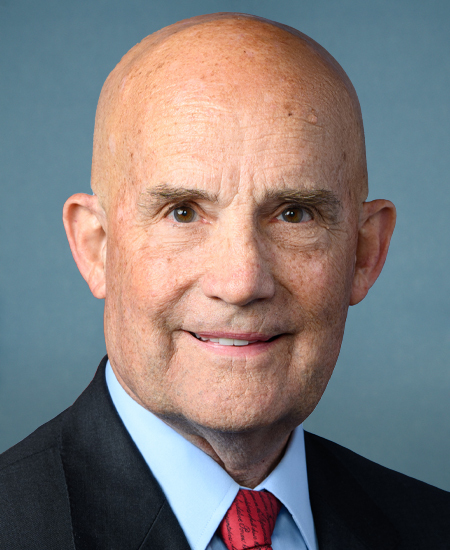
Rep. Keith Self
Sponsored bills
Maddy summaryH.Res. 1497 is a House resolution that commemorates the fifth anniversary of the Abbey Gate bombing, in which 13 U.S. servicemembers were killed during the withdrawal from Afghanistan. The bill lists the names of the fallen soldiers and formally condemns the Biden-Harris administration for what it describes as dereliction of duty and the forfeiture of military property to the Taliban. It asserts that the withdrawal was a disastrous failure that ignored security warnings and left Americans at risk, while also criticizing the lack of accountability from officials involved in the decision-making process.
Maddy summaryThe SRBIJA Act directs the U.S. Secretary of State to pause participation in the U.S.-Serbia Strategic Dialogue unless specific topics, including Serbia's relations with Russia, China, and Iran, are formally addressed and certified to Congress before each meeting. The bill requires the submission of a detailed strategy and an intelligence report within 90 to 180 days of enactment to assess foreign influence in Serbia and evaluate domestic political conditions. It authorizes additional U.S. assistance only if the President certifies that Serbia has made significant progress toward judicial accountability, media freedom, and alignment with NATO and European Union security policies. The legislation includes a five-year sunset provision, after which it ceases to have any legal effect.
Maddy summaryThe SHIELD Act would prohibit local school districts that receive federal education funds from allowing organizations that provide abortions to distribute information about those services to students on school grounds or through the district's virtual platforms. This ban specifically covers sharing or reposting such materials on social media on behalf of outside abortion providers. The bill defines "abortion-related service" as any medical, surgical, or support care directly related to terminating a pregnancy.
Maddy summaryThis House resolution formally honors the life and legacy of the late Representative Kay Granger from Texas, recognizing her historic achievements in public service. The bill highlights her roles as the first woman elected mayor of Fort Worth, the first Republican woman to represent Texas in the U.S. House, and the first Republican woman to chair the House Committee on Appropriations. It also acknowledges her contributions to national defense, including her work on the F-35 fighter jet program and the naming of a Navy ship for Fort Worth. The resolution expresses sympathy to Granger's family and directs the Clerk of the House to send an official copy of the document to her loved ones.
Maddy summaryHR 7008, the Stop Insider Trading Act, restricts Members of Congress, their spouses, and dependent children from purchasing certain investments like stocks in publicly traded companies. It requires 7-14 days' advance public notice before selling any such investment, including the sale date, description, and number of shares. Exceptions apply for work-related transactions (e.g., employer compensation) and reinvesting dividends. Violations trigger a fee of $2,000 or 10% of the investment’s value (whichever is greater), plus any net gain, paid from personal funds - not congressional allowances or campaign donations. The bill aims to prevent conflicts of interest by increasing transparency around congressional financial dealings.
Maddy summaryThis bill, titled the Permanent CBDC Ban Act, aims to permanently prohibit the Federal Reserve from issuing a central bank digital currency. It achieves this by amending the Federal Reserve Act to remove the specific legal authority that allows the Reserve to create such a digital currency. The legislation directly affects the Federal Reserve by stripping away its power to launch a digital version of the dollar. By deleting the relevant subsection of the law, the bill ensures that the Reserve cannot issue a CBDC in the future.
Maddy summaryThe Super Pay-As-You-Go Act of 2026 strengthens existing budget rules by requiring that any new government spending or tax cuts be offset by savings equal to twice the cost of those changes. This stricter standard aims to ensure that legislation directly reduces the federal deficit rather than merely maintaining the current level of debt accumulation. The bill also tightens the process for designating emergency spending, mandating a two-thirds congressional vote to waive these stricter budget rules and requiring specific justifications for such designations. Additionally, it mandates that the Office of Management and Budget publish detailed reports on how new laws affect the federal deficit and that Congress cannot bundle these budgetary restrictions with other unrelated legislation.
Maddy summaryThe Preventing Forced Abortions Act of 2026 prohibits federal courts from enforcing any part of a surrogacy agreement that forces a surrogate mother to have an abortion. Instead, the law mandates that courts must uphold the financial compensation promised to the surrogate, even if the contract includes penalties or reduced payments for refusing an abortion. This legislation grants federal district courts specific authority to hear civil cases involving surrogacy contracts and defines key terms such as "abortion" and "surrogate mother" to clarify the scope of the protections.
Maddy summaryThis resolution supports designating July 20, 2026, as "National Moon Landing Day" to honor the historic Apollo 11 mission and the ongoing Artemis program. The bill encourages Americans to celebrate the achievements of NASA astronauts, engineers, and scientists while honoring those who lost their lives during space exploration efforts. It also aims to inspire young people to pursue careers in STEM fields and promote public awareness of the economic and scientific benefits of human spaceflight.