Ban Russian Energy Imports Act This bill declares that a national emergency exists with respect to the aggression of Russia against Ukraine. During this emergency, the President must prohibit the importation of crude oil, petroleum, petroleum products, liquefied natural gas, and coal in which Russia or a Russian national has any interest. The bill exempts products that are already loaded or in transit at the time of this bill's enactment.
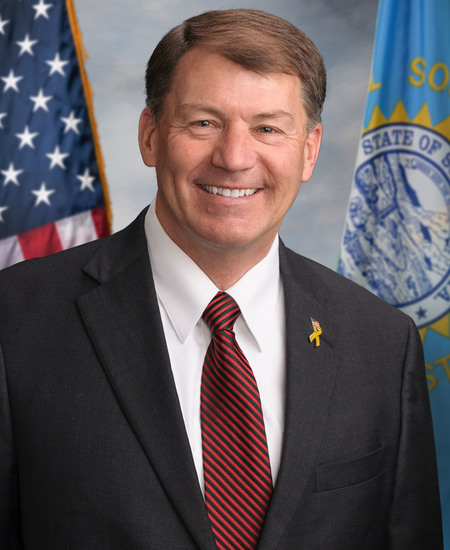
Sen. Mike Rounds
Sponsored bills
Taking Account of Institutions with Low Operation Risk Act of 2022 or the TAILOR Act of 2022 This bill addresses the supervision of financial institutions. The bill requires federal financial regulatory agencies to (1) tailor any regulatory actions so as to limit burdens on the institutions involved, with consideration of the risk profiles and business models of those institutions; and (2) report to Congress on specific actions taken to do so, as well as on other related issues. The bill's tailoring requirement applies not only to future regulatory actions but also to regulations adopted within the last seven years. The bill also reduces certain reporting requirements for banks eligible for the community bank leverage ratio. Finally, federal banking agencies must report on the modernization of bank supervision, including examiner workforce and training and statutory changes necessary to achieve more effective supervision.
This joint resolution nullifies the rule titled Medicare and Medicaid Programs; Omnibus COVID-19 Health Care Staff Vaccination , which was issued by the Centers for Medicare & Medicaid Services on November 5, 2021. The rule requires health care providers, as a condition of Medicare and Medicaid participation, to ensure that staff are fully vaccinated against COVID-19.
American Energy Independence Act of 2022 This bill addresses U.S. energy independence, the production and importation of oil and natural gas, and the rescission of specified environmental requirements. Specifically, the bill directs the President to develop a plan for the United States to achieve energy independence by 2024. The Department of Energy (DOE) must also develop a program and issue rules to ensure that the United States achieves such energy independence and becomes a net exporter of energy. The bill also addresses energy pipelines, including by approving the TransCanada Keystone Pipeline in Phillips County, Montana for the import of oil from Canada to the United States. It also provides for energy production, including by requiring regulations to be issued by DOE to reduce requirements on entities harvesting energy through hydraulic fracturing, the Department of Transportation to promote stable and affordable gasoline and diesel prices, and the Department of the Interior to promote the leasing of federal land for oil and natural gas production. In addition, the Environmental Protection Agency (EPA) must identify and repeal certain regulations that substantially reduce energy independence. Further, the bill prohibits the use of any funds to implement the Paris Agreement on climate change. Finally, the bill rescinds (1) Executive Order 14008 about tackling climate change, (2) the 2021 proposed rule issued by the EPA and the U.S. Army Corps of Engineers about the scope of the Clean Water Act, and (3) the 2021 proposed rule issued by the EPA about methane gas emissions.
Health Care for Burn Pit Veterans Act This bill updates policies and procedures related to Department of Veterans Affairs (VA) health care and benefits for veterans who have been exposed to toxic substances. Specifically, the bill extends the eligibility period for VA hospital care, medical services, and nursing home care for combat veterans who served after September 11, 2001, and were exposed to toxic substances, radiation, or other conditions, including those who did not enroll to receive VA care during the eligibility period. The VA must incorporate into its existing health care screening a screening to help determine potential exposures to toxic substances during military service. Among other requirements, the VA must also provide annual training to health care and benefits personnel with respect to veterans who were exposed to toxic substances; analyze total and respiratory disease mortality in veterans who served in specified locations on specified dates; conduct an epidemiological study on the health trends of veterans who served in the Armed Forces after September 11, 2001; conduct a study to determine trends in the rates of the incidence of cancer in veterans; publish a list of VA resources for veterans who were exposed to toxic substances, families and caregivers of such veterans, and survivors of such veterans who are receiving death benefits; and report on the data quality of the Individual Longitudinal Exposure Record and its usefulness in supporting veterans in receiving VA health care and benefits.
This resolution supports the designation of February 19-February 26, 2022, as National FFA Week. It also (1) recognizes the important role of the National FFA Organization (Future Farmers of America) in developing the next generation of leaders who will change the world, and (2) celebrates 70 years of the National FFA Organization's membership magazine.
This resolution congratulates Yellowstone National Park, spanning Wyoming, Montana, and Idaho, on its sesquicentennial anniversary. The resolution also celebrates 150 years of the unique cultural heritage and natural beauty of Yellowstone National Park.
Expediting Natural Gas Exports to Allies Act This bill revises the approval process for applications to export natural gas. Specifically, the bill expedites the approval process for certain U.S. allies, such as Taiwan and Ukraine. However, the Federal Energy Regulatory Commission may not grant expedited approval for applications to export natural gas to any nation that is (1) subject to sanctions or trade restrictions imposed by the United States, or (2) designated by acts of Congress from such expedited approval for reasons of national security.
Native American Housing Assistance and Self-Determination Reauthorization Act of 2021 This bill provides federal housing assistance to Indians and Native Hawaiians. Specifically, the bill reauthorizes through FY2032 and otherwise revises the Indian Housing Block Grant program and the Native Hawaiian Housing Block Grant program. Among other revisions to these programs, the bill expands allowable housing activities under the Indian program to include education-related stipends, college housing assistance, and other education-related assistance for low-income college students. Next, the bill authorizes the Department of Housing and Urban Development (HUD) to guarantee housing loans for Indians and Native Hawaiians through FY2032. HUD may make grants to eligible recipients of block grants for use in eliminating drug-related and violent crime. Additionally, the bill provides statutory authority for the Tribal HUD-VASH program, which provides rental assistance and supportive services to Indian veterans who are homeless or at risk of homelessness and living in or near an area where a tribe or tribally designated housing entity provides assistance for affordable housing. HUD must use at least 5% of rental assistance amounts under the HUD-VASH program, which provides housing assistance to homeless veterans, for the Tribal HUD-VASH program. The Tribal HUD-VASH program must be carried out by HUD in conjunction with the Department of Veterans Affairs. Under the program, grants must be made to entities eligible for housing assistance block grants. HUD may make renewal grants to entities that have received prior program grants.
This resolution supports the designation of February 2022 as Career and Technical Education Month to celebrate career and technical education across the United States.