Maddy summaryThis Senate resolution formally recognizes the week of May 3 through May 9, 2026, as National Small Business Week to honor the contributions of small business owners and entrepreneurs across the United States. The measure expresses appreciation for the economic role these businesses play and acknowledges the resilience of their owners and employees. By adopting this designation, the Senate aims to celebrate the entrepreneurial spirit within every community without imposing any new laws or regulations.
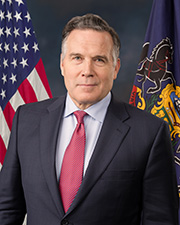
Sen. David McCormick
Sponsored bills
Maddy summaryThe National Veterans Strategy Act of 2026 requires the President to establish measurable metrics for veteran well-being - covering health, employment, education, and social engagement - and develop a national strategy every four years to align federal, state, local, nonprofit, and private sector efforts toward improving veteran outcomes. This strategy must be developed with input from veterans, government agencies, and stakeholders like veterans' organizations and businesses, and it will guide how benefits and services are delivered to address gaps in veteran success. The bill mandates annual reports to Congress tracking progress, spending, and barriers, with a requirement for the President to update the strategy every four years based on public input and evaluation. It directly affects all veterans by creating a coordinated framework for service delivery, though specific benefits or programs are not defined by the bill itself.
Maddy summaryThis bill requires the Department of Veterans Affairs (VA) to clearly inform veterans about their rights regarding healthcare, benefits, and services. It directly affects veterans using VA services and VA employees, mandating that the VA integrate 10 specific rights into all policies, training, and communications. Key provisions include ensuring veterans receive respectful treatment, transparent claim updates, access to community care, protection from retaliation for seeking care, and clear grievance processes. The VA must display these rights prominently at facilities, in its mobile app, and during military transition programs, with annual staff training and facility audits. The bill does not create new legal rights but codifies existing expectations for VA accountability and veteran communication.
Maddy summaryThe Dennis and Lois Krisfalusy Act amends a provision in federal law that governs eligibility for memorial headstones and markers provided by the Department of Veterans Affairs. It removes a requirement that veterans must have died on or after November 11, 1998, to qualify for these memorials. This change expands eligibility to include veterans who died before that date, allowing their families to access headstones and markers regardless of their death date. The bill directly affects the VA's administration of the program and veterans' families who previously faced this eligibility barrier.
Maddy summaryThis Senate resolution formally welcomes King Charles III and Queen Camilla to the United States for a state visit where the King will address a joint session of Congress. The document highlights the long-standing diplomatic and security partnership between the two nations, noting shared values and cooperation on issues like defense and technology. It also marks the occasion as the first time a British monarch has addressed Congress since 1991, coinciding with the 250th anniversary of American independence.
Maddy summaryThe Lowering Input Costs for American Farmers Act removes existing trade barriers on phosphate fertilizers imported from Morocco. It eliminates specific duties and countervailing orders previously applied to these goods, allowing them to enter the U.S. without extra fees. Additionally, the bill requires the government to refund any cash deposits that importers made while these restrictions were in place. This legislation directly affects American farmers by potentially reducing the cost of fertilizer and impacts importers by changing how they pay for these agricultural supplies.
Maddy summaryThe Protecting American Taxpayers Act aims to reduce government waste and fraud by requiring stricter oversight of federal programs and extending legal deadlines for prosecuting pandemic-related violations. It mandates that child care payments be based on recorded attendance rather than enrollment alone and requires agencies to report when health care spending or provider numbers spike by more than 100 percent in specific areas. The bill also prohibits small businesses from receiving federal loans or grants if an owner or key employee has been convicted of financial misconduct, while simultaneously banning foreign entities controlled by agents from certain listed countries from receiving U.S. financial assistance. Additionally, the legislation seeks to increase transparency by requiring agencies to publicly report on improper payments and other transaction agreements, and it expands whistleblower protections for employees of defense and non-defense contractors who report waste or misconduct.
Maddy summaryThis bill, titled the Russia's War on Faith Act, mandates that the U.S. government create a detailed annual report documenting religious persecution in Ukrainian territories currently occupied by Russian forces. The required reports must list specific actions taken against various religious groups, such as the destruction of worship sites, the detention of clergy, and efforts to force communities to align with the Russian Orthodox Church. Following each report, the President must certify whether individuals or entities listed for these abuses should face financial sanctions under existing U.S. laws. If the President agrees that sanctions are warranted, the bill authorizes the blocking of property and other penalties against those responsible for the documented violations.
Hot Rotisserie Chicken Act This bill includes hot rotisserie chicken as an eligible food to purchase with Supplemental Nutrition Assistance Program (SNAP) benefits.
Maddy summaryThis bill requires states to verify that applicants for driver's licenses, commercial licenses, and state ID cards have lawful presence in the United States before issuing them. To enforce this, the legislation mandates that states use approved methods to electronically validate biometric data, conduct background checks, and cross-reference tax and social security records with federal agencies. If a state fails to implement and enforce these verification procedures by October 1, 2026, the federal government will withhold 10% of the state's transportation funding until compliance is achieved. Any withheld funds are then redistributed proportionally to states that have met the new requirements. The bill does not alter existing REAL ID standards but adds a specific layer of immigration status verification to the licensing process.