Forced Arbitration Injustice Repeal Act This bill prohibits a predispute arbitration agreement from being valid or enforceable if it requires arbitration of an employment, consumer, antitrust, or civil rights dispute.
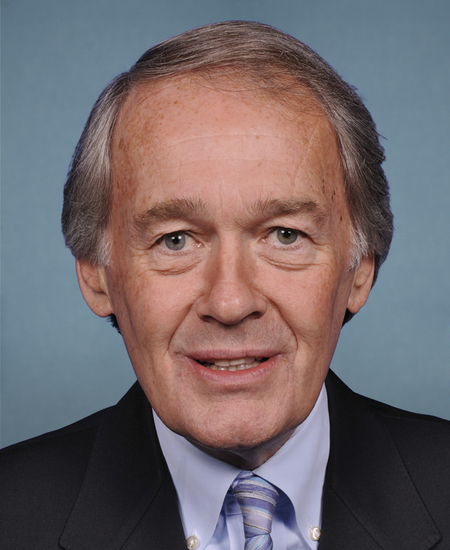
Sen. Edward J. Markey
Sponsored bills
This concurrent resolution (1) affirms, on the 400th anniversary of the arrival of the first slave ship, that the nation owes a debt of remembrance not only to those who lived through the injustices of slavery but also to their descendants; and (2) urges the establishment of a U.S. Commission on Truth, Racial Healing, and Transformation to properly acknowledge, memorialize, and be a catalyst for progress, including toward permanently eliminating persistent racial inequities.
This resolution designates the week of February 22-February 26, 2021, as Public Schools Week.
Stop Tip-overs of Unstable, Risky Dressers on Youth Act or the STURDY Act This bill requires the Consumer Product Safety Commission to revise the safety standards for freestanding clothing storage units such as dressers, bureaus, or chests of drawers. Such standards must include specified testing related to tip overs and new warning requirements for all such products entering the U.S. market.
Emergency Funding for Child Protection Act This bill funds additional grants to states for child abuse or neglect prevention and treatment programs in response to the COVID-19 (i.e., coronavirus disease 2019) pandemic. Specifically, states may use such grants to expand services, provide support to community-based organizations, purchase emergency supplies, and provide temporary direct payments to families caring for children under protective services supervision that are awaiting approval for government assistance, among other uses. The bill does not require states to match funding under these grants. The bill also provides funding to operate and expand the national child abuse hotline.
Pandemic Heroes Compensation Act of 2021 This bill allows essential workers and their family members to file claims and receive compensation for harm or death suffered as a result of COVID-19 (i.e., coronavirus disease 2019). A Special Master appointed by the Department of Justice must review claims submitted and determine if a claimant is eligible for compensation, the extent of the harm to the claimant, and the amount of compensation to be awarded.
Mainstreaming Addiction Treatment Act of 2021 This bill removes the requirement that a health care practitioner apply for a separate waiver through the Drug Enforcement Administration (DEA) to dispense certain narcotic drugs (e.g., buprenorphine) for maintenance or detoxification treatment (i.e., substance use disorder treatment). Further, a community health aide or community health practitioner may dispense certain narcotic drugs for maintenance or detoxification treatment without registering with the DEA if the drug is prescribed by a health care practitioner through telemedicine. It preempts state laws related to licensure for this activity. The bill also directs the Substance Abuse and Mental Health Services Administration to conduct a national campaign to educate health care practitioners and encourage them to integrate substance use disorder treatment into their practices.
Democracy Restoration Act of 2021 This bill addresses the voting rights of individuals convicted of a criminal offense and the restoration of their voting rights. First, the bill declares that the right of a U.S. citizen to vote in any election for federal office shall not be denied or abridged because that individual has been convicted of a criminal offense unless, at the time of the election, such individual is serving a felony sentence. Further, the bill provides for enforcement of, and remedies for violations of, the bill. In addition, it sets forth requirements for state and federal notification of individuals of the restoration of their voting rights. Finally, the bill prohibits federal funding of construction or improvement of a place of incarceration unless U.S. citizens incarcerated in that jurisdiction are notified, upon release, of their voting rights.
This resolution recognizes Black History Month as an opportunity to reflect on U.S. history and to commemorate the contributions of African Americans. It calls for the United States to (1) honor the contribution of pioneers who helped to ensure its legacy; and (2) move forward as a nation "indivisible, with liberty and justice for all."
This resolution designates February 28, 2021, as Rare Disease Day.