

Maddy summaryS 2903, the Safe Step Act, requires health insurance plans and employers offering health coverage to establish a clear, timely process for patients or doctors to request exceptions when step therapy protocols (where insurers require trying cheaper drugs first) would harm a patient. It mandates approval for exceptions if prior drugs failed, delay would cause severe harm, a drug is unsafe, or a patient is stable on their current medication. Plans must respond to requests within 72 hours (or 24 hours in emergencies) and cover the requested drug without extra cost-sharing. The bill also requires annual reports to the government on exception requests, approvals, denials, and trends by medical condition or specialty. This directly affects patients on health plans with step therapy, their doctors, and the insurers managing those plans.
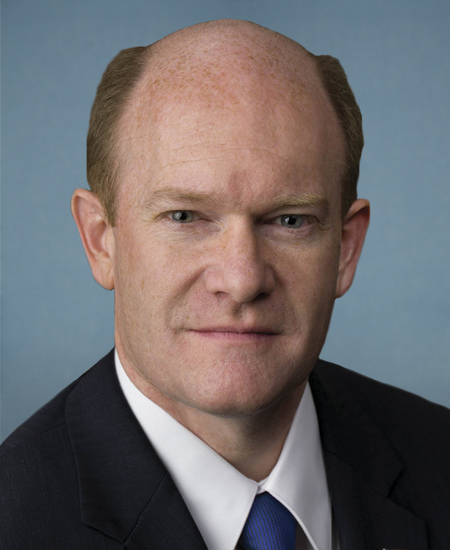
Sen. Christopher A. Coons
Sponsored bills
Maddy summaryThis bill (S 1677, Ensuring Lasting Smiles Act) requires health insurance plans to cover medically necessary treatments for congenital anomalies or birth defects affecting the eyes, ears, teeth, mouth, or jaw. It mandates coverage for reconstructive services, dental/orthodontic care, and related treatments during the course of medical treatment, while excluding purely cosmetic procedures not medically necessary. Plans may apply cost-sharing requirements similar to those for other medical services but must provide notice about these coverage requirements to participants by January 1, 2026. The bill also directs a study on provider network adequacy and cost impacts related to these coverage requirements, to be completed by December 2027.
Maddy summaryThe National Nursing Workforce Center Act of 2025 establishes a two-year federal pilot program to create or enhance state-based nursing workforce centers. These centers, funded through $1.5 million annually (2026-2027), will analyze nursing workforce data, address shortages, and develop strategies for recruitment and retention - using matching funds requiring $1 non-Federal for every $4 federal dollar. Eligible entities like state nursing boards, schools of nursing, and nonprofits will use grants to conduct statewide research on education gaps, clinical staffing challenges, and strategies to improve rural access and workforce diversity. Centers must report annually on outcomes, including demographic data and best practices for reducing shortages across specialties and regions.
Resident Education Deferred Interest Act or the REDI Act This bill allows borrowers in medical or dental internships or residency programs to defer student loan payments until the completion of their programs.
Maddy summaryThe HELP Copays Act requires that financial assistance from non-profit organizations or prescription drug manufacturers counts toward patients' annual out-of-pocket cost-sharing limits (like deductibles and copays) for certain prescription drugs. It directly affects individuals enrolled in group health plans or individual insurance who receive such assistance, ensuring payments from these sources reduce their total out-of-pocket spending. The bill amends key healthcare laws to include these payments in calculating cost-sharing thresholds, specifically for specialty drugs and drugs subject to utilization management (like prior authorization). It takes effect for plan years beginning in 2026 and does not change how utilization management tools are applied.
Maddy summaryThis bill requires health insurance plans to cover prostate cancer screenings without copays or deductibles for men aged 40+ who are at high risk of prostate cancer. It specifically applies to African-American men and men with a family history of prostate cancer (defined as having a first-degree relative diagnosed with the disease or genetic risk factors). The law amends existing coverage requirements to include these screenings as a preventive service, aiming to address disparities in late-stage diagnosis and improve early detection rates. The policy change takes effect for plan years beginning January 1, 2025.
Maddy summaryThis bill allows eligible veterans to use their existing educational benefits (like the GI Bill) to pay for specific exams that earn college credit for their military training. It covers standardized tests (such as DSST and CLEP), the National Career Readiness Certificate, and portfolio assessments of military experience. Veterans can use up to $500 per exam, with costs charged against their current benefit entitlement. The policy directly affects veterans enrolled in approved degree programs who seek credit for prior military learning.
Maddy summaryThe Love Lives On Act of 2025 modifies veterans' and military survivors' benefit rules to prevent remarriage from automatically ending eligibility. It directly affects surviving spouses of veterans or military members who remarried, ensuring they retain access to key benefits. Key provisions include: (1) preventing termination of veterans' dependency compensation (under 38 U.S.C. §1311/1562) due to remarriage; (2) stopping termination of military Survivor Benefit Plan annuities solely for remarriage, with specific rules for those who remarried before age 55; and (3) expanding TRICARE coverage to include remarried widows/widowers whose subsequent marriage ended (via death, divorce, or annulment). These changes restore or maintain benefits that were previously lost upon remarriage.
Maddy summaryThis resolution formally honors the life and legacy of former college football coach Louis Leo "Lou" Holtz, recognizing his contributions to the sport and his impact on character development. The bill acknowledges his extensive coaching career at six different universities, where he transformed struggling programs into winning teams and established lasting traditions such as the "Play Like A Champion Today" sign at Notre Dame. It highlights his receipt of the Presidential Medal of Freedom and his work as a motivational speaker, author, and television analyst who promoted values like integrity, hard work, and caring for others. The Senate resolution serves as an official tribute to Holtz's achievements and expresses gratitude for his service to college football and his mentorship of hundreds of student-athletes.
Maddy summaryThis bill reauthorizes conservation programs for the Delaware River Basin by extending the program's funding period through 2033. It officially adds Maryland as a fifth state to the basin, expanding the geographic scope of the program beyond the original four states. The legislation also allows the Secretary to prioritize funding for projects that benefit small, rural, or disadvantaged communities. These changes amend the existing Water Infrastructure Improvements for the Nation Act to provide continued support for water conservation efforts in the region.