

Maddy summaryHR 1599, the Dismantling Investments in Violation of Ethical Standards through Trusts Act, prohibits senior federal employees (those in Senior Executive Service positions), their spouses, and dependent children from holding, purchasing, or selling certain financial instruments - including stocks, bonds, and derivatives - during their federal service. The bill excludes diversified mutual funds, exchange-traded funds, and U.S. Treasury securities from the prohibition, while allowing investments held in qualified blind trusts. Senior employees must annually certify compliance with the rules, and violations may result in fines (up to 10% of the investment’s value) or forced profit disgorgement. The law aims to prevent conflicts of interest by restricting personal financial holdings that could influence official duties.
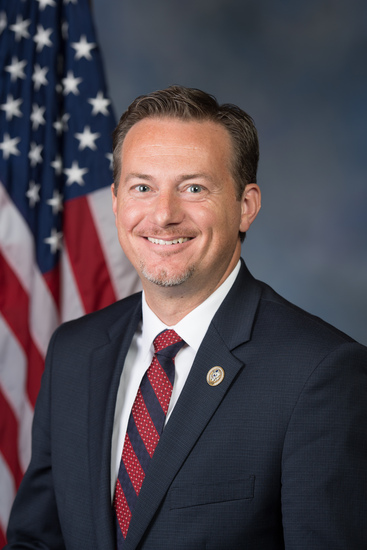
Rep. Michael Cloud
Sponsored bills
Maddy summaryHR 1502 authorizes the creation of a Congressional Gold Medal to honor the volunteers and communities (primarily from Nebraska, Colorado, and Kansas) who supported the North Platte Canteen during World War II. The bill directs the Treasury Secretary to design and strike the medal, which will be presented to the individuals who contributed to the canteen’s operations and then permanently displayed at the Lincoln County Historical Museum in North Platte, Nebraska. It also permits the sale of bronze duplicates to cover production costs, with proceeds going to the U.S. Mint. This is a commemorative measure recognizing historical service, not a policy change affecting current laws or programs.
Maddy summaryHR 1432, the LIABLE Act, removes federal immunity for manufacturers of authorized COVID-19 vaccines regarding claims of injury or loss from vaccine administration or use. It directly affects vaccine manufacturers by allowing individuals to pursue civil lawsuits for vaccine-related harm, regardless of prior compensation through existing programs like the National Vaccine Injury Compensation Program. The bill explicitly overrides previous laws (such as sections 319F-3, 2111, and 2122 of the Public Health Service Act) that previously limited manufacturer liability. This law applies retroactively to all vaccine administration or use occurring before, during, or after the bill’s enactment.
Maddy summaryThe No IRIS Act of 2025 (HR 1415) prohibits the Environmental Protection Agency (EPA) from using scientific assessments generated by its Integrated Risk Information System (IRIS) program to develop environmental regulations, enforce laws, issue permits, or inform air toxics mapping tools. This bill directly restricts the EPA’s regulatory process by banning IRIS data from key decision-making steps in environmental rulemaking. The law requires the EPA to rely on alternative scientific data for these purposes, without altering the IRIS program itself. It does not change existing EPA authority but limits how specific assessments may be applied in regulatory actions.
Maddy summaryHR 479, the Healthy SNAP Act of 2025, revises which foods are eligible for purchase using Supplemental Nutrition Assistance Program (SNAP) benefits. It prohibits SNAP benefits from being used for alcoholic beverages, tobacco, soft drinks, candy, ice cream, and prepared desserts like cakes or pies. The bill requires the Secretary of Agriculture to establish regulations within 180 days designating specific foods that contain nutrients lacking in U.S. diets, promote health based on nutrition science, and align with cultural eating patterns, while limiting fat, sugar, and salt. The Secretary must also review and update these designations at least every five years to reflect current science, and states may substitute culturally appropriate foods if nutritionally equivalent. This directly affects SNAP recipients and the program's food eligibility rules.
Maddy summaryThis bill amends the Food and Nutrition Act of 2008 to clarify that households must meet existing income and resource criteria to receive food assistance benefits. It directly affects households applying for or receiving SNAP (Supplemental Nutrition Assistance Program) benefits under the Food and Nutrition Act. The key provision explicitly states that eligibility requires compliance with current income and asset standards, reinforcing existing rules rather than creating new restrictions. The amendment takes effect one year after enactment, with existing benefit certifications unaffected if they began before that date.
Maddy summaryHR 1301, the Death Tax Repeal Act, would eliminate the federal estate tax and generation-skipping transfer tax for estates of individuals dying on or after its enactment date. It directly affects individuals inheriting significant assets, as it removes taxes on estates exceeding $10 million (adjusted for inflation) and repeals taxes on large transfers between generations. The bill modifies the gift tax by establishing a $10 million lifetime exemption with annual inflation adjustments, replacing previous tax brackets. It applies to estates, gifts, and transfers occurring on or after the bill's effective date.
Maddy summaryHR 1232, the National Right-to-Work Act, would make union membership voluntary for workers in most private-sector jobs by removing legal requirements for employees to join a union or pay dues as a condition of employment. It directly affects workers in unionized workplaces covered by the National Labor Relations Act (including most private employers) and railroad workers covered by the Railway Labor Act. The key change eliminates provisions that allowed "union security agreements" (requiring dues or membership), meaning workers could no longer be forced to pay union fees to keep their jobs. This bill does not change other labor rights or create new programs - it only modifies existing laws to allow workers to opt out of union membership and financial obligations.
Security And Fairness Enhancement for America Act of 2025 or SAFE for America Act of 2025 This bill eliminates the diversity visa program. This program provides up to 55,000 visas annually to individuals from countries with low rates of immigration to the United States.
Maddy summaryThis bill designates the Department of Veterans Affairs community-based outpatient clinic in Lubbock, Texas, as the "General Bernie Mittemeyer VA Clinic" upon enactment. It updates all official references in federal laws, documents, and records to reflect this new name. The bill does not alter services, funding, or operations at the clinic - its sole purpose is to honor General Bernie Mittemeyer through a ceremonial naming designation. This change affects only the clinic's official identification within federal systems.