USPS Fairness Act This bill repeals the requirement that the U.S. Postal Service annually prepay future retirement health benefits.
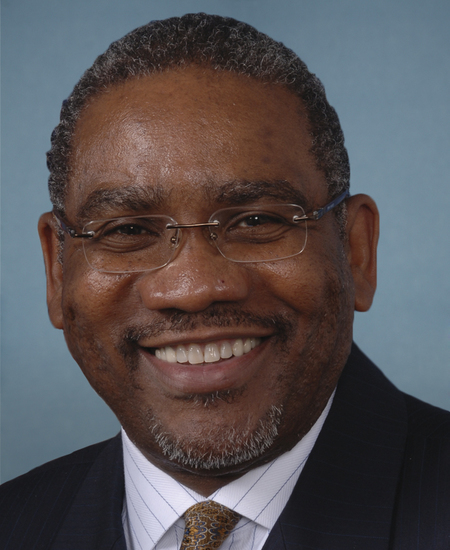
Rep. Gregory W. Meeks
Sponsored bills
Comprehensive Breast Reconstruction Act of 2021 This bill provides for Medicare, Medicaid, and private health insurance coverage of certain tattooing services in connection with post-mastectomy breast reconstruction, and aligns the scope of Medicare and Medicaid coverage of such breast reconstruction with that of private health insurance. Specifically, the bill provides for coverage of reconstructive tattooing services that are performed by a health care practitioner or state-licensed tattoo artist pursuant to a physician prescription, and expands Medicare and Medicaid coverage to include all stages of reconstruction, surgery to produce a symmetrical appearance, and prostheses and physical complications of mastectomies (e.g., lymphedemas).
Insular Area Medicaid Parity Act This bill eliminates Medicaid funding limitations for U.S. territories beginning in FY2021.
This concurrent resolution recognizes the difficult challenges Black veterans faced when returning home after serving in the Armed Forces, their heroic military sacrifices, and their patriotism in fighting for equal rights and for the dignity of a people and a nation. The concurrent resolution also recognizes the need for the Department of Veterans Affairs to continue to work to eliminate any health and benefit disparities for minority veterans.
This concurrent resolution calls for the Citizens' Stamp Advisory Committee to recommend that the Postmaster General issue a commemorative postage stamp honoring the Buffalo Soldiers.
This resolution recognizes Black History Month as an important time to reflect on the significant contributions of African Americans in the history of the United States, including in the Armed Forces.
This resolution mourns the death of U.S. Capitol Police Officer Brian D. Sicknick, and it honors his lifelong commitment to service and his selfless acts of heroism on January 6, 2021.
Relaunching America's Workforce Act This bill establishes several grant programs to address employment, the workforce, and education access in response to the COVID-19 national emergency. The Department of Labor must provide grants in response to the COVID-19 national emergency to provide training and employment for dislocated, unemployed, and underemployed workers; support youth employment; establish workforce information systems improvements; provide reentry employment opportunities for justice-involved youth and young adults; and create or expand apprenticeship programs. Programs directed towards assisting Native Americans and migrant and seasonal farmworkers may be extended. The Department of Education must provide grants to expand the capacity of adult education providers to prioritize serving adults with low-literacy or numeracy levels negatively impacted by the COVID-19 national emergency, and to improve or expand career and technical education programs and programs of study to respond to state and local needs as a result of the COVID-19 national emergency.
Woman on the Twenty Act of 2021 This bill bars the printing of any $20 note after December 31, 2024, which does not prominently feature a portrait of Harriet Tubman on the front face of the note. The Department of the Treasury shall release to the public the preliminary design of the $20 note prominently featuring a portrait of Harriet Tubman no later than December 31, 2022.
Safe from the Start Act of 2021 This bill directs the Department of State to direct U.S. foreign assistance to address humanitarian crises in a manner that aims to prevent and respond to gender-based violence at the onset of an emergency. The State Department shall focus on (1) preventing gender-based violence, (2) protecting survivors of humanitarian crises from the onset of the emergency, (3) promoting standards and activities to prevent and respond to gender-based violence, and (4) advancing and empowering survivors and at-risk individuals. Activities shall include improving access to post-sexual-assault medical and mental health services and ensuring such services are available to hard-to-reach populations. The State Department may provide support to local and international organizations to achieve its goals.