Maddy summaryThe AI LABS Act directs the Secretary of Education to provide competitive grants to states for establishing or expanding artificial intelligence programs in elementary and secondary schools. These funds are specifically designated for creating dedicated curricula that teach students how to use and understand AI, as well as providing professional development for teachers to integrate these tools into their instruction. Additionally, the bill requires the Secretary to conduct a study on how states utilize the grant money and submit a report with recommendations to Congress within one year of enactment.
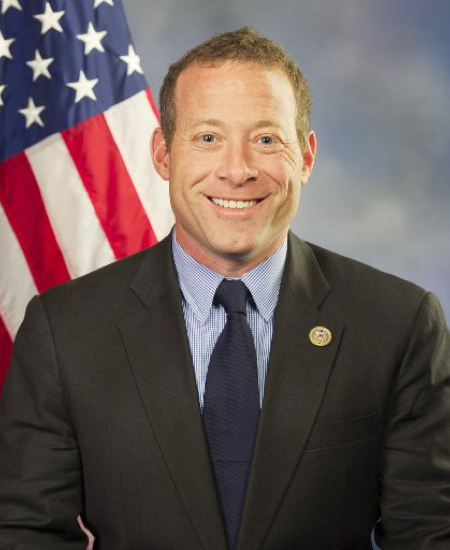
Rep. Josh Gottheimer
Sponsored bills
Maddy summaryThis bill directs the Secretary of Education to conduct a study on how states, local school districts, and public schools teach students about the September 11, 2001 terrorist attacks. The study must examine whether 9/11 education is required or optional in curricula, identify available teaching resources and professional development for teachers, and assess the methods used to evaluate student learning. It also requires the Secretary to work with the National September 11 Memorial & Museum and submit a report on these findings to Congress within three years of the law's enactment.
Maddy summaryThe Student Protection and University Accountability Act requires colleges receiving federal funds to establish clear, public processes for investigating discrimination complaints based on race, color, or national origin. Under this bill, universities must designate a compliance officer, provide detailed explanations for their investigative decisions, and notify complainants of outcomes within 30 days. The law also mandates that schools display federal anti-discrimination materials on campus and makes them ineligible for funding if they fail to comply with these requirements for two consecutive years. Additionally, the bill directs the Department of Education to report monthly on discrimination complaints to Congress and prohibits the agency from dismissing or delaying investigations when similar claims are filed elsewhere.
Maddy summaryHR 5267, the American Franchise Act, clarifies when franchisors can be considered joint employers of franchisee employees under federal labor laws. It defines "substantial direct and immediate control" over essential employment terms like wages, benefits, hours, hiring, and discipline - requiring franchisors to actively set these terms to be deemed joint employers. The bill explicitly excludes routine brand standards, training, or minimal safety requirements from constituting such control. This directly affects franchisors and franchisees by limiting joint employer liability to cases where franchisors exert significant, ongoing influence over core employment decisions. The law applies prospectively to new cases after enactment, not past disputes.
Maddy summaryThis House resolution marks the 25th anniversary of the September 11, 2001 terrorist attacks by formally honoring the memory of the nearly 3,000 victims and recognizing the sacrifices made by first responders, military personnel, and the passengers of United Airlines Flight 93. The bill acknowledges the ongoing health challenges faced by survivors and responders, highlighting the role of the World Trade Center Health Program in providing long-term medical support. It also credits charitable organizations and community groups that have continued to assist victims' families and veterans over the past two decades. Finally, the resolution urges the American public to observe the anniversary with ceremonies and reaffirms Congress's commitment to remembering the events and lessons of that day.
Maddy summaryThe Stop Auto Fraud Act of 2026 creates a new federal crime for individuals who knowingly stage or fabricate motor vehicle accidents to submit false insurance claims. The bill directly affects people involved in these schemes by imposing penalties that include fines and up to 10 years in prison, with sentences increasing to 20 years if serious bodily injury occurs and potentially life imprisonment if the fraud results in death. Additionally, any criminal fines collected under this new law must be deposited into the Highway Trust Fund rather than general government revenue.
Maddy summaryThis bill requires credit reporting resellers to use reasonable procedures to ensure the accuracy of consumer information they transmit to other agencies or end users. It limits reseller liability when they accurately pass on data obtained from another consumer reporting agency without making changes. The law defines resellers according to existing Fair Credit Reporting Act definitions and focuses on maintaining data integrity during the transfer process. These changes directly affect companies that sell consumer credit reports to other businesses or individuals.
Maddy summaryThe BEDROCK Act directs the Secretary of Commerce to designate a senior official who will lead federal efforts to boost the competitiveness and supply-chain resilience of the U.S. biomanufacturing industry. This official is tasked with identifying barriers to private sector investment, mapping complex regulatory pathways across agencies like the FDA and EPA, and publishing a prioritized action plan to address vulnerabilities in critical inputs such as enzymes and cell lines. The bill also requires the government to create a public web resource that consolidates federal information and designates specific agency points of contact to help businesses navigate commercialization processes. These requirements are set to terminate five years after the law is enacted, with periodic reports submitted to Congress to track progress.
Maddy summaryThe MANNARINO Act requires states to ban the sale of scented or flavored nitrous oxide products and other non-exempt nitrous oxide items in order to receive certain federal public health grants. The law allows exemptions for nitrous oxide used in medical, veterinary, dental, food manufacturing, industrial, or automotive applications. If a state fails to implement these sales prohibitions, the Secretary of Health and Human Services can reduce its federal grant allotment by up to 10 percent. These requirements would take effect starting in the third fiscal year after the bill is enacted.
Maddy summaryThe EXIM Bank Continuity in Competitiveness Act modifies the rules for the Export-Import Bank of the United States to ensure the institution can continue operating when its board lacks a full complement of members. It reduces the required waiting period before a temporary board can be formed from 120 days to 60 days if the main board loses its quorum. Additionally, the bill clarifies that this temporary board will automatically end when a new President takes office or when the original board regains a full quorum. These changes are set to take effect on December 31, 2026.