

Maddy summaryThis bill requires the Secretary of Defense to assess staffing levels in the Department of Defense's Office for Diversity, Equity, and Inclusion (DEI Office) against its core missions and functions. It mandates two assessments: one from the DEI Office head and one from the Secretary, to identify staffing conflicts, followed by a detailed report to Congress within one year of enactment. The report must validate each position, analyze staffing gaps, and propose updates to job descriptions and grades. If the report is not submitted on time, the bill prohibits new positions, military personnel details to the office, and new contractor appointments. The measure focuses on procedural oversight of the DEI Office's structure, not on altering its mission or policies.
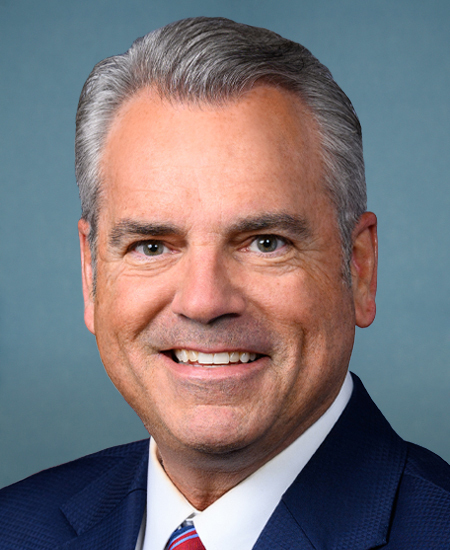
Rep. Mark Alford
Sponsored bills
Maddy summaryThis bill prohibits using funds from the FY2024 National Defense Authorization Act (NDAA) to support the Department of Defense's Countering Extremism Work Group. It directly affects the DoD's existing Countering Extremism Work Group by blocking its access to specific defense funding. The key provision is a clear funding restriction, preventing the use of authorized NDAA resources for this particular work group's activities.
Maddy summaryHR 4417, the "Ending Agricultural Trade Suppression Act," prevents state and local governments from imposing additional production standards on agricultural products sold across state lines if those standards aren't already required by federal law or the state where the product is grown. It directly affects agricultural producers, distributors, and businesses operating in interstate commerce by allowing them to sue states in federal court to challenge such regulations. The bill creates a private right of action for affected parties to seek court invalidation of the regulations and damages for economic losses, with provisions for preliminary injunctions to halt enforcement during litigation. This aims to reduce regulatory barriers that could hinder the movement of agricultural goods between states.
Maddy summaryHR 3419 reauthorizes and increases mandatory funding for U.S. animal disease prevention programs through fiscal year 2028. It allocates $233 million annually from the Commodity Credit Corporation for three key areas: $10 million for disease prevention, $70 million for surveillance, and $153 million for rapid response. The bill also raises annual funding for the National Animal Health Laboratory from $30 million to $45 million. These provisions directly affect USDA programs that protect livestock and agricultural industries from foreign animal disease outbreaks. The funding increases extend existing programs through 2028, with reduced annual amounts starting in 2029.
Maddy summaryHJRES 44 is a congressional resolution seeking to block a 2021 rule by the Bureau of Alcohol, Tobacco, Firearms, and Explosives (ATF). The rule classified firearms with stabilizing braces as "short-barreled rifles," which would have required additional licensing and regulation. This resolution uses a specific legal process (under Title 5, U.S. Code) to formally disapprove the ATF rule, meaning the rule would no longer be in effect. It directly affects firearm owners, manufacturers, and dealers who would have been subject to the rule’s requirements.
Maddy summaryThis bill renames the U.S. Food for Peace program after Peter O'Brien and makes key changes to how agricultural aid is delivered. It prohibits using cash, food vouchers, or foreign-sourced food for aid (section 2d), requires that at least 50% of annual funds be used for procuring U.S. agricultural commodities (section 2b(5)), and mandates annual reports to Congress on fund usage (section 2b(6)). These changes directly affect U.S. farmers supplying aid and international recipients of food assistance. The bill focuses on strengthening domestic agricultural exports within the Food for Peace program while adding transparency requirements.
Maddy summaryHJRES 45 is a congressional disapproval resolution targeting a specific Department of Education rule about federal student loans. It seeks to block the rule implementing "One-Time Federal Student Loan Debt Relief" (including modifications to Perkins, FFEL, and Direct Loan programs) by invoking the Congressional Review Act. If passed, this resolution would nullify the rule, preventing the Department of Education from using it to modify or waive student loan obligations. The bill directly affects borrowers who might have qualified for debt relief under the targeted rule.
Maddy summaryHR 277 would require Congress to approve major federal regulations before they take effect. Major rules are defined as those with significant economic impact ($100 million+ annually), major cost increases for consumers or industries, or significant adverse effects on competition, employment, or innovation. Agencies must submit detailed information about these rules to Congress, including cost-benefit analyses, before they can take effect. Congress would have 70 session days to approve the rule with a joint resolution; if they don't act within that timeframe, the rule would not take effect. This would increase congressional oversight of federal regulations and require more detailed information about proposed rules before they become law.
This resolution expresses support for keeping AM radios in cars. (Several car manufacturers announced plans to remove AM radio options from some or all of their models.)
Stop Funding Rioters Act This bill makes a person convicted of an offense relating to the assault of a law enforcement officer or a person convicted of a felony in connection with a riot that results in the destruction of a small business ineligible for any assistance or program administered by the Small Business Administration.