

Safe Schools Improvement Act This bill requires states to direct their local educational agencies (LEAs) to establish policies that prevent and prohibit bullying and harassment of elementary and secondary school students. In particular, these policies must prohibit bullying and harassment based on race, color, national origin, disability, religion, or sex. Sex includes sexual orientation, gender identity, and sex characteristics (including intersex traits). Further, LEAs must provide (1) students, parents, and educational professionals with annual notice of the conduct prohibited in their disciplinary policies; (2) students and parents with grievance procedures that target such conduct; and (3) the public with annual data on the incidence and frequency of that conduct at the school and LEA level. The Department of Education must conduct and report on an independent biennial evaluation of programs and policies to combat bullying and harassment in elementary and secondary schools. The National Center for Education Statistics must collect state data to determine the incidence and frequency of the conduct prohibited by LEA disciplinary policies.
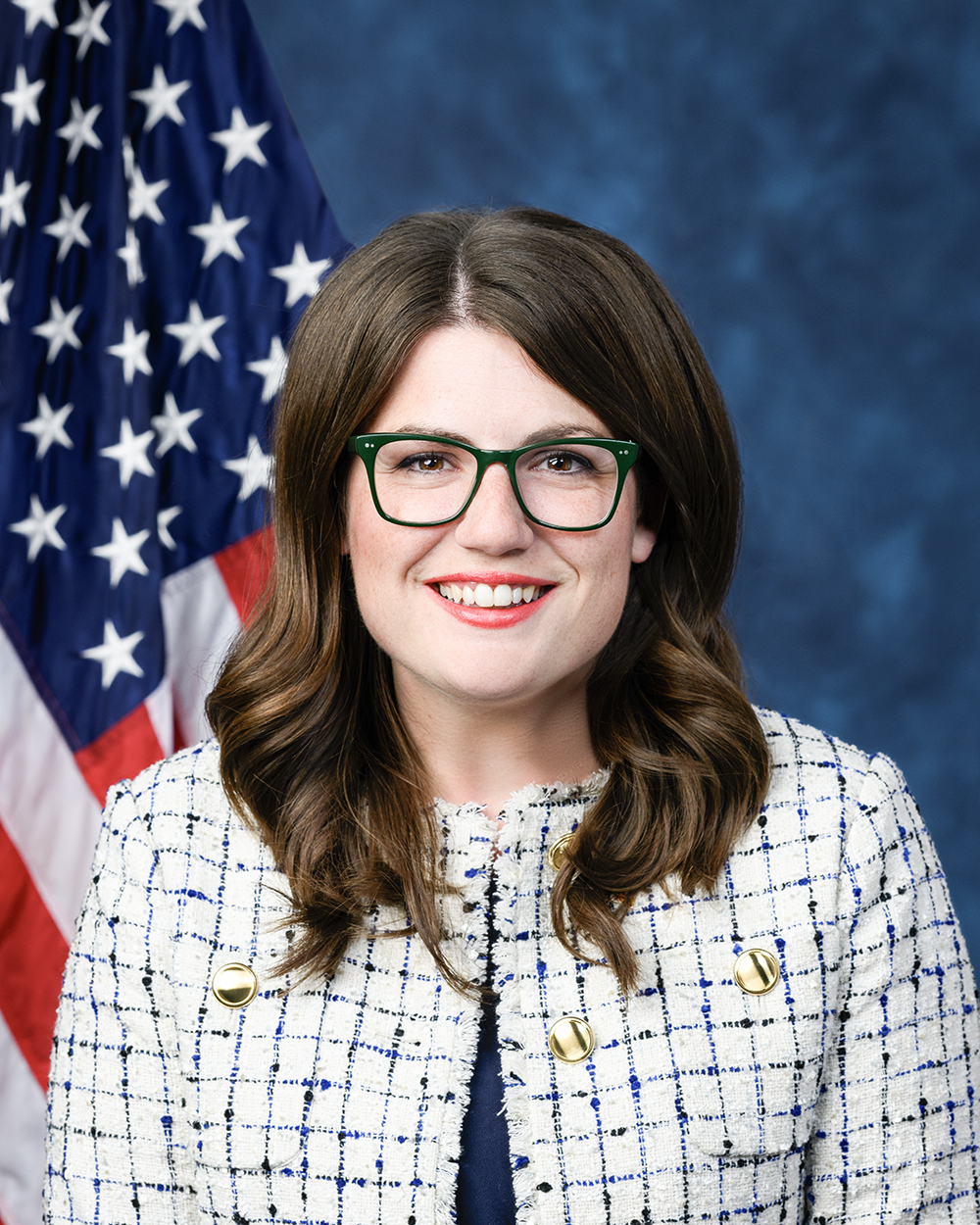
Rep. Sarah Elfreth
Sponsored bills
Maddy summaryHR 1715, the Public Health Funding Restoration Act, restores annual funding for the Prevention and Public Health Fund to $2 billion starting in fiscal year 2026. This bill directly affects federal public health programs, including the CDC’s immunization initiatives and state/local health departments, by reversing prior funding cuts. It amends the Affordable Care Act to set the annual funding level at $2 billion, enabling continued support for evidence-based prevention programs like childhood lead poisoning prevention, tobacco cessation, and immunizations. The restored funding aims to maintain existing programs proven to reduce healthcare costs and improve community health outcomes. This change specifically targets the Prevention and Public Health Fund (Section 4002 of the ACA) without creating new programs.
Maddy summaryHR 1718 would establish the Justice Thurgood Marshall National Historic Site at Public School 103 in Baltimore, Maryland - the elementary school attended by Justice Thurgood Marshall - making it an affiliated area of the National Park System. The bill specifies that the Beloved Community Services Corporation, which currently owns and operates the building, will continue as the site's management entity. It requires the National Park Service to provide technical assistance and enter cooperative agreements for interpretation and preservation, but explicitly prohibits federal acquisition of the property or assumption of operational costs. This designation preserves the site for public education about Marshall's early life and legacy without altering ownership or federal financial responsibility.
Maddy summaryThe MEME Act prohibits federal officials - including the president, vice president, members of Congress, and their immediate family - from issuing, sponsoring, or promoting financial assets (such as cryptocurrencies, meme coins, or securities) for personal financial gain. It applies during their term of service and for 180 days before/after, targeting misuse of public office for private profit. Violations carry civil penalties up to $250,000, require disgorgement of profits, and allow private lawsuits for harm caused. The bill specifically defines "covered assets" to include digital assets like meme coins, aiming to prevent conflicts of interest and corruption through financial exploitation.
Maddy summaryThe PAST Act of 2025 amends the Horse Protection Act to ban harmful practices known as "soring," which deliberately cause pain to horses to exaggerate their gait for shows. It specifically prohibits devices like action devices (e.g., boots causing friction) and weighted shoes on Tennessee Walking Horses, Racking Horses, and Spotted Saddle Horses at events. The bill increases penalties, including escalating disqualifications for repeat offenses (180 days → 1 year → 3 years) and raises fines for violations to $5,000 per offense. It also requires stricter licensing for inspectors and mandates public posting of violation records to help event organizers enforce rules.
Maddy summaryThe American Dream and Promise Act of 2025 would create pathways to permanent residency for certain immigrant youth who entered the U.S. as children (Dream Act component) and for individuals from countries with Temporary Protected Status or Deferred Enforced Departure (American Promise Act component). To qualify, applicants must meet continuous physical presence requirements (since January 1, 2021 for Dream Act applicants, and for 3+ years for American Promise applicants), pass background checks, and satisfy educational or employment criteria. Conditional permanent resident status would be granted initially, with the option to convert to full permanent residency after meeting additional requirements like earning a degree, serving in the military for two years, or demonstrating three years of earned income. The bill includes fee exemptions for low-income applicants, establishes a grant program to assist applicants with legal help, and creates specific procedures for background checks and appeals.
Maddy summaryHRES 166 is a non-binding House resolution expressing U.S. support for the Iranian people's desire for a democratic, secular, and nonnuclear republic. It condemns the Iranian regime's terrorism, regional proxy wars, internal suppression of ethnic and religious minorities, and human rights abuses - including executions and repression of women-led protests. The resolution calls for holding the regime accountable through sanctions, supports the Ten-Point Plan for Iran’s democratic transition, and urges protection for Iranian political refugees in Albania. It does not create new laws but affirms U.S. policy alignment with Iranian protesters' demands.
Maddy summaryHR 1637, the Protect Veteran Jobs Act, allows veterans who were involuntarily dismissed without cause from federal civil service positions between January 20, 2025, and the bill’s enactment date to seek reinstatement to their former role or a qualified position. It directly affects eligible veterans dismissed during this period and requires federal agencies to report quarterly on veteran removals, including the number and reasons for each dismissal. Agencies must submit these reports to specified congressional committees until January 20, 2029, when the reporting requirement ends. The bill aims to restore employment opportunities for affected veterans while increasing transparency around federal hiring and dismissal practices.
Maddy summaryThe RAISE Act of 2025 creates a new tax credit for teachers and early childhood educators, with a base of $1,000 plus additional amounts based on school poverty rates. Teachers working in schools where more than 39% of students live in poverty can receive up to $14,000 more in tax credits, calculated based on how much a school's poverty rate exceeds 39%. The bill also increases the deduction for teachers' classroom expenses from $250 to $500 and requires schools to maintain teacher pay levels to receive certain federal funds. This directly affects public school teachers, early childhood educators, and schools serving communities with high poverty rates.
Maddy summaryEthan's Law requires gun owners to store firearms securely in homes where minors live or where residents are legally prohibited from owning guns. It makes it unlawful to leave firearms unsecured if a minor or ineligible person could access them, with fines of $500 per violation and harsher penalties if injury or death occurs. The bill creates a federal grant program to help states implement similar secure storage laws and treats unsafe storage as negligence in legal cases. It directly affects households with children or residents who cannot legally possess firearms, aiming to reduce accidental shootings and unauthorized access.