

In committee Sep 24, 2026
0 co-sponsors
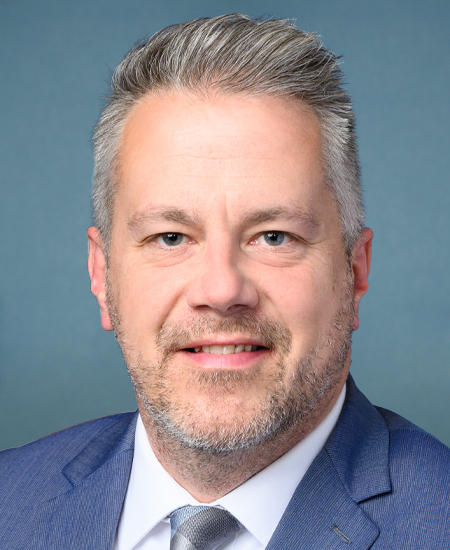
Rep. Eric Sorensen
Total votes
1,879
all sessions
Attendance
97%
64 missed
Higher than 78% of chamber peers
With party
94%
of cast votes
Lower than 82% of chamber peers
Bipartisan score
3%
crosses aisle rarely
Higher than 81% of chamber peers
Sponsored
751
bills & resolutions
Near the chamber average
Committees
6
assignments
751 bills and resolutions
Sponsored bills
Total
751
Primary
25
Co-sponsor
726
This page
751
matching current filters
Lindsey O. Graham Sanctioning Russia and Iran Act of 2026
Maddy summaryHR 5334, the SEED Act of 2025, expands the existing educator expense deduction under federal tax law to explicitly include early childhood educators. It revises the Internal Revenue Code to cover expenses for "early childhood educators" and broadens the educational levels affected to include "pre-kindergarten through grade 12." This change allows early childhood educators (such as preschool teachers) to deduct work-related expenses like classroom supplies and professional development costs, which they previously could not claim under the existing deduction for "kindergarten through grade 12" teachers. The amendment applies to expenses incurred in taxable years beginning after December 31, 2024.
Budget & TaxesSupports Budget & TaxesExpands tax deduction for early childhood educators, providing tax relief for lower/middle-income educators under IRS code, aligning with support indicators for tax relief.
EducationSupports EducationExpands tax deduction for early childhood educators' work expenses, directly supporting teachers by reducing out-of-pocket costs for supplies and professional development.
Labor & EmploymentSupports Labor & EmploymentBill expands tax deductions for early childhood educators, supporting worker benefits and financial relief for educators.
Signed into law Sep 18, 2026
1 co-sponsor
Relief Without Delay Act
Maddy summaryThe Relief Without Delay Act ensures that FEMA can continue disaster relief operations and access its Disaster Relief Fund even if the government shuts down due to a lapse in appropriations. It requires FEMA to submit monthly public reports detailing how disaster funds are obligated and spent, while also mandating the Department of Housing and Urban Development to assess unmet housing needs after major disasters. Additionally, the bill directs NOAA and FEMA to improve tornado detection capabilities using new technologies like artificial intelligence and establishes a grant program for communities to build storm shelters and upgrade warning systems.
HousingSupports HousingThe bill mandates HUD to assess unmet housing needs after major disasters, which directly supports addressing housing issues in affected communities.
TechnologySupports TechnologyThe bill directs NOAA and FEMA to improve tornado detection capabilities, which implies an advancement in technology for public safety.
In committee Sep 17, 2026
1 co-sponsor
To designate the facility of the United States Postal Service located at 901 Lake Street in Oak Park, Illinois, as the "Detective Allan Reddins Post Office Building".
Maddy summaryThis bill designates the U.S. Postal Service facility at 901 Lake Street in Oak Park, Illinois, as the "Detective Allan Reddins Post Office Building." It also requires that any federal law, map, regulation, or document referencing this facility must use its new official name.
In committee Sep 16, 2026
1 co-sponsor
ASAP Act
Maddy summaryThis bill would require Medicare to cover early detection screening tests for Alzheimer's disease and related dementias starting January 1, 2028. It defines eligible tests as FDA-cleared genomic blood tests, blood product analyses, or equivalent medical imaging methods (like protein expression or whole genome sequencing) that detect pre-symptomatic or early-stage conditions. Medicare beneficiaries would receive this coverage without cost-sharing for these specific screenings. The bill amends Medicare coverage rules to explicitly include these tests under Section 1861(nnn) of the Social Security Act.
In committee Sep 16, 2026
1 co-sponsor
Data BRIDGE Act
Maddy summaryThe Data BRIDGE Act requires the Federal Communications Commission (FCC) to update its national broadband map within 180 days of enactment by adding agricultural areas as a dedicated layer. This change will directly affect the FCC, USDA, state governments, and broadband providers by incorporating agricultural land data into the map used to identify broadband coverage gaps. The bill mandates the FCC to consult with the USDA, Commerce Department, states, and other stakeholders to integrate existing agricultural data into the map. The goal is to improve accuracy in identifying broadband needs in rural farming communities, though it does not directly fund infrastructure.
In committee Sep 16, 2026
1 co-sponsor
Small Business Payment for Performance Act of 2025
Maddy summaryThis bill requires federal agencies to provide small business contractors with interim partial payments of at least 50% of estimated costs when contract terms change without the business's agreement. It directly affects small businesses awarded federal construction contracts and their subcontractors, ensuring they receive upfront funds to cover increased costs from mandated changes. The key mechanism mandates that agencies issue these payments promptly upon valid requests, with small businesses required to pass the funds to relevant subcontractors. The law also specifies that these interim payments do not finalize the adjustment request, preserving the agency's right to review the full claim later.
In committee Sep 16, 2026
1 co-sponsor
GUARD Act
Maddy summaryHR 2978, the GUARD Act, allows state, local, and tribal law enforcement agencies to use existing federal grant funds for investigating elder financial fraud, "pig butchering" investment scams, and general financial fraud. The bill directs these funds toward hiring specialized staff, training on blockchain tools and transnational fraud, purchasing investigative software, improving data collection, and creating financial sector liaisons to coordinate with banks. It requires annual reports from law enforcement on fund usage and outcomes, and mandates federal agencies to submit comprehensive reports to Congress on scam statistics, enforcement actions, and funding allocation. The legislation directly affects law enforcement agencies and aims to strengthen efforts against fraud targeting vulnerable populations, particularly elderly individuals.
Criminal JusticeSupports Criminal JusticeFunds specialized law enforcement for financial fraud investigations, strengthening investigative capacity within criminal justice enforcement.
TechnologySupports TechnologyFunds blockchain tools and cybersecurity training for fraud investigations, enhancing digital security measures.
Passed Sep 16, 2026
1 co-sponsor
Combating Illicit Xylazine Act
Maddy summaryHR 1266, the Combating Illicit Xylazine Act, adds xylazine - a veterinary sedative increasingly found in illicit drug mixtures - to Schedule III of the Controlled Substances Act, regulating its use and trafficking. It directly affects veterinarians, animal owners, and manufacturers by allowing xylazine to be legally dispensed for animal use under specific veterinary prescriptions, while prohibiting non-veterinary human use. The bill includes transition periods (60 days for practitioners, 1 year for labeling) to ease compliance for manufacturers and practitioners, and requires the DEA and FDA to expedite necessary applications. It also mandates two congressional reports on xylazine's illicit use and trafficking patterns, and directs the Sentencing Commission to review penalties for offenses involving xylazine.
Passed Sep 16, 2026
1 co-sponsor
National Law Enforcement Officers Remembrance, Support, and Community Outreach Act
National Law Enforcement Officers Remembrance, Support and Community Outreach Act. [ sic ] This bill temporarily directs the Department of the Interior to award a grant to the National Law Enforcement Officers Memorial Fund for the expenses associated with operating and enhancing the community outreach, public education, and officer safety and wellness programs of the National Law Enforcement Museum.
Passed Sep 15, 2026
1 co-sponsor
Ask Maddy
·
AI policy assistant
Ask Maddy about Eric Sorensen
Scope: rhode-island
Hi! I can help you understand Eric Sorensen's legislative record. What would you like to know?
Try one of these
i
Maddy answers using official bill text and legislative records. Always verify before sharing.
Sources cited inline