Issue · Environment

Environment

Every environment bill, vote, and legislator stance in Rhode Island, automatically classified by Maddy, our AI policy reader.

Total bills
118
119th Congress
Top supporter
Jack Reed
76% support rate
Top opponent
-
no data yet
Ranked legislators
4
4 support · 0 oppose
Key legislators

Who's moving environment in Rhode Island

Legislators moving environment in Rhode Island
Legislator Party Stance Support rate Votes
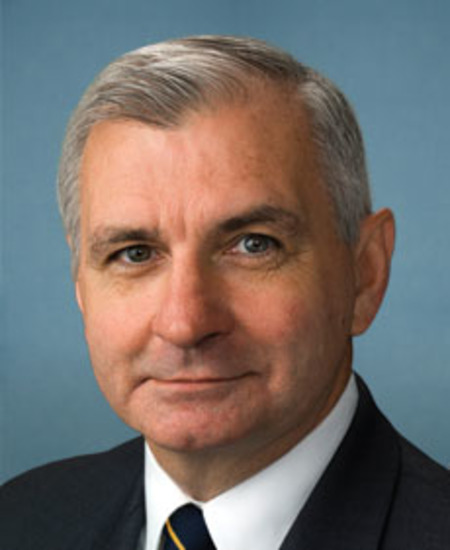
Jack Reed
Jack Reed Senate
D
Support
76% 235
Sheldon Whitehouse
Sheldon Whitehouse Senate
D
Support
73% 226
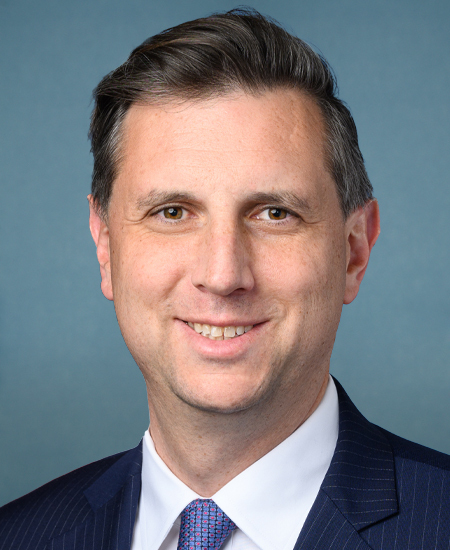
Seth Magaziner
Seth Magaziner House · District 2
D
Support
64% 298
Gabe Amo
Gabe Amo House · District 1
D
Support
62% 306
Showing 1–10 of 118 bills

All environment bills

in committee · United States · Senate Aug 6, 2026

S 5273: Fisheries Science Modernization Act of 2026

The Fisheries Science Modernization Act of 2026 directs the National Oceanic and Atmospheric Administration (NOAA) to integrate environmental DNA (eDNA) sampling into federal fishery stock assessments through a multi-year pilot study and subsequent implementation plan. To support this transition, the bill establishes the National Aquatic Biomolecular Coordination Network, a multi-agency body tasked with developing national standards for eDNA collection, analysis, and data sharing across various aquatic environments. Additionally, the legislation authorizes funding to expand NOAA’s workforce and laboratory capabilities, encourages partnerships with private-sector technology developers, and amends the Magnuson-Stevens Act to formally incorporate eDNA methods into fisheries management.
in committee · United States · Senate Aug 3, 2026

SJRES 204: A joint resolution providing for congressional disapproval under chapter 8 of title 5, United States Code, of the rule submitted by the United States Fish and Wildlife Service and the National Oceanic and Atmospheric Administration relating to "Rescinding the Definition of 'Harm' Under the Endangered Species Act".

This joint resolution seeks to formally disapprove a federal rule issued by the U.S. Fish and Wildlife Service and the National Oceanic and Atmospheric Administration. The rule in question aims to remove the legal definition of "harm" from the Endangered Species Act, a change that could alter how agencies regulate activities affecting protected species. If passed, the resolution would prevent the new rule from taking effect, thereby keeping the existing definition of harm in place. The measure directly impacts federal conservation efforts and the regulatory framework governing endangered species.
Sub-Topics Conservation Wildlife
in committee · United States · Senate Jul 29, 2026

S 5170: Carbon Dioxide Removal Leadership Act of 2026

The Carbon Dioxide Removal Leadership Act of 2026 directs the Department of Energy to remove specific quantities of carbon dioxide from the atmosphere each year through 2036 and beyond, with targets increasing from 50,000 to 10 million metric tons annually. The bill defines eligible technologies as those that capture CO2 directly from the air or seawater and store it durably, while excluding methods like enhanced oil recovery or natural photosynthesis. To ensure accuracy, the law requires independent third parties to measure, monitor, and verify removals, with costs included in the price of removal, which must drop from $750 per ton in 2026 to $150 per ton by 2037. The Secretary of Energy must prioritize projects that create domestic jobs, source materials locally, and benefit communities historically dependent on fossil fuels, while reserving at least 20 percent of removals for smaller projects. Additionally, the act mandates regular reports to Congress on progress and authorizes funding to carry out these removal obligations.
Sub-Topics Oil & Gas
in committee · United States · House Jul 13, 2026

HR 9647: To prohibit the National Science Foundation from obligating or expending Federal funds to descope or decommission the Ocean Observatories Initiative instruments, and for other purposes.

This bill prevents the National Science Foundation from stopping or dismantling the Ocean Observatories Initiative instruments located off the coasts of Oregon, Washington, Alaska, North Carolina, and in the Irminger Sea. It requires the agency to conduct a thorough review of the program with input from scientists and coastal communities before any such actions can occur. Until that review is finished, the bill mandates that the initiative continue operating normally in all areas where instruments were previously removed. The legislation directly affects the federal funding and operational status of this specific scientific research network.
in committee · United States · Senate Jul 16, 2026

SRES 806: A resolution designating July 2026 as "Plastic Pollution Action Month".

This resolution designates July 2026 as "Plastic Pollution Action Month" to raise awareness about the environmental and health risks associated with plastic waste. The bill recognizes that plastic pollution harms marine life and human health, citing statistics on ocean contamination and the presence of microplastics in the human body. It encourages all individuals in the United States to participate in activities aimed at reducing plastic use and cleaning up litter during the designated month. The measure does not create new laws or regulations but serves to highlight the issue and promote voluntary action.
Sub-Topics Recycling
in committee · United States · Senate Jul 15, 2026

S 4949: Water Resources Development Act of 2026

The Water Resources Development Act of 2026 authorizes the Army Corps of Engineers to conduct numerous feasibility studies and modify existing projects focused on flood risk management, coastal storm protection, navigation improvements, and ecosystem restoration across the United States. It establishes new grant programs and funding authorizations for the Environmental Protection Agency to support drinking water and wastewater infrastructure, including specific provisions for small and disadvantaged communities, lead reduction, and cybersecurity resilience. The legislation also directs the EPA to create initiatives for water sector cybersecurity, combats plastic waste, and updates regulations regarding nonpotable aquifer use for industrial wells.
in committee · United States · Senate Jun 24, 2026

S 4911: Investing in State Energy Act of 2026

The Investing in State Energy Act of 2026 requires the federal government to provide application guidance and publish funding allocations for state energy programs within 60 days of funds becoming available. Additionally, the bill mandates that financial assistance payments be sent to states and tribes within 30 days after they submit complete conservation plans. This legislation also increases funding for state energy initiatives by adding $100 million for each of the fiscal years from 2027 through 2031. These changes aim to streamline the process for states and tribes to receive and utilize federal energy conservation funds more quickly.
in committee · United States · House Jun 25, 2026

HR 9467: Green Ribbon Act of 2026

The Green Ribbon Act of 2026 establishes a new program to recognize schools and nonformal learning institutions that achieve high performance in environmental literacy, reducing their carbon footprint, and ensuring a positive impact on the health of their students and staff. Under this bill, the Department of Education would award grants to state agencies to support schools in meeting these goals, while the Institute of Museum and Library Services would create a similar award program for libraries, museums, and nature centers. The legislation also creates a new office within the Department of Education dedicated to providing technical assistance and resources for sustainable school infrastructure and facilities. Key provisions include setting aside specific funds for underresourced schools and Bureau of Indian Education schools, as well as requiring annual reports on the program's progress and outcomes.
Sub-Topics Libraries
in committee · United States · Senate Jun 23, 2026

S 4867: Small Farm Conservation Act

The Small Farm Conservation Act creates a dedicated subprogram within the Environmental Quality Incentives Program to provide financial and technical assistance specifically for small-scale agricultural producers. This new initiative allocates at least 30 percent of program funds between 2027 and 2031 to support farms that are smaller than their state's median size, with special eligibility for socially disadvantaged groups, veterans, and those in high-poverty areas. Key provisions include a minimum payment of $2,500, a 50 percent bonus for soil health management on operations of 50 acres or less, and a streamlined application process designed to reduce administrative burdens. To ensure effective delivery, the bill requires the Natural Resources Conservation Service to hire and train staff familiar with small farm challenges, designate coordinators in every state, and publish outreach materials in multiple languages.
Sub-Topics Conservation
in committee · United States · House Jun 24, 2026

HR 9250: Great American Outdoors Act 250

This bill redesignates the existing National Parks and Public Land Legacy Restoration Fund as the America's Legacy Restoration Fund to address deferred maintenance on federal lands. It directs revenue from recreation fees and a portion of energy development income into the fund, which must be used primarily for repairing critical infrastructure like roads, trails, and buildings managed by agencies such as the National Park Service and the Forest Service. The legislation establishes strict rules requiring that most funds go toward non-transportation projects, mandates transparency through public dashboards tracking project status, and sets aside a small percentage for matching private donations. Additionally, the bill increases entrance fees for foreign visitors to ensure they contribute to the fund, while prohibiting the use of these specific funds for land acquisition or employee bonuses.
Showing 1 to 10 of 118 bills
1 2 3 12 Next