Issue · Criminal Justice

Criminal Justice

Every criminal justice bill, vote, and legislator stance in Rhode Island, automatically classified by Maddy, our AI policy reader.

Total bills
122
119th Congress
Top supporter
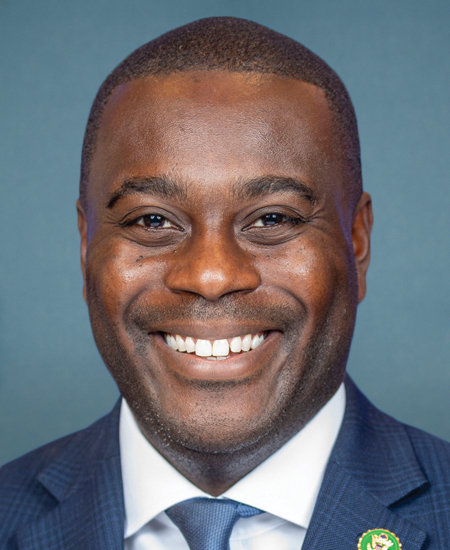
Gabe Amo
57% support rate
Top opponent
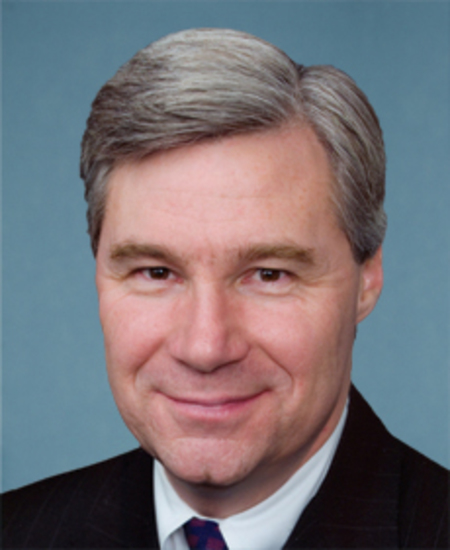
Sheldon Whitehouse
16% support rate
Ranked legislators
4
2 support · 2 oppose
Key legislators

Who's moving criminal justice in Rhode Island

Legislators moving criminal justice in Rhode Island
Legislator Party Stance Support rate Votes
Gabe Amo
Gabe Amo House · District 1
D
Mixed
57% 154
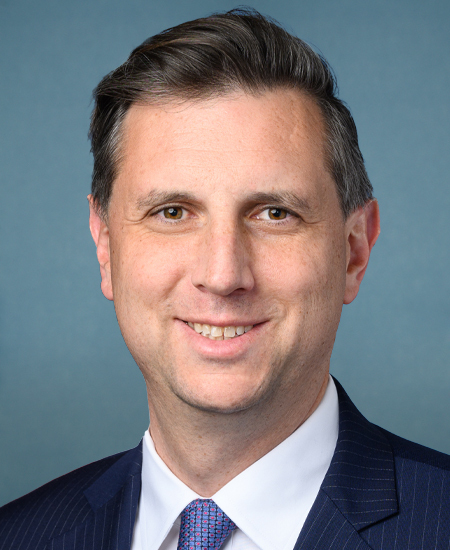
Seth Magaziner
Seth Magaziner House · District 2
D
Mixed
53% 153
Sheldon Whitehouse
Sheldon Whitehouse Senate
D
Strong −
16% 167
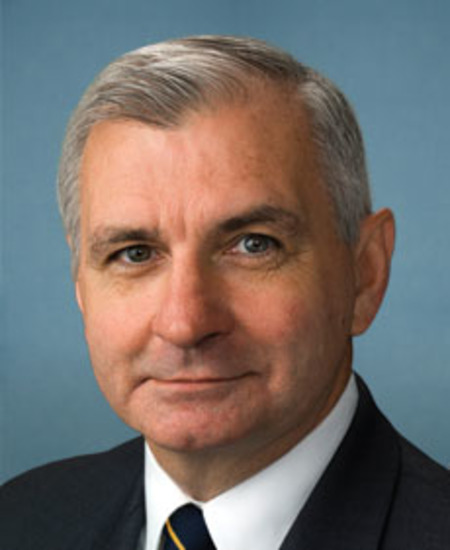
Jack Reed
Jack Reed Senate
D
Strong −
16% 171
Showing 1–10 of 122 bills

All criminal justice bills

in committee · United States · Senate Jul 30, 2026

S 5201: Lori Jackson-Nicolette Elias Domestic Violence Survivor Protection Act

The Lori Jackson-Nicolette Elias Domestic Violence Survivor Protection Act expands federal firearm restrictions to include individuals subject to any domestic violence restraining order, including temporary or emergency orders issued without the abuser's presence. It broadens the legal definition of an "intimate partner" to cover dating partners and other relationships protected by state laws, closing previous loopholes that allowed some abusers to keep guns. The bill also creates a federal grant program for states and tribes to fund the removal, storage, and return of firearms from individuals subject to these orders, requiring them to partner with local domestic violence service providers to ensure victim safety.
in committee · United States · Senate Aug 6, 2026

S 5320: Insider Trading Prohibition Act

The Insider Trading Prohibition Act creates a new federal criminal statute that makes it illegal to buy or sell securities while knowingly in possession of material, nonpublic information that was obtained wrongfully. The bill defines wrongful conduct to include actions such as theft, breach of fiduciary duty, or unauthorized access to data, and explicitly covers situations where an individual consciously avoids knowing the details of how the information was acquired. It also prohibits sharing this type of sensitive information if the sender knows it will be used for trading. While the law allows for certain exemptions, including transactions made under pre-existing Rule 10b5-1 plans, it ensures that these new penalties apply in addition to existing legal remedies.
Sub-Topics Drug Policy
in committee · United States · House Aug 6, 2026

HR 10066: Stop Corrupt Trading Act

The Stop Corrupt Trading Act creates a new federal criminal offense prohibiting the President and Vice President from selling or exchanging nonpublic information gained through their official positions for financial benefit. The bill also makes it illegal for any other person to purchase, sell, or exchange such information with these officials or their closely associated entities. Violations can result in criminal penalties including fines of up to double the transaction value and imprisonment for the President or Vice President, while third parties face significant fines and mandatory forfeiture of proceeds derived from the illicit transactions. Additionally, the Attorney General is authorized to pursue civil actions against violators to recover profits and impose further financial penalties, with a specific requirement for the Office of Government Ethics to refer credible evidence of such conduct to the Justice Department.
in committee · United States · Senate Jun 24, 2026

S 4926: State Firearms Dealer Licensing Enhancement Act

This bill creates a federal grant program to help states and tribal governments improve their licensing systems for firearms dealers. To qualify for funding, a state or tribe must already require dealers to hold a license, pass an application process, renew their license every three years, and submit to inspections. If a dealer breaks the rules, the state must be able to suspend or revoke their license and impose fines or criminal charges. The Attorney General will award up to $2.5 million per year in competitive grants to eligible applicants who submit plans for developing or improving these programs. Recipients must report annually on the number of inspections, violations, and licenses issued, renewed, or revoked, while the Attorney General will provide a public report on all grants awarded and denied.
Sub-Topics Firearms
in committee · United States · House Feb 4, 2025

HR 923: Stop Arming Cartels Act of 2025

The Stop Arming Cartels Act of 2025 prohibits civilian possession, sale, or transfer of rifles capable of firing .50 caliber ammunition, with exceptions for government use and rifles lawfully owned before the bill's enactment. It requires owners of such rifles to register them with the federal government within 12 months, without fees, and adds these rifles to the National Firearms Act registry. The bill also creates new federal firearm restrictions for significant foreign narcotics traffickers identified under the Foreign Narcotics Kingpin Designation Act and expands reporting requirements for rifle sales to include all rifles. This directly affects civilian rifle owners, sellers, and individuals designated as foreign narcotics traffickers.
in committee · United States · House Jul 7, 2026

HR 9374: Find Our Families Act of 2026

The Find Our Families Act of 2026 requires the Department of Homeland Security to create a public online system that allows families to locate individuals detained by Customs and Border Protection or Immigration and Customs Enforcement. This system must provide search results within eight hours of detention, display information in multiple languages, and include specific details such as names, dates of birth, and facility locations, while excluding data for minors. The bill also mandates that families be notified within five hours if a detainee is transferred for medical care and establishes new reporting requirements for CBP arrests, including details on the circumstances of the arrest and the number of agents involved. Additionally, the legislation creates a process for families to report errors in detainee information and imposes penalties on employees or contractors who fail to comply with these data-sharing and reporting obligations.
passed · United States · Senate Jun 22, 2026

SRES 783: A resolution expressing support for the designation of June 11, 2026, as "Anti-Illicit Trade Awareness Day".

This resolution expresses support for designating June 11, 2026, as "Anti-Illicit Trade Awareness Day" to raise public and governmental attention about illegal trade activities. The bill defines illicit trade broadly to include the movement of contraband like drugs and firearms, as well as regulatory violations such as customs fraud and smuggling that harm the economy and national security. By formally recognizing this issue, the Senate aims to encourage reporting of illegal activities, promote education on the scale of the problem, and urge federal agencies to prioritize combating these networks in their security strategies.
in committee · United States · House May 7, 2026

HR 8694: Assault Weapon Financing Accountability Act

The Assault Weapon Financing Accountability Act prohibits the use of "Buy Now, Pay Later" loans to purchase semiautomatic assault weapons. This ban applies to both lenders offering these short-term credit products and dealers who accept such loans for firearm sales. The bill defines "semiautomatic assault weapons" based on specific physical features like pistol grips, forward grips, and high-capacity magazines, and sets a civil penalty of $100,000 for violations by lenders or sellers.
Sub-Topics Firearms Violent Crime
in committee · United States · House May 13, 2026

HR 8798: Universal School Meals Program Act of 2026

The Universal School Meals Program Act of 2026 mandates that all public schools provide free breakfast and lunch to every enrolled student, regardless of income. It establishes specific funding rates for these meals, adjusts payments based on the use of locally sourced food, and eliminates the ability of schools to collect debt for unpaid charges. Additionally, the bill expands free meal access to summer programs, afterschool care, and incarcerated juveniles while updating poverty measurement standards across various federal education and nutrition laws.
Sub-Topics Student Health
passed · United States · Senate Jun 15, 2026

S 4394: Promoting Police Leadership Act

The Promoting Police Leadership Act directs the Attorney General to create and certify specialized training programs for police commanders, focusing on leadership, community trust, and data-driven policing. This initiative requires the training to be primarily in-person and include practical problem-solving exercises where officers develop and refine solutions for real-world challenges. The bill mandates that the Attorney General consult with local agencies and universities to design these curricula and publish a list of law enforcement units that successfully complete the courses. Additionally, the legislation requires periodic reports to Congress and a review by the Government Accountability Office to assess the program's effectiveness and implementation barriers. Importantly, the act does not override state or local authority to set their own certification standards for law enforcement officers.
Showing 1 to 10 of 122 bills
1 2 3 13 Next