

Regulations from the Executive in Need of Scrutiny Act of 20 21 This bill revises provisions relating to congressional review of agency rulemaking. Specifically, the bill establishes a congressional approval process for a major rule. A major rule may only take effect if Congress approves of the rule. A major rule is a rule that results in (1) an annual effect on the economy of $100 million or more; (2) a major increase in costs or prices for consumers, individual industries, government agencies, or geographic regions; or (3) significant adverse effects on competition, employment, investment, productivity, innovation, or the ability of U.S.-based enterprises to compete with foreign-based enterprises. In addition, the bill establishes a congressional disapproval process for a nonmajor rule. A nonmajor rule may only take effect if Congress does not disapprove of the rule.
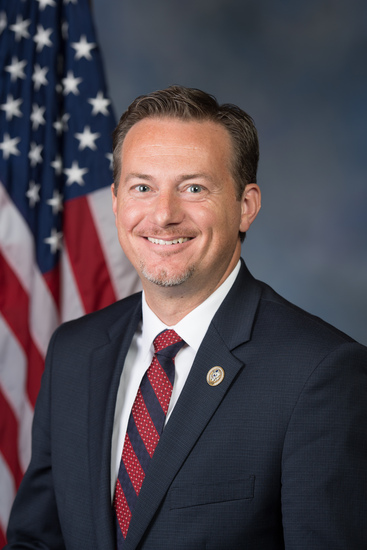
Rep. Michael Cloud
Sponsored bills
Lawful Interstate Transportation of Firearms Act This bill revises criminal provisions related to the interstate transportation of firearms and ammunition. An individual may transport a firearm between two places (e.g., states) where it is legal to possess, carry, or transport the firearm. During transport, the firearm must be unloaded and secured or securely stored. Additionally, an individual may transport ammunition, or a detachable magazine or feeding device, between two places where it is legal to possess, carry, or transport the ammunition, magazine, or feeding device. During transport, the ammunition, magazine, or feeding device must not be loaded into a firearm and must be securely stored. The term transport includes staying in temporary lodging; stopping for food, fuel, vehicle maintenance, an emergency, or medical treatment; or any other activity incidental to the transport. The bill prohibits the arrest or detention of an individual for a state or local firearm or ammunition violation unless there is probable cause to believe the individual failed to comply with the provisions of this bill, and there is probable cause to believe the individual committed another crime.
Border Visibility and Security Act This bill directs the Department of Homeland Security (DHS) to install surveillance technology and take other actions with respect to the U.S.-Mexico border. DHS shall deploy the most practical and effective technology available to achieve situational awareness and operational control of the border. Such technology may include radar surveillance systems, tunnel detection technology, and unmanned aerial vehicles. DHS is authorized to waive legal requirements as necessary in order to implement the necessary surveillance technology along the border. DHS shall also (1) construct a navigable road along at least 700 miles of the southwest border, (2) permanently eradicate certain foliage that grows along the Rio Grande river, and (3) report to Congress a comprehensive strategy about the barriers and technologies needed to secure operational control along the border. Drug cartel funds that have been criminally forfeited to the U.S. government shall be reserved for security measures along the U.S.-Mexico border.
Iran Sanctions Relief Review Act of 2021 This bill restricts the President's authority to unilaterally undertake certain actions with respect to Iran and increases congressional oversight of those actions. Specifically, the President must report to Congress before terminating or waiving sanctions related to Iran or taking a licensing action that significantly alters U.S. foreign policy with respect to Iran. Each report must (1) describe the proposed action and its rationale, and (2) indicate whether or not the action is intended to significantly alter foreign policy concerning Iran. If the intention is to alter that policy, the report must provide additional information about the policy objectives and anticipated effects of the action. After the President submits a report, the bill provides Congress with a 30-day period to review it; this period is extended to 60 days for reports submitted between July 10 and September 7. During this period, Congress may enact a joint resolution approving or disapproving the action. During the review period, the President may not take the action unless Congress passes a joint resolution of approval; if Congress enacts a joint resolution of disapproval, the bill prohibits the President from taking the action. The bill also outlines procedures for the introduction and consideration of these types of joint resolutions.
Homeland and Cyber Threat Act or the HACT Act This bill allows claims in federal or state court against foreign states that conduct or participate in cyberattacks against U.S. nationals.
State Border Security Reimbursement Act of 2021 This bill requires the federal government to reimburse eligible states for their border security expenses. To be eligible, a state must have expended more than $2.5 billion on border security and enforcement in the 10 years before this bill's enactment. If such a state provides an accounting of all of its nonfederally funded border security expenses any time up to 180 days after this bill's enactment, the federal government shall reimburse the full amount.
Adoptee Citizenship Act of 2021 This bill provides for the automatic acquisition of citizenship for certain individuals adopted by a U.S. citizen. A child born outside the United States and adopted by a U.S. citizen shall automatically acquire citizenship upon meeting certain requirements, regardless of when the adoption was finalized. Currently, adoptees who were over the age of 18 on February 27, 2001, do not automatically acquire citizenship. An individual born outside the United States and residing in the United States shall automatically acquire citizenship if the individual (1) was adopted by a citizen before becoming 18 years old, (2) was physically present in the United States in the citizen parent's custody pursuant to lawful admission before becoming 18 years old, (3) never acquired citizenship before this bill's enactment, and (4) was lawfully residing in the United States on this bill's enactment date. An individual born outside the United States and residing outside the United States but who otherwise meets all of the requirements shall automatically acquire citizenship upon being physically present in the United States pursuant to lawful admission. Such an individual shall be subject to a background check. If the background check reveals the individual has committed a crime that was not properly resolved, the individual may not receive a visa unless the Department of Homeland Security and Department of State have coordinated with law enforcement to ensure that action was taken to resolve the issue.
This resolution calls on the Office for Civil Rights within the Department of Education and state attorneys general to assist elementary and secondary schools in complying with existing civil rights laws and investigate and enforce such laws. In addition, the resolution condemns the practice of requiring teachers to receive education in critical race theory as a condition of certification.
This bill prohibits any executive agency from contravening Executive Order 13950 (Combating Race and Sex Stereotyping), except as such order relates to contractors and grant recipients.
Stop CRT Act This bill grants Executive Order 13950 the force and effect of law. That order prohibits federal agencies and contractors from advancing specified policies or training related to race or sex.