

Entrepreneurs Need Timely Replenishment (for) Eating Establishments Act or the ENTRÉE Act This bill provides FY2021 supplemental appropriations for the Restaurant Revitalization Fund and modifies requirements related to administration of the fund. The fund was established in response to COVID-19 to make grants to eligible food and beverage purveyors for covering specified costs such as payroll, operational expenses, and paid sick leave. The bill correspondingly rescinds unobligated amounts previously made available for the Economic Injury Disaster Loan Program and coronavirus state and local fiscal recovery funds. Further, the bill requires the Small Business Administration (SBA) to (1) review and process grant applications in the order in which they are received; (2) impose requirements on applicants that reduce waste, fraud, and abuse; and (3) submit and report monthly on an oversight and audit plan outlining the SBA's policies, procedures, and activities with respect to these grants.
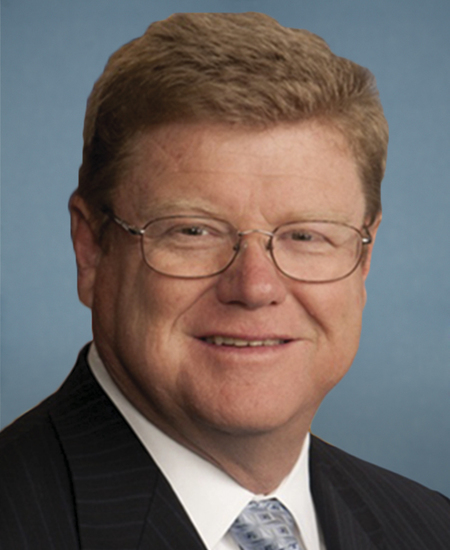
Rep. Mark E. Amodei
Sponsored bills
This bill provides supplemental FY2021 appropriations to the National Guard for its response to the events at the U.S. Capitol on January 6, 2021. The bill designates the funding as emergency spending, which is exempt from discretionary spending limits.
Lake Tahoe Restoration Reauthorization Act This bill reauthorizes through September 30, 2034, activities to restore Lake Tahoe and its surrounding basin. Lake Tahoe is a large freshwater lake on the border of California and Nevada.
This resolution expresses support for the designation of Journeyman Lineworkers Recognition Day. (A journeyman lineworker is a person who builds and maintains electrical power systems.)
Public Land Renewable Energy Development Act of 2021 This bill sets forth provisions regarding development of geothermal, solar, or wind energy on public lands. The Department of the Interior shall establish priority areas on its land for geothermal, solar, and wind energy projects, consistent with the principles of multiple use and the renewable energy permitting goal. Among applications for a given renewable energy source, proposed projects located in priority areas for that renewable energy source shall be given the highest priority for incentivizing deployment, and be offered the opportunity to participate in any regional mitigation plan developed for the relevant priority areas. The bill provides for the disposition of revenues from the development of wind or solar energy. The bill establishes the Renewable Energy Resource Conservation Fund to make funds available to federal, state, and tribal agencies for distribution in regions in which renewable energy projects are located on federal land for (1) restoring and protecting natural water bodies and fish and wildlife habitat and corridors, and (2) preserving and improving recreational access to federal land and water in an affected region.
Technical Correction to the Shoshone-Paiute Tribes of the Duck Valley Reservation Water Rights Settlement Act of 2021 This bill authorizes deposit of specified interest payments into the Shoshone-Paiute Tribes Water Rights Development Fund and the Shoshone-Paiute Tribes Operation and Maintenance Fund. These funds were established under the water rights settlement agreement for the Shoshone-Paiute Tribes of the Duck Valley Reservation.
Minor League Baseball Relief Act This bill establishes a program for the relief of certain minor league baseball clubs and independent professional baseball clubs that experienced large business losses. The bill provides funding for the Small Business Administration to make grants to such clubs that experienced decreases in gross revenue in 2020 of at least 75%, as measured against revenues in 2019 (or, if revenues were negatively affected by a natural disaster or weather disruption in 2019, by the average of revenues over the prior three-year period). The source of funding for the grants shall be funds appropriated under enacted COVID-19 relief legislation that have not been obligated and are no longer being used to carry out activities authorized under those laws. Grant amounts provided to any club may not exceed $10 million.
Reducing Hereditary Cancer Act of 2021 This bill provides for Medicare coverage of germline mutation testing for individuals with a personal or family history of a hereditary cancer gene mutation or suspected history of hereditary cancer, as well as for associated coverage of risk-reducing surgeries and screenings.
Ending Platform Monopolies Act This bill prohibits large online platforms, as designated by the Department of Justice or Federal Trade Commission, from offering certain products or services from another line of business that is owned or controlled by the platform. Specifically, such platforms are prohibited from owning or controlling another line of business that (1) uses the platform to sell products or services, (2) offers a product or service that the platform requires a business user to purchase or use as a condition for access to the platform, or (3) gives rise to a conflict of interest. Under the bill, a conflict of interest occurs when a platform operator's ownership or control of another line of business creates an incentive and the ability for the platform to provide an advantage to the platform's own products or services over those of a competitor on the platform, or exclude or disadvantage the products or services of a competitor on the platform. For example, under the bill, Amazon.com, Inc. may be prohibited from offering for sale on Amazon.com privately labeled products or services (e.g., Amazon Essentials, AmazonBasics, etc.) if designated as a large online platform. Finally, the bill prohibits a director, officer, employee, or agent of a platform from simultaneously serving in the same or a similar role with a formerly affiliated entity.
Augmenting Compatibility and Competition by Enabling Service Switching Act of 2021 or the ACCESS Act of 2021 This bill requires large online platforms (e.g., YouTube, Salesforce) to facilitate consumers and businesses switching from one platform to another. Specifically, the platforms must maintain interfaces that (1) securely transfer user data to other platforms (i.e., portability), and (2) allow other platforms to connect and communicate with their systems (i.e., interoperability). The bill provides the Federal Trade Commission (FTC) and the Department of Justice with the authority to designate specific platforms to which these requirements apply. After a platform is designated, the FTC must issue standards of interoperability specific to the platform. A platform may not change its interoperability interface without petitioning the FTC, and the platform must provide to competing businesses documentation for accessing the interface. Further, the FTC must establish a technical committee to assist with the implementation of these requirements. The bill provides the FTC with authority to enforce these requirements including through recovery of civil penalties and injunctive relief.