

Maddy summaryHR 7651, the Chloe Cole Act of 2026, prohibits healthcare providers from performing certain medical interventions on minors under 18 aimed at altering physical development to align with gender identity. These "covered interventions" include puberty blockers, hormone treatments, and specific surgeries, but exclude medically necessary care for conditions like disorders of sexual development or traumatic injuries. The bill creates a federal civil lawsuit right for affected minors or their parents against providers who perform such interventions, allowing claims for damages including emotional distress and punitive awards, with strict liability for providers after the law's enactment. It explicitly allows exceptions for legitimate medical treatments and requires providers to prove such exceptions apply if challenged.
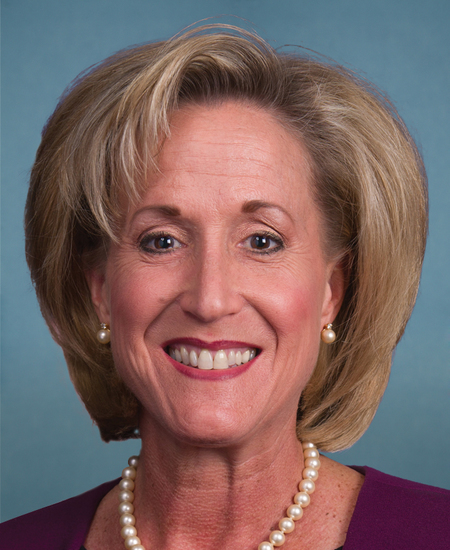
Rep. Ann Wagner
Sponsored bills
Maddy summaryThis bill requires Medicare Advantage plans to implement electronic pre-approval systems for medical services by 2028 and meet transparency reporting standards starting in 2027. Plans must publicly report data on approval/denial rates, appeal outcomes, response times, and technology use for pre-approval requests, including details on how denials relate to clinical criteria. It establishes a 24-hour response timeframe for certain requests and mandates annual reviews of pre-approval requirements based on data and input from seniors and providers. The law directly affects Medicare Advantage plans, seniors enrolled in these plans, and healthcare providers who submit pre-approval requests. These changes aim to make the pre-approval process faster, more transparent, and more accountable for seniors seeking covered medical services.
Protecting Privacy in Purchases Act This bill prohibits payment card networks from using merchant codes that distinguish firearms retailers from general-merchandise retailers or sporting-goods retailers. The Department of Justice must enforce this bill and report annually on the resulting investigations and cases.
Maddy summaryThis bill directs the U.S. Secretary of State to create and execute a plan to end the operations of the United Nations Relief and Works Agency for Palestine Refugees in the Near East (UNRWA) across the Middle East. The legislation requires a detailed strategy that assesses current programs like education and healthcare, identifies new organizations to take over these services, and outlines how to fund and oversee the transition without interrupting aid. Once the plan is submitted to Congress, the State Department must begin implementing it within a year while coordinating with host countries and international partners. The bill emphasizes maintaining service continuity and ensuring that any successor groups meet strict standards for transparency and accountability.
Maddy summaryThis bill requires investment companies and transfer agents to collect contact information for a trusted person when serving "specified adults" (individuals 65+ or with impairments affecting their ability to protect their interests). It allows these entities to temporarily delay cash payments from investments (up to 15 business days, extendable by 10 more days) if they reasonably suspect financial exploitation during a redemption request. The delay period requires written notification to the trusted contact, internal review, and holding funds securely. The bill aims to prevent exploitation by giving companies time to verify situations before releasing funds. It also mandates record-keeping and future SEC reporting on financial exploitation risks.
Maddy summaryThe Jewish American Security Act aims to combat antisemitism by strengthening protections for Jewish students, securing Jewish communities, and increasing transparency regarding online hate speech. For educational institutions receiving federal funds, the bill mandates the creation of specific coordinators to handle discrimination complaints, requires annual training on handling antisemitism, and establishes a new federal clearinghouse to share best practices for campus safety. To support physical security, the legislation expands grant funding for nonprofit organizations and directs the Attorney General to provide resources for law enforcement agencies protecting houses of worship. Additionally, the act requires major online platforms with over 50 million monthly users to submit detailed reports to the Federal Trade Commission on how they detect, remove, and moderate antisemitic content.
Maddy summaryThis resolution celebrates the 200th anniversary of Jefferson Barracks in Missouri and honors its historical contributions to U.S. military history and national security. It recognizes the site's long legacy, from its founding in 1826 as a training ground to its role in major conflicts like the Civil War and World War I, as well as its current status as a National Guard installation and historic park. The measure formally commends the thousands of service members who served there and encourages the continued preservation of the facility as a vital community and military asset.
Maddy summaryThis bill sets clear limits on class action lawsuits against credit reporting companies for violations of the Fair Credit Reporting Act (FCRA). For intentional failures to follow FCRA rules, it caps individual damages at $100,000 or 40% of total damages, and total class recovery at $500,000 or 1% of the company’s net worth. For negligent failures, it similarly limits total class recovery to $500,000, 1% of net worth, or 40% of actual damages. These changes directly affect credit bureaus (like Equifax or TransUnion) and creditors handling consumer credit data, preventing excessive damages in class actions. The bill harmonizes existing liability rules by adding specific, predictable financial limits to court awards.
Maddy summaryThis bill redesignates the existing National Parks and Public Land Legacy Restoration Fund as the America's Legacy Restoration Fund to address deferred maintenance on federal lands. It directs revenue from recreation fees and a portion of energy development income into the fund, which must be used primarily for repairing critical infrastructure like roads, trails, and buildings managed by agencies such as the National Park Service and the Forest Service. The legislation establishes strict rules requiring that most funds go toward non-transportation projects, mandates transparency through public dashboards tracking project status, and sets aside a small percentage for matching private donations. Additionally, the bill increases entrance fees for foreign visitors to ensure they contribute to the fund, while prohibiting the use of these specific funds for land acquisition or employee bonuses.
Maddy summaryThis bill, titled the Protecting Americans' Retirement Savings From Politics Act, aims to reform how companies disclose information to investors and how proxy advisory firms operate. It requires companies to only disclose information they determine is material to investment decisions, creates a new advisory committee for public companies, and mandates registration for proxy advisory firms with strict rules on conflicts of interest and voting recommendations. The legislation also requires institutional investors to report how they use proxy advisory firm recommendations and prohibits automated voting without independent review. Additionally, it clarifies that investment advice should prioritize financial returns over non-financial factors unless customers provide informed consent to consider other factors.