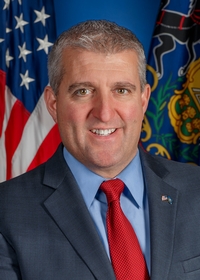
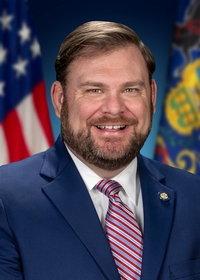
Key legislators
Who's moving labor & employment in Pennsylvania
Showing 4 of 4
bills
All labor & employment bills
SB 1260 establishes the State Board of Electrical Licensure to regulate and oversee electrical contractors, electricians, residential electricians, and apprentices in Pennsylvania. The bill requires individuals performing electrical work to obtain specific licenses based on their role and experience, while also mandating liability insurance and continuing education for license holders. To enforce these standards, the legislation creates a system of fees, fines, and penalties for violations, along with procedures for suspending or revoking licenses when necessary.
This bill amends Pennsylvania's Prevailing Wage Act to clarify definitions and requirements for public works projects. It expands the definition of "public work" to include custom fabrication of nonstandard goods or materials for projects costing more than $25,000, while excluding structural steel and precast concrete. The law requires contractors and subcontractors performing custom fabrication to follow the same wage, reporting, and compliance rules as other public works contractors. Additionally, the bill clarifies that the Secretary of Labor and Industry must determine prevailing wage rates for all crafts, including those involved in custom fabrication, and must consider employee benefit contributions from collective bargaining agreements when setting these rates.
HB 274 amends Pennsylvania's 1936 Unemployment Compensation Law to change eligibility rules for workers seeking benefits. It specifically expands eligibility for individuals fleeing domestic violence by removing barriers to claiming compensation in such cases. The bill also modifies how unemployment compensation rates and benefit amounts are calculated. These changes directly affect unemployed workers in Pennsylvania who qualify under the updated rules. The bill is currently pending in committee after recent amendments.
SB 153 amends Pennsylvania's 1936 Unemployment Compensation Law to clarify when unemployed workers may lose benefits. It adds specific rules making workers ineligible if they unreasonably discourage their own hiring - such as skipping job interviews without good cause or refusing referrals before discussing job details. Employers can now report such behavior to the state, and the Department of Labor must create forms for this process within 90 days. The bill directly affects workers claiming unemployment benefits by tightening eligibility standards around job search efforts.