

Issue · Housing
Housing (Property Taxes)
Every housing bill, vote, and legislator stance in Pennsylvania, automatically classified by Maddy, our AI policy reader.
Total bills
26
2025-2026 Regular Session
Top supporter
Elder Vogel
100% support rate
Top opponent
Jarrett Coleman
0% support rate
Ranked legislators
10
5 support · 5 oppose
Key legislators
Who's moving property taxes in Pennsylvania
| Legislator | Party | Stance | Support rate | Votes |
|---|---|---|---|---|

Elder Vogel
Senate · District 47
|
R |
Strong +
|
100% | 5 |

Joe Picozzi
Senate · District 5
|
R |
Strong +
|
100% | 5 |

Kim Ward
Senate · District 39
|
R |
Strong +
|
100% | 5 |
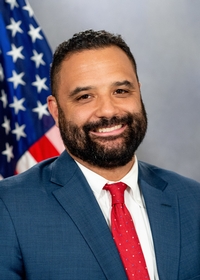
Dave Madsen
House · District 104
|
D |
Strong +
|
100% | 4 |

Izzy Smith-Wade-El
House · District 49
|
D |
Strong +
|
100% | 4 |

Jarrett Coleman
Senate · District 16
|
R |
Strong −
|
0% | 5 |
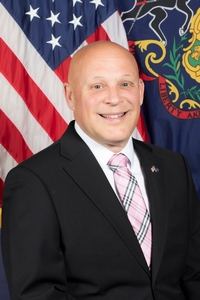
Eric Weaknecht
House · District 5
|
R |
Strong −
|
0% | 4 |
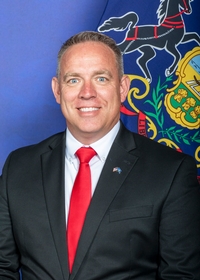
Tom Jones
House · District 98
|
R |
Strong −
|
0% | 4 |

Brett Miller
House · District 41
|
R |
Strong −
|
0% | 3 |

Chad Reichard
House · District 90
|
R |
Strong −
|
0% | 3 |
Showing 21–26 of 26
bills
All housing bills
HB 702: An Act amending the act of June 27, 2006 (1st Sp.Sess., P.L.1873, No.1), known as the Taxpayer Relief Act, in senior citizens property tax and rent rebate assistance, further providing for definitions.
Topics
✓ Budget & TaxesSupports Budget & TaxesClarifies eligibility for senior/disabled tax rebates, expanding access to existing relief program. Directly provides tax benefit to vulnerable groups, aligning with tax relief indicators.
✓ HousingSupports HousingClarifies eligibility for senior/disabled rent/property tax rebates, directly reducing housing costs for vulnerable groups under existing assistance program.
HB 1214: An Act amending the act of May 22, 1933 (P.L.853, No.155), known as The General County Assessment Law, in subjects of taxation and exemptions, further providing for temporary tax exemption for residential construction.
Topics
✓ Budget & TaxesSupports Budget & TaxesBill provides temporary tax exemption for new residential construction, reducing property tax burden per summary. Aligns with tax relief indicator for Budget & Taxes.
✓ HousingSupports HousingTax exemption for new residential construction incentivizes housing development, increasing supply which alignates with affordable housing goals by lowering development costs for builders.
HB 842: An Act amending the act of March 4, 1971 (P.L.6, No.2), known as the Tax Reform Code of 1971, in realty transfer tax, providing for deductions.
Topics
✓ Budget & TaxesSupports Budget & TaxesProvides tax deductions for low-to-moderate income homebuyers, reducing their taxable burden per the bill's explicit focus on SSI recipients and income thresholds.
✓ HousingSupports HousingCreates tax deductions for low-to-moderate income homebuyers, reducing purchase costs and enhancing affordability per bill's specific eligibility criteria.
HB 816: A Joint Resolution proposing an amendment to the Constitution of the Commonwealth of Pennsylvania, further providing for exemptions and special provisions relating to taxation.
Topics
✓ Budget & TaxesSupports Budget & TaxesProposes income-based property tax exemption for homeowners, providing relief to lower-income households, aligning with tax relief indicators.
✓ HousingSupports HousingBill provides income-based property tax relief for primary homeowners, reducing housing costs for low-income residents, aligning with affordable housing goals.
SB 394: A Joint Resolution proposing an amendment to the Constitution of the Commonwealth of Pennsylvania, providing for expiration of authority to levy or collect real property taxes on homesteads and farmsteads.
Topics
✓ Budget & TaxesSupports Budget & TaxesEliminates property taxes on homesteads/farmsteads (tax relief for homeowners/farmers) while mandating state replacement funding, directly advancing tax relief within Budget & Taxes framework.
✓ HousingSupports HousingEliminates property taxes on primary residences (homesteads), directly reducing housing costs for homeowners and advancing affordability.