Issue · Housing

Housing (Affordable Housing)

Every housing bill, vote, and legislator stance in Pennsylvania, automatically classified by Maddy, our AI policy reader.

Total bills
23
2025-2026 Regular Session
Top supporter
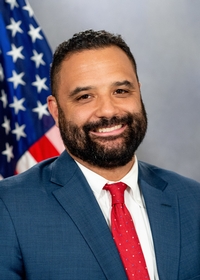
Aerion Abney
100% support rate
Top opponent
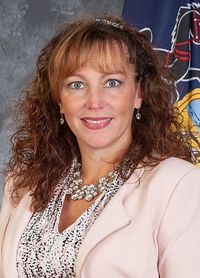
Ann Flood
0% support rate
Ranked legislators
10
5 support · 5 oppose
Key legislators

Who's moving affordable housing in Pennsylvania

Legislators moving affordable housing in Pennsylvania
Legislator Party Stance Support rate Votes
Aerion Abney
Aerion Abney House · District 19
D
Strong +
100% 6
Ben Waxman
Ben Waxman House · District 182
D
Strong +
100% 6
Dave Madsen
Dave Madsen House · District 104
D
Strong +
100% 6
La'Tasha Mayes
La'Tasha Mayes House · District 24
D
Strong +
100% 6
Amen Brown
Amen Brown House · District 10
D
Strong +
100% 5
Ann Flood
Ann Flood House · District 138
R
Strong −
0% 4
Charity Krupa
Charity Krupa House · District 51
R
Strong −
0% 4
Clint Owlett
Clint Owlett House · District 68
R
Strong −
0% 4
Eric Davanzo
Eric Davanzo House · District 58
R
Strong −
0% 4
Jarrett Coleman
Jarrett Coleman Senate · District 16
R
Strong −
0% 4
Showing 1–10 of 23 bills

All housing bills

in committee · Pennsylvania · House Apr 22, 2026

HB 2445: An Act amending the act of June 27, 1996 (P.L.403, No.58), known as the Community and Economic Development Enhancement Act, providing for Office of Housing Opportunity.

This bill creates a new Office of Housing Opportunity within Pennsylvania's Department of Community and Economic Development to oversee housing production goals. The office will be led by a Deputy Secretary appointed by the Governor and will work with other state agencies to develop and meet ten-year housing targets. A new advisory committee will be formed to guide the office, including representatives from the General Assembly, local governments, and housing experts. The office will also manage a grant program for residential economic development districts and publish annual reports on housing progress.
in committee · Pennsylvania · Senate Jun 3, 2026

SB 1278: An Act amending Title 53 (Municipalities Generally) of the Pennsylvania Consolidated Statutes, establishing the Residential Economic Development District Grant Program and the Residential Economic Development District Fund.

This bill creates a new grant program and fund to encourage local governments in Pennsylvania to build large-scale workforce housing near major economic development projects. To qualify for funding, counties or municipalities must adopt specific pro-housing policies, such as reducing permit fees, allowing higher-density zoning, and eliminating parking requirements, while also approving a project with at least 50 residential units. The program is designed to help areas that might otherwise struggle to attract housing development by providing financial support to those that streamline their approval processes and infrastructure for new construction.
Sub-Topics Affordable Housing Community Development Zoning Tags Economic Development
in committee · Pennsylvania · House Apr 18, 2026

HB 2423: An Act amending Title 53 (Municipalities Generally) of the Pennsylvania Consolidated Statutes, establishing the Residential Economic Development District Grant Program and the Residential Economic Development District Fund.

This bill creates a new grant program in Pennsylvania to encourage the construction of workforce housing in areas that might otherwise resist such development. Local governments can apply for funding if they commit to adopting at least five specific pro-housing policies, such as reducing permit fees, allowing higher-density zoning, or eliminating parking requirements. The program aims to increase home ownership and support major economic projects by providing financial assistance to counties and municipalities that streamline their housing approval processes.
Sub-Topics Affordable Housing Community Development Zoning Tags Economic Development
in committee · Pennsylvania · House Apr 16, 2026

HR 484: A Concurrent Resolution directing the Joint State Government Commission to study the creation of a Statewide housing accelerator and to conduct a comprehensive review of State and local housing approval and permitting processes that delay residential construction.

This bill directs the Joint State Government Commission to study the creation of a statewide housing accelerator and review current approval processes that delay construction. The study will examine how inconsistent zoning rules, conservation district backlogs, and permitting steps slow down residential projects, while also looking at successful strategies used by other states. The commission is tasked with developing recommendations to streamline these procedures and expand housing availability, with a final report due to the General Assembly within one year.
in committee · Pennsylvania · Senate Apr 17, 2026

SR 278: A Resolution recognizing the month of April 2026 as "Fair Housing Month" in Pennsylvania and designating April 30, 2026, as "Affordable Homeownership Day" in Pennsylvania.

This resolution designates April 2026 as "Fair Housing Month" and April 30, 2026, as "Affordable Homeownership Day" in Pennsylvania to honor the legacy of the Fair Housing Act and Dr. Martin Luther King Jr. The bill directly affects the state's residents, financial institutions, community organizations, and local governments by encouraging them to promote equitable lending and remove barriers to homeownership. It formally commends the National Association of Real Estate Brokers for its work in expanding housing access for Black families and underserved communities. The measure serves as a symbolic gesture to raise awareness about housing disparities rather than implementing new laws or funding programs.
passed · Pennsylvania · House Jun 11, 2026

HB 2109: An Act amending Title 53 (Municipalities Generally) of the Pennsylvania Consolidated Statutes, in preemptions, providing for occupancy limits.

HB 2109 prohibits Pennsylvania local governments (like cities, towns, and counties) from setting household size limits based on familial relationships (such as parents with children or roommates). It allows occupancy limits only for verified health/safety standards (like building codes) or to comply with federal/state affordable housing program rules. The bill directly affects renters, homeowners, and local officials who previously enforced such restrictions. Key definitions clarify that "familial relationship" includes blood, marriage, adoption, or foster care ties, and "local government unit" covers all Pennsylvania municipalities. This bill takes effect 60 days after enactment.
in committee · Pennsylvania · House Jan 30, 2026

HB 2180: An Act imposing requirements when lands containing certain State correctional institutions are offered for sale; and further providing for duties of the Department of Corrections.

HB 2180 requires Pennsylvania's Department of Corrections to notify counties when land containing a permanently closing state correctional facility is offered for sale. The bill mandates that 2% of the facility's total acreage (including road access) be reserved for transfer to the county at no cost, solely for developing affordable housing. Counties must accept this offer within 60 days by submitting a resolution and development plan, and must begin constructing affordable housing units within five years, with units available for lease within ten years of the land transfer. If counties fail to meet these deadlines, the land reverts to the Commonwealth. This bill directly affects counties where correctional facilities are closing, the Department of Corrections, and future affordable housing projects on former prison land.
in committee · Pennsylvania · Senate Apr 28, 2025

SB 673: An Act amending the act of April 9, 1929 (P.L.343, No.176), known as The Fiscal Code, in fiscal supplements to statutory programs, establishing a tracking system for publicly financed housing.

SB 673 establishes a public tracking system for housing in Pennsylvania that receives government financial assistance. It requires the Pennsylvania Housing Finance Agency (PHFA) to create and maintain a publicly accessible, searchable online database. This database will include property addresses, anticipated termination dates for affordability restrictions, and information on potential extensions. PHFA must also submit annual reports to the Governor and General Assembly detailing properties with expiring affordability restrictions.
in committee · Pennsylvania · House Apr 23, 2025

HB 1293: An Act amending the act of May 28, 1937 (P.L.955, No.265), referred to as the Housing Authorities Law, further providing for findings and declaration of policy, for definitions, for formation of housing authorities, for powers of an authority and for establishment of rentals and selection of tenants.

HB 1293 amends Pennsylvania's Housing Authorities Law (1937) to update the policy declaration section (Section 2), reaffirming that unsafe housing conditions harm public health, safety, and the economy, and that housing authorities are necessary to provide safe housing for low and moderate income residents. The bill does not change operational procedures for housing authorities, such as tenant selection, rental rates, or property management, but revises the foundational policy statement justifying their existence. This update directly affects housing authorities by modernizing the legal basis for their work under state law. The bill focuses on clarifying legislative intent without altering existing mechanisms for housing projects or tenant eligibility.
in committee · Pennsylvania · House Feb 25, 2025

HB 737: An Act amending the act of May 22, 1933 (P.L.853, No.155), known as The General County Assessment Law, in subjects of taxation and exemptions, further providing for exemptions from taxation.

HB 737 clarifies tax exemption rules for charitable institutions under Pennsylvania's General County Assessment Law. It specifies that hospitals, universities, and charitable organizations (including residential housing providers receiving federal low-income subsidies) retain tax exemption only if their property isn't used commercially and all revenue supports their charitable mission. The bill adds that subsidized housing units must have at least 95% federal funding to maintain exemption, with any surplus monitored and used solely for charitable purposes. This directly affects institutions relying on tax-exempt status for property ownership and operations.
Showing 1 to 10 of 23 bills
1 2 3 Next