Issue · Housing

Housing

Every housing bill, vote, and legislator stance in Pennsylvania, automatically classified by Maddy, our AI policy reader.

Total bills
6
2025-2026 Regular Session
Top supporter
James Malone
100% support rate
Top opponent
Andrea Verobish
14% support rate
Ranked legislators
10
5 support · 5 oppose
Key legislators

Who's moving housing in Pennsylvania

Legislators moving housing in Pennsylvania
Legislator Party Stance Support rate Decisive votes
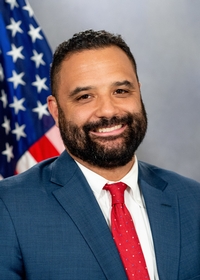
James Malone
James Malone Senate · District 36
D
Strong +
100% 5
AT
Ana Tiburcio House · District 22
D
Strong +
89% 19
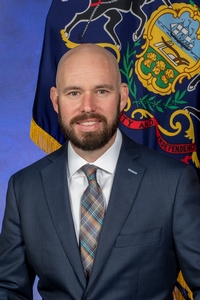
Ben Waxman
Ben Waxman House · District 182
D
Strong +
84% 55
Dave Madsen
Dave Madsen House · District 104
D
Strong +
83% 59
Izzy Smith-Wade-El
Izzy Smith-Wade-El House · District 49
D
Strong +
83% 53
AV
Andrea Verobish House · District 79
R
Strong −
14% 14
Jake Banta
Jake Banta House · District 4
R
Strong −
15% 39
Carl Metzgar
Carl Metzgar House · District 69
R
Strong −
20% 35
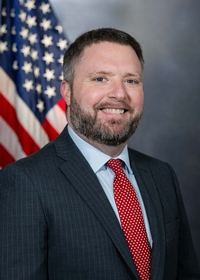
Doug Mastriano
Doug Mastriano Senate · District 33
R
Strong −
20% 5
Wendy Fink
Wendy Fink House · District 94
R
Oppose
21% 39
Showing 6 of 6 bills

All housing bills

in committee · Pennsylvania · Senate Jun 9, 2026

SB 1299: An Act providing for a tax credit for retrofitting residential high-rise structures with an automatic fire sprinkler system and associated monitoring or detection devices.

This Pennsylvania legislation establishes a tax credit for owners of residential high-rise buildings located in major cities. The credit is designed to offset the costs of installing or upgrading automatic fire sprinkler systems and associated monitoring equipment within these structures. Owners may receive a credit equal to the amount spent on the retrofitting or up to 100% of their income tax liability, whichever is less. The Office of the Mayor in the respective city will administer the program and determine which buildings qualify as high-rise structures. The tax credit becomes available for tax years beginning after December 31, 2026.
in committee · Pennsylvania · Senate Jun 8, 2026

SB 1277: An Act amending the act of December 1, 1977 (P.L.237, No.76), known as the Local Economic Revitalization Tax Assistance Act, further providing for title of act, for construction, for definitions and for deteriorated areas; providing for ordinance and resolution limitations; further providing for exemption schedule and for procedure for obtaining exemption; and providing for public registry.

SB 1277 amends Pennsylvania's Local Economic Revitalization Tax Assistance Act to update how local governments can offer property tax exemptions for deteriorated buildings and new construction in economically depressed areas. The bill clarifies definitions to include various types of distressed properties, such as those ordered vacated or demolished, and expands the scope to cover mixed-use and converted residential structures. It also establishes a public registry for these exemptions and requires local authorities to hold at least one public hearing before designating specific areas as deteriorated. Ultimately, the legislation provides a standardized framework for municipalities to implement tax relief aimed at revitalizing struggling neighborhoods.
in committee · Pennsylvania · Senate Jun 3, 2026

SB 1278: An Act amending Title 53 (Municipalities Generally) of the Pennsylvania Consolidated Statutes, establishing the Residential Economic Development District Grant Program and the Residential Economic Development District Fund.

This bill creates a new grant program and fund to encourage local governments in Pennsylvania to build large-scale workforce housing near major economic development projects. To qualify for funding, counties or municipalities must adopt specific pro-housing policies, such as reducing permit fees, allowing higher-density zoning, and eliminating parking requirements, while also approving a project with at least 50 residential units. The program is designed to help areas that might otherwise struggle to attract housing development by providing financial support to those that streamline their approval processes and infrastructure for new construction.
signed · Pennsylvania · House Nov 12, 2025

HB 416: An Act amending the act of April 9, 1929 (P.L.343, No.176), known as The Fiscal Code, providing for Child Care Staff Recruitment and Retention Program; in 911 Emergency Communication Services, further providing for surcharge; in Department of Revenue, further providing for exclusion from classes of income and providing for research and experimental expenditures and qualified production property, for report to General Assembly and for interest expense; in joint underwriting association, further providing for findings and for definitions, repealing provisions relating to sunset and providing for risk-based capital certification, for fund transfers, for association oversight and additional duties, for Joint Underwriting Association Board, for board meetings, for construction, for dissolution, for appropriations and for reports and hearings; in State Health Insurance Exchange Affordability Program, further providing for Exchange Affordability Assistance Account; providing for Rural Health Transformation Program; in Treasury Department, providing for waiver of interest, costs and fees; in procedure for disbursement of money from the State Treasury, further providing for use and appropriation of unused Commonwealth funds; in oil and gas wells, further providing for Oil and Gas Lease Fund; providing for advanced air mobility sites and for public transportation vehicles; in human services, further providing for resident care and related costs; in Attorney General, providing for home improvement contractor registration fee; providing for Rare Disease Advisory Council, for affordable housing tax credit and for working Pennsylvanians tax credit; in additional keystone opportunity expansion zones, providing for additional keystone opportunity expansion zones for certain counties of the fourth class; providing for additional extensions of keystone opportunity zones; in special funds, further providing for funding, for expiration and for other grants; in additional special funds and restricted accounts, further providing for establishment of special fund and account, for use of fund and for distributions from Pennsylvania Race Horse Development Fund and providing for refund of 2003 assessment by Insurance Department; in additional special funds and restricted accounts relating to Service and Infrastructure Improvement Fund, further providing for deposits and providing for Property Tax Relief Fund; in general budget implementation, further providing Executive Offices, for Department of Community and Economic Development, for Department of Environmental Protection, for Pennsylvania Fish and Boat Commission, for Pennsylvania Higher Education Assistance Agency and for Commonwealth Financing Authority, providing for stenography services, further providing for surcharges, for Federal and Commonwealth use of forest land and for Multimodal Transportation Fund and providing for State Sexual Offenders Assessment Board, for interest transfers, for fund transfers and for miscellaneous provisions; in 2024-2025 budget implementation, further providing for Department of Education, for Department of Environmental Protection and for Department of Human Services; in Streamlining Permits for Economic Expansion and Development Program, further providing for scope of article, for definitions and for the Streamlining Permits for Economic Expansion and Development Program, providing for review and determination of specific permits and for State agency permits and further providing for construction; providing for electricity load forecast accountability, for 2025-2026 budget implementation and for 2025-2026 restrictions on appropriations for funds and accounts; making repeals; and making editorial changes.

HB 416 establishes a new Child Care Staff Recruitment and Retention Program to support early childhood educators and creates a Rural Health Transformation Program to improve healthcare access in underserved areas. It also streamlines permit processes for economic development projects through the Streamlining Permits for Economic Expansion and Development Program. These provisions are integrated into the 2025 state budget implementation, alongside administrative updates to tax collection procedures, state fund management, and reporting requirements for agencies like the Department of Revenue and Treasury. The bill does not alter existing tax rates or create new funding streams but modifies how current state financial systems operate.
passed · Pennsylvania · Senate Jun 25, 2025

SB 780: An Act amending Title 68 (Real and Personal Property) of the Pennsylvania Consolidated Statutes, in uses of property, providing for encampments.

SB 780 creates new rules for managing encampments in Pennsylvania. It defines an "unauthorized encampment" as a temporary structure housing three or more unrelated people on property without consent, where conditions like garbage, drug activity, or unsafe sanitation exist (an "indication of nuisance"). Property owners must remove such encampments within 30 days or face civil penalties up to $250 per day, while municipalities can enforce removal after a nuisance determination. This law directly affects property owners, local governments, and individuals living in encampments, focusing on public health and safety without creating new housing programs.
passed · Pennsylvania · House Jun 23, 2025

HB 734: An Act amending the act of April 6, 1951 (P.L.69, No.20), known as The Landlord and Tenant Act of 1951, in tenement buildings and multiple dwelling premises, further providing for landlord's duties; and providing for tenant relocation.

HB 734 amends Pennsylvania's 1951 Landlord and Tenant Act to update landlord responsibilities in tenement and multiple-dwelling buildings. It specifically adds new requirements for landlords when relocating tenants, such as providing relocation assistance during building repairs or renovations. The bill directly affects landlords in older apartment buildings and tenants who may need to move due to property improvements or maintenance. These changes clarify and strengthen existing protections for renters in multi-unit housing.