Issue · Healthcare

Healthcare (Medical Licensing)

Every healthcare bill, vote, and legislator stance in Pennsylvania, automatically classified by Maddy, our AI policy reader.

Total bills
44
2025-2026 Regular Session
Top supporter
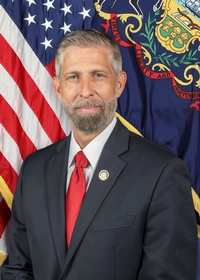
Alec Ryncavage
100% support rate
Top opponent
-
no data yet
Ranked legislators
5
5 support · 0 oppose
Key legislators

Who's moving medical licensing in Pennsylvania

Legislators moving medical licensing in Pennsylvania
Legislator Party Stance Support rate Votes
Alec Ryncavage
Alec Ryncavage House · District 119
R
Strong +
100% 4
Brenda Pugh
Brenda Pugh House · District 120
R
Strong +
100% 4
Brian Rasel
Brian Rasel House · District 56
R
Strong +
100% 4
CW
Catherine Wallen House · District 193
R
Strong +
100% 4
Craig Williams
Craig Williams House · District 160
R
Strong +
100% 4
Showing 41–44 of 44 bills

All healthcare bills

in committee · Pennsylvania · Senate Mar 16, 2026

SB 571: An Act authorizing the Commonwealth of Pennsylvania to join the Interstate Compact; providing for the form of the compact; imposing additional powers and duties on the Governor, the Secretary of the Commonwealth and the Compact.

SB 571 authorizes Pennsylvania to join the Interstate Occupational Therapy Licensure Compact, enabling occupational therapists licensed in one participating state to practice in Pennsylvania without obtaining a separate Pennsylvania license. It establishes that therapists practice where their patient is located, requires states to share licensure and disciplinary information, and includes provisions for military spouses relocating across state lines. The bill directly affects licensed occupational therapists, patients seeking services across state lines, and state licensing boards managing professional standards. Key mechanisms include mutual license recognition, a shared data system for tracking disciplinary actions, and telehealth service access rules. (3 sentences)
in committee · Pennsylvania · House Feb 12, 2025

HB 588: An Act amending the act of May 22, 1951 (P.L.317, No.69), known as The Professional Nursing Law, further providing for continuing nursing education.

HB 588 amends Pennsylvania's Professional Nursing Law to require registered nurses and licensed practical nurses to complete one hour of mandatory continuing education focused on older adult abuse recognition and reporting during each biennial license renewal period. This requirement applies to all license renewals (except initial licensure) and includes specific documentation rules, such as retaining certificates for five years and submitting them upon request. Failure to complete this hour may delay license renewal, trigger disciplinary action under existing penalties, or require remediation within six months. The bill directly affects nursing license holders in Pennsylvania seeking renewal, reinstatement, or reactivation of their licenses.
in committee · Pennsylvania · House Oct 24, 2025

HB 1993: An Act providing for the use of artificial intelligence in mental health therapy and for enforcement.

HB 1993 establishes standards and oversight requirements for mental health professionals using artificial intelligence tools in therapy. It directly affects licensed therapists, clinics, and their patients by mandating safety protocols, data privacy safeguards, and regular audits for AI therapy platforms. The bill requires licensing boards to develop enforcement mechanisms, including penalties for non-compliance, and sets criteria for AI tool certification. Referred to the Professional Licensure committee, the bill aims to regulate AI integration while prioritizing patient safety and ethical practice.
in committee · Pennsylvania · House Feb 10, 2025

HB 544: An Act providing for the use of certain credentialing applications and for credentialing requirements for health insurers; imposing penalties; and conferring powers and imposing duties on the Insurance Department.

HB 544, the Health Care Practitioner Credentialing Act, requires all health insurers in Pennsylvania to accept the CAQH credentialing application (or a nationally recognized alternative) for health care practitioners seeking to join insurer networks. It sets clear timelines: insurers must notify practitioners within 10 business days if an application is incomplete, and make a final credentialing decision within 45 business days of receiving a complete application. The bill also mandates automatic credentialing for practitioners with multi-location practices and imposes penalties on insurers that fail to use CAQH or delay the process. It does not guarantee network access but standardizes the application and review process for practitioners and insurers.
Showing 41 to 44 of 44 bills
Previous 1 3 4 5