Issue · Healthcare

Healthcare (Substance Abuse)

Every healthcare bill, vote, and legislator stance in Pennsylvania, automatically classified by Maddy, our AI policy reader.

Total bills
53
2025-2026 Regular Session
Top supporter
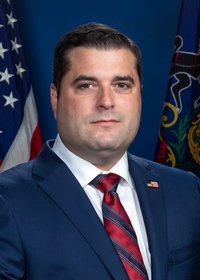
Dan Laughlin
100% support rate
Top opponent
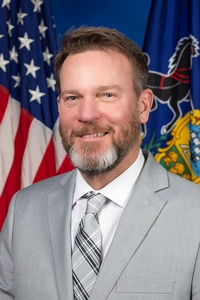
Joe Hamm
7% support rate
Ranked legislators
10
5 support · 5 oppose
Key legislators

Who's moving substance abuse in Pennsylvania

Legislators moving substance abuse in Pennsylvania
Legislator Party Stance Support rate Votes
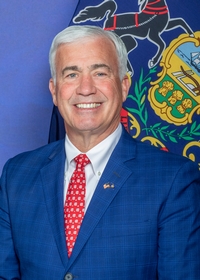
Dan Laughlin
Dan Laughlin Senate · District 49
R
Strong +
100% 7
Devlin Robinson
Devlin Robinson Senate · District 37
R
Strong +
100% 7
Joe Picozzi
Joe Picozzi Senate · District 5
R
Strong +
100% 7
Rosemary Brown
Rosemary Brown Senate · District 40
R
Strong +
100% 7
Cris Dush
Cris Dush Senate · District 25
R
Strong +
100% 5
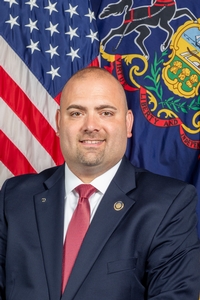
Joe Hamm
Joe Hamm House · District 84
R
Strong −
7% 15
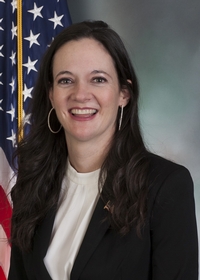
Stephanie Borowicz
Stephanie Borowicz House · District 76
R
Strong −
7% 15
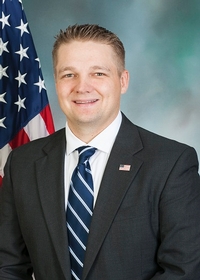
Aaron Bernstine
Aaron Bernstine House · District 8
R
Strong −
8% 13
Dave Zimmerman
Dave Zimmerman House · District 99
R
Strong −
8% 13
Jamie Barton
Jamie Barton House · District 124
R
Strong −
8% 13
Showing 31–40 of 53 bills

All healthcare bills

passed · Pennsylvania · House Apr 28, 2025

HB 269: An Act amending the act of April 14, 1972 (P.L.233, No.64), known as The Controlled Substance, Drug, Device and Cosmetic Act, further providing for drug overdose medication.

HB 269 amends Pennsylvania's Controlled Substance Act to improve access to overdose response information. It requires the Department of Health to develop free online training materials, posters, and pamphlets about recognizing opioid overdoses and using reversal medications (like naloxone), with the materials available in multiple languages upon request. Specific public entities - including Commonwealth agencies, transit authorities, municipalities, and local transportation organizations - must display the poster in conspicuous public locations, such as bathrooms or lobbies. The Department covers all printing and distribution costs, and entities already displaying equivalent materials may substitute them with prior notice. This bill focuses on education and resource accessibility, not changing drug laws or medication access.
Sub-Topics Substance Abuse
in committee · Pennsylvania · House Feb 12, 2025

HB 602: An Act amending Title 35 (Municipalities Generally) of the Pennsylvania Consolidated Statutes, providing for opioid stewardship; establishing the Opioid Reparation and Accountability Fund and the Opiate Epidemic Response Advisory Council; and imposing duties on the Department of Health, the Department of Human Services and the Department of Drug and Alcohol Programs.

This bill establishes the Opioid Reparation and Accountability Fund, which will receive fees from opioid manufacturers and distributors, and creates the Opiate Epidemic Response Advisory Council. It requires opioid manufacturers/distributors to obtain licenses and pay $27,500 annually for licenses (with $2,500 for non-opioid drugs), plus an additional annual fee if they distribute over 2 million opioid units. The Department of Health, Human Services, and Drug and Alcohol Programs must implement new reporting requirements, manage the fund, and coordinate with the advisory council. The fund will support community programs addressing the opioid crisis, directly affecting opioid manufacturers, distributors, and state agencies responsible for oversight.
passed · Pennsylvania · House Jun 25, 2026

HB 1117: An Act amending the act of April 9, 1929 (P.L.177, No.175), known as The Administrative Code of 1929, in powers and duties of the Department of Drug and Alcohol Programs, further providing for powers and duties.

HB 1117 amends Pennsylvania's 1929 Administrative Code to redefine the Department of Drug and Alcohol Programs' responsibilities for addressing substance use disorders. The department must now develop a comprehensive State plan coordinating prevention, treatment, research, and education across all state agencies and local communities - including health, law enforcement, education, and workforce sectors - to avoid duplication. The plan requires annual review and updates, and mandates the department to provide assistance to local governments while collaborating with medical professionals on drug use guidelines. This change formalizes existing coordination efforts under a unified framework, directly affecting state agencies and local entities managing substance use disorder services.
Sub-Topics Substance Abuse
passed · Pennsylvania · House Mar 17, 2025

HB 111: An Act prohibiting discrimination in certain life insurance policies based on certain drugs.

HB 111 prohibits life insurance companies in Pennsylvania from denying coverage, limiting benefits, or charging higher rates to applicants or policyholders solely because they have been prescribed an opioid overdose reversal agent (like naloxone). The bill directly affects individuals who use these medications, including those with opioid use disorder or at risk of overdose. It defines "adverse action" to include these discriminatory practices and makes such actions violations of existing laws against unfair insurance practices. The law takes effect 60 days after enactment.
Sub-Topics Substance Abuse
in committee · Pennsylvania · Senate May 2, 2025

SB 716: An Act amending the act of July 9, 1976 (P.L.817, No.143), known as the Mental Health Procedures Act, in general provisions, further providing for statement of policy and for definitions.

Senate Bill 716 amends Pennsylvania's Mental Health Procedures Act, primarily to update terminology and expand the scope of mental health services. The bill explicitly includes "substance use disorder" as a mental illness, making it eligible for treatment under the act. It also clarifies that assisted outpatient treatment services can encompass substance use disorder treatments, especially when co-occurring with a primary mental illness diagnosis. Additionally, the bill updates outdated language for conditions such as intellectual disability, alcohol use disorder, and age-related cognitive decline.
in committee · Pennsylvania · Senate Jun 6, 2025

SR 121: A Resolution designating August 31, 2025, as "Overdose Awareness Day" in Pennsylvania.

This resolution designates August 31, 2025, as "Overdose Awareness Day" in Pennsylvania. It requests the Governor to issue a proclamation encouraging public officials and residents to observe the day through appropriate activities, and to order flags flown at half-staff. The resolution aims to raise awareness about drug overdoses, reduce stigma around substance use, and acknowledge the impact of overdose deaths on families and communities. It does not create new laws or funding but serves as a symbolic recognition of the overdose crisis.
Sub-Topics Substance Abuse
passed · Pennsylvania · House Jul 23, 2025

HB 1697: An Act amending the act of June 13, 1967 (P.L.31, No.21), known as the Human Services Code, providing for liability for false claims, for adoption of congressional intent of the Federal False Claims Act, for damages, costs and civil penalties, for powers of Attorney General, for qui tam actions and for civil investigative demands; and establishing the Fraud Prevention and Recovery Account.

HB 1697 amends Pennsylvania's Human Services Code to create a state-level False Claims Act, directly affecting healthcare providers, contractors, and organizations receiving state funds (like Medicaid or welfare programs). It makes individuals or entities liable for three times the damages plus penalties if they knowingly submit false claims, make false records, or conceal obligations to the state. The bill establishes "qui tam" lawsuits allowing whistleblowers to sue on behalf of the state and creates a Fraud Prevention and Recovery Account to hold recovered funds. These provisions align Pennsylvania's law with the federal False Claims Act to combat fraud in public spending.
in committee · Pennsylvania · House Jan 27, 2025

HB 361: An Act amending the act of April 9, 1929 (P.L.343, No.176), known as The Fiscal Code, providing for Collaborative Care Model and Primary Care Behavioral Health Model Implementation Program.

HB 361 amends Pennsylvania's Fiscal Code to create a grant program supporting integrated behavioral health care in primary care settings. It provides funding for primary care physicians and practices to cover initial costs of implementing two evidence-based models: the Collaborative Care Model (with psychiatric consultants and care managers) and the Primary Care Behavioral Health Model (with behavioral health professionals on-site). Grants can be used for hiring staff, contracting specialists, purchasing software, and building patient registries, with priority given to rural providers and practices in counties with high suicide or overdose rates. The bill also establishes six regional technical assistance centers to support implementation across Pennsylvania.
passed · Pennsylvania · House May 22, 2025

HB 561: An Act amending Title 61 (Prisons and Parole) of the Pennsylvania Consolidated Statutes, in Nonnarcotic Medication Assisted Substance Abuse Treatment Grant Pilot Program, further providing for definitions, repealing provisions relating to establishment of pilot program, providing for establishment and further providing for county participation requirements, for use of grant funding, for powers and duties of department, for report to General Assembly and for construction; imposing duties on the Pennsylvania Commission on Crime and Delinquency; and making an editorial change.

This bill updates Pennsylvania's pilot program for non-narcotic medication-assisted treatment (MAT) in prisons and parole settings. It removes outdated rules about the program's establishment, clarifies requirements for county participation, and specifies how grant funds can be used for treatment services. The Pennsylvania Commission on Crime and Delinquency gains new duties to oversee the program, and the bill includes administrative updates to the state statutes governing it. The changes directly affect counties administering the pilot program and individuals in prison or parole under the MAT initiative.
in committee · Pennsylvania · House Jul 14, 2025

HB 1721: An Act amending the act of June 13, 1967 (P.L.31, No.21), known as the Human Services Code, in public assistance, providing for medical assistance coverage for peer recovery support services.

HB 1721 adds medical assistance coverage under public assistance programs for peer recovery support services. This means individuals receiving state-funded public assistance (like Medicaid) would now have access to coverage for services provided by trained peers who have lived experience with recovery. The bill directly affects people seeking substance use disorder treatment through public assistance programs. It amends the Human Services Code to require coverage for these specific peer services, expanding available treatment options without changing existing eligibility rules. The bill is currently in the Human Services committee for review.
Showing 31 to 40 of 53 bills
Previous 1 3 4 5 6 Next