Issue · Healthcare

Healthcare (Healthcare Workforce)

Every healthcare bill, vote, and legislator stance in Pennsylvania, automatically classified by Maddy, our AI policy reader.

Total bills
33
2025-2026 Regular Session
Top supporter
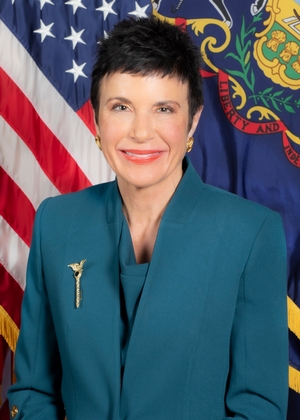
Marla Brown
100% support rate
Top opponent
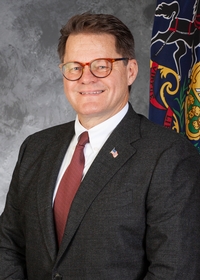
Lindsey Williams
0% support rate
Ranked legislators
10
5 support · 5 oppose
Key legislators

Who's moving healthcare workforce in Pennsylvania

Legislators moving healthcare workforce in Pennsylvania
Legislator Party Stance Support rate Votes
Marla Brown
Marla Brown House · District 9
R
Strong +
100% 5
Tim Twardzik
Tim Twardzik House · District 123
R
Strong +
100% 5
Michele Brooks
Michele Brooks Senate · District 50
R
Strong +
100% 4
Scott Hutchinson
Scott Hutchinson Senate · District 21
R
Strong +
100% 4
Alec Ryncavage
Alec Ryncavage House · District 119
R
Strong +
100% 3
Lindsey Williams
Lindsey Williams Senate · District 38
D
Strong −
0% 7
Sharif Street
Sharif Street Senate · District 3
D
Strong −
0% 5
Vincent Hughes
Vincent Hughes Senate · District 7
D
Strong −
0% 5
James Malone
James Malone Senate · District 36
D
Strong −
0% 4
John Kane
John Kane Senate · District 9
D
Strong −
0% 4
Showing 21–30 of 33 bills

All healthcare bills

in committee · Pennsylvania · Senate Jul 24, 2025

SB 941: An Act requiring lactation rooms in courthouses.

SB 941 requires all Pennsylvania courthouses to provide private, accessible lactation rooms for nursing parents. These rooms must be at least 80 square feet, include a chair, electrical outlet, and privacy features (like locking doors), and comply with ADA accessibility standards. The bill directly affects nursing parents using courthouses for court-related matters, ensuring they have a hygienic space to express breast milk or nurse their child. Courthouses must post public signage indicating room locations, and rooms cannot be repurposed restrooms or storage areas. The law takes effect six months after enactment.
in committee · Pennsylvania · Senate Jun 3, 2026

SB 402: An Act amending the act of March 10, 1949 (P.L.30, No.14), known as the Public School Code of 1949, providing for administration of emergency anti-seizure medication.

SB 402 amends Pennsylvania's Public School Code to allow trained school staff to administer emergency anti-seizure medication to students with epilepsy during seizures when a nurse is unavailable. It directly affects students with epilepsy, their parents/guardians (who must request training), and school employees (who may voluntarily undergo training). Key provisions require parental consent for staff training, mandate that participation be voluntary, and connect to existing disability laws (IDEA/Section 504) by encouraging schools to explore 504 plans or individualized health plans for affected students. The bill specifies that only FDA-approved medications (like nasal sprays) may be used, and trained staff must follow department-approved guidelines.
in committee · Pennsylvania · House Feb 26, 2025

HB 739: An Act amending the act of May 22, 1951 (P.L.317, No.69), known as The Professional Nursing Law, further providing for title, for definitions, for State Board of Nursing, for dietitian-nutritionist license required, for unauthorized practices and acts not prohibited, for temporary practice permit, for graduates of schools of other states, territories or Dominion of Canada, for persons entitled to practice, for certified registered nurse practitioners and qualifications, for scope of practice for certified registered nurse practitioners, for prescriptive authority for certified registered nurse practitioners, for Drug Review Committee, for professional liability, for reporting of multiple licensure, for continuing nursing education, for punishment for violations, for refusal, suspension or revocation of licenses, for reinstatement of license and for injunction or other process; and providing for the expiration of the State Board of Nursing's power to license certified registered nurse practitioners.

HB 739 amends Pennsylvania's 1951 Professional Nursing Law to modernize terminology and clarify roles for advanced practice nurses. It replaces "certified registered nurse practitioner" with "APRN-CNP" throughout the law, defines "collaboration" requirements for new APRN-CNPs (requiring 3,600 practice hours before independent work), and updates definitions for "medical nutrition therapy" and "population focus areas." The bill explicitly removes the State Board of Nursing's authority to license APRN-CNPs, shifting that responsibility elsewhere. These changes directly affect registered nurses seeking advanced practice certification and the Board's regulatory role in nursing licensure.
in committee · Pennsylvania · House Apr 28, 2025

HB 1323: An Act amending the act of May 22, 1951 (P.L.317, No.69), known as The Professional Nursing Law, providing for advanced practice registered nurse.

HB 1323 amends Pennsylvania's Professional Nursing Law to establish a formal certification process for Advanced Practice Registered Nurses (APRNs). It requires the Board of Nursing to issue certificates to nurses holding a master's or higher degree who are already licensed as nurse practitioners, clinical nurse specialists, or nurse anesthetists. Certified APRNs may use the title "Advanced Practice Registered Nurse" and "A.P.R.N.," and the Board must maintain a public online registry of all certified APRNs. This bill directly affects nurses seeking APRN certification in Pennsylvania and clarifies their title usage and public recordkeeping.
in committee · Pennsylvania · Senate Apr 9, 2025

SB 579: An Act amending the act of July 9, 1987 (P.L.220, No.39), known as the Social Workers, Marriage and Family Therapists and Professional Counselors Act, providing for licensing and regulating the practice of music therapy; and making editorial changes.

SB 579 adds music therapy as a licensed profession under Pennsylvania's existing Social Workers, Marriage and Family Therapists, and Professional Counselors Act. It requires individuals practicing music therapy to obtain a license to use the title "licensed professional music therapist" and defines the scope of practice, including clinical music interventions like improvisation and songwriting for therapeutic goals. The bill directly affects music therapists seeking to legally represent their credentials in Pennsylvania, while excluding students, supervised practitioners, and those not claiming to be licensed therapists. Key provisions clarify what constitutes "practice of music therapy" and establish the State Board of Social Workers, Marriage and Family Therapists, and Professional Music Therapists to oversee licensing. This bill does not change employment requirements for government or nonprofit agencies.
in committee · Pennsylvania · House Feb 4, 2025

HB 475: An Act amending the act of July 19, 1979 (P.L.130, No.48), known as the Health Care Facilities Act, in licensing of health care facilities, providing for dialysis centers.

HB 475 amends Pennsylvania's Health Care Facilities Act to establish staffing requirements for dialysis centers. It mandates that all dialysis facilities - whether hospital-owned, Commonwealth-run, or independent - must maintain at least one trained dialysis caregiver for every four patients receiving active treatment. The bill defines "dialysis caregiver" to include physicians, nurse practitioners, registered nurses, licensed practical nurses, and dialysis technicians, who must provide direct care during hemodialysis or peritoneal dialysis for end-stage renal disease. This requirement applies to both inpatient and outpatient settings and directly affects all dialysis centers operating under Pennsylvania licensing.
in committee · Pennsylvania · House Nov 17, 2025

HB 2030: An Act authorizing the Commonwealth of Pennsylvania to join the Advanced Practice Registered Nurse Interstate Compact; providing for the form of the compact; and imposing additional powers and duties on the Governor and the Secretary of the Commonwealth.

HB 2030 would allow Pennsylvania to join the Advanced Practice Registered Nurse (APRN) Interstate Compact, enabling APRNs (like nurse practitioners and anesthetists) to practice across state lines without obtaining separate licenses in each state. This directly affects APRNs working in Pennsylvania and those seeking to practice in other compact states. The bill requires the Governor and Secretary of the Commonwealth to adopt the compact's terms and implement its provisions. If enacted, it would streamline licensing for APRNs providing care in multiple states, reducing administrative barriers for healthcare providers and patients.
in committee · Pennsylvania · House Jan 28, 2025

HB 389: An Act amending the act of March 10, 1949 (P.L.30, No.14), known as the Public School Code of 1949, establishing the New Nursing Faculty Grant Program; providing for duties of the Pennsylvania Higher Education Assistance Agency; and making an appropriation.

HB 389 establishes the New Nursing Faculty Grant Program to support nursing education in Pennsylvania. It provides $10,000 grants to eligible nursing faculty members at accredited medical colleges who are PA residents, employed full-time (or have a pending offer), and have no more than three years of experience. The Pennsylvania Higher Education Assistance Agency (PHEAA) will administer the program, prioritizing positions historically difficult to fill, with applications submitted by nursing program deans. Grants cover professional expenses and aim to increase enrollment capacity at nursing programs.
in committee · Pennsylvania · House Jan 28, 2025

HB 390: An Act amending the act of March 4, 1971 (P.L.6, No.2), known as the Tax Reform Code of 1971, in personal income tax, providing for preceptor tax deduction.

HB 390 creates a $1,000 annual tax deduction for Pennsylvania health care providers who volunteer to supervise clinical training for students. It directly affects licensed physicians, nurses, physician assistants, and nurse anesthetists who provide uncompensated, volunteer-based clinical training (minimum 80 hours annually per student) to eligible students in approved programs. The bill establishes a Preceptor Certification Committee within the Department of Health to verify eligibility, process applications within 30 days, and issue certificates confirming the deduction. To claim the deduction, providers must submit this certificate with their tax return, and the deduction cannot exceed the tax owed. The policy change specifically targets volunteer clinical education support without altering tax rates or creating new tax credits.
passed · Pennsylvania · Senate Apr 21, 2026

SB 998: An Act providing for the Nurse Education Capacity Expansion Grant Program; and imposing duties on the Department of Community and Economic Development.

SB 998 would create a grant program to fund expansions of nursing education programs at colleges and universities. It requires the Department of Community and Economic Development to administer grants for institutions aiming to increase nursing program capacity, directly affecting nursing schools and future nursing students. Key provisions include establishing grant criteria, application processes, and reporting requirements for funded programs. The bill is currently pending in the Appropriations committee after committee review.
Showing 21 to 30 of 33 bills
Previous 1 2 3 4 Next