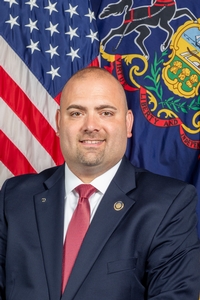
HB 482 authorizes Pennsylvania to join the Interstate Occupational Therapy Licensure Compact, enabling licensed occupational therapists and assistants from Pennsylvania to practice in other participating states without obtaining separate licenses. The bill establishes mechanisms for mutual recognition of licenses, sharing of disciplinary and investigative data between states, and accountability for practitioners providing services across state lines. It directly affects occupational therapists, assistants, and patients seeking services in multiple states, particularly supporting military spouses relocating and expanding telehealth access. Key provisions include requiring states to participate in a shared data system, defining terms like "Compact Privilege," and preserving each state’s regulatory authority over local practice standards. This is a procedural bill enabling Pennsylvania’s participation in an existing interstate framework, not creating new licensing requirements.
This bill (HB 2024) requires Pennsylvania's Office of the Deputy Adjutant General for Veterans' Affairs to create a mandatory training program for county veterans affairs directors. The program must cover specific topics like trauma-informed care, military sexual trauma, PTSD, and traumatic brain injury, developed in collaboration with the State Association of County Directors of Veterans Affairs. It directly affects county-level veterans' service staff who assist veterans across Pennsylvania. The training program becomes effective 180 days after the bill's passage.
This Pennsylvania bill requires health insurance companies to cover fertility preservation services for individuals facing medically necessary cancer treatments that could cause infertility. The law mandates that insurers include at least three years of egg, sperm, or ovarian tissue storage at an in-network facility, with a minimum lifetime benefit of $100,000 per person. While the coverage must follow standard policy rules like deductibles and copayments, religious employers are allowed to request exemptions if the services conflict with their beliefs, provided they notify patients and allow them to buy separate supplemental insurance.
This bill allows Pennsylvania residents to voluntarily donate $5 when they renew their driver's licenses or vehicle registrations online. The funds collected will go exclusively to the Office for the Deaf and Hard of Hearing to help provide communication access services for those individuals. The donation is optional and will be added to the regular renewal fee, with annual reports required to track how much money is raised and how it is spent.
This Pennsylvania House resolution designates June 2026 as Scoliosis Awareness Month to highlight a spinal condition affecting millions of people, particularly children and teenagers. The bill aims to encourage the public to learn more about scoliosis and support early screening efforts to prevent severe spinal deformities. It does not change laws or allocate funding but serves as a symbolic gesture to promote awareness and community support for those affected by the condition.
This Pennsylvania House resolution designates October 13, 2026, as "Metastatic Breast Cancer Awareness Day" to highlight the challenges faced by individuals with stage IV breast cancer. The measure formally recognizes the national #LightUpMBC campaign, which encourages landmarks to display teal, green, and pink lights in solidarity and promotes increased research funding for metastatic cases. By officially acknowledging this specific date and cause, the bill aims to raise public awareness about a condition that affects women when their cancer has spread to other parts of the body.
This House Resolution designates the week of September 20 through 27, 2026, as "Idiopathic Pulmonary Fibrosis Research and Awareness Week" in Pennsylvania. The bill aims to raise public understanding of this lung disease, which causes irreversible scarring and affects thousands of residents in the state. By officially recognizing this specific time period, the resolution encourages increased attention and support for improved diagnosis and treatment efforts.
This Pennsylvania House resolution designates the week of September 20 through 26, 2026, as "Surgical Technologist Week" to recognize the contributions of surgical technologists in the state. The measure directly affects surgical technologists working in hospitals and surgical centers by formally acknowledging their vital role in patient care. It does not create new laws or funding but serves as a symbolic gesture to honor these healthcare professionals, following a similar national observance.
This bill designates November 2026 as Pancreatic Cancer Awareness Month within the state of Pennsylvania. It aims to increase public understanding of the disease by encouraging educational programs and support initiatives for those affected. The resolution does not change laws or allocate funding but serves as a formal statement to highlight the importance of early detection and research.
This Pennsylvania House Resolution designates September 2026 as "ITP Awareness Month" to highlight Immune thrombocytopenia, a rare autoimmune condition that lowers platelet counts and increases bleeding risks. The bill aims to encourage research and support for the more than 50,000 people in the United States living with the disease, which affects women aged 30 to 60 more frequently than others. By officially recognizing the month, the resolution seeks to educate the public about the challenges of diagnosing and managing ITP, which often requires specialized medical treatments like blood transfusions or spleen removal. This measure does not change laws or allocate funding but serves as a symbolic gesture to raise visibility for patients and their families.