

Issue · Education
Education
Every education bill, vote, and legislator stance in Pennsylvania, automatically classified by Maddy, our AI policy reader.
Total bills
388
2025-2026 Regular Session
Top supporter
Lynda Culver
89% support rate
Top opponent
Barb Gleim
23% support rate
Ranked legislators
10
5 support · 5 oppose
Key legislators
Who's moving education in Pennsylvania
| Legislator | Party | Stance | Support rate | Votes |
|---|---|---|---|---|
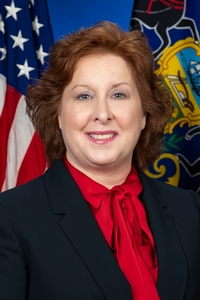
Lynda Culver
Senate · District 27
|
R |
Strong +
|
89% | 64 |
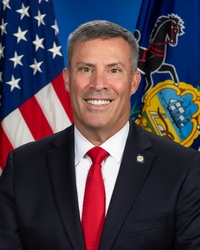
Greg Rothman
Senate · District 34
|
R |
Strong +
|
89% | 58 |
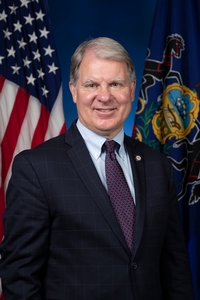
Dave Argall
Senate · District 29
|
R |
Strong +
|
89% | 59 |

Kim Ward
Senate · District 39
|
R |
Strong +
|
88% | 78 |
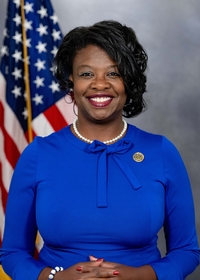
Regina Young
House · District 185
|
D |
Strong +
|
80% | 195 |
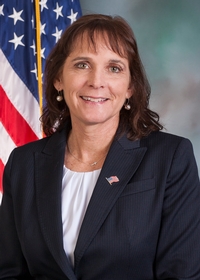
Barb Gleim
House · District 199
|
R |
Oppose
|
23% | 155 |

Marc Anderson
House · District 92
|
R |
Oppose
|
25% | 157 |

Joe D'Orsie
House · District 47
|
R |
Oppose
|
26% | 159 |
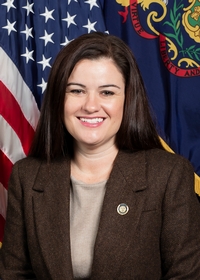
Charity Krupa
House · District 51
|
R |
Oppose
|
32% | 166 |
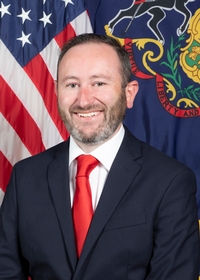
Brian Rasel
House · District 56
|
R |
Oppose
|
33% | 157 |
Showing 341–350 of 388
bills
All education bills
HB 774: An Act amending the act of March 10, 1949 (P.L.30, No.14), known as the Public School Code of 1949, in school directors, further providing for school director training programs.
Sub-Topics
School Choice
HB 792: An Act amending the act of March 10, 1949 (P.L.30, No.14), known as the Public School Code of 1949, in terms and courses of study, further providing for Holocaust, genocide and human rights violations instruction.
SB 573: An Act amending the act of March 10, 1949 (P.L.30, No.14), known as the Public School Code of 1949, in terms and courses of study, providing for blood donation education.
Topics
✓ EducationSupports EducationAdds mandatory blood donation curriculum to health classes for 11th-12th graders, expanding educational content within existing school health standards without funding cuts.
✓ HealthcareSupports HealthcareRequires blood donation education in health classes to promote public health awareness and increase blood supply, aligning with healthcare public health initiatives.
Sub-Topics
Curriculum
SR 157: A Resolution encouraging Federal, State and local policymakers, educational institutions, workplaces and other organizations to adopt and uphold diversity, equity and inclusion principles that promote inclusivity, protect freedom of expression, remove barriers and provide equitable opportunities for all individuals to pursue their American Dream.
Topics
✓ EducationSupports EducationEncourages DEI principles in educational institutions to promote inclusivity, remove barriers, and provide equitable opportunities for all students and educators.
✓ Labor & EmploymentSupports Labor & EmploymentBill promotes equitable workplace opportunities and removes barriers through DEI principles, aligning with labor & employment protections by fostering inclusive work environments.
HB 1220: An Act amending the act of June 27, 2006 (1st Sp.Sess., P.L.1873, No.1), known as the Taxpayer Relief Act, in taxation by school districts, repealing provisions relating to local tax study commission and to adoption of further referendum.
Topics
✗ Budget & TaxesOpposes Budget & TaxesRepeals referendum requirements for school district taxes, reducing voter accountability in fiscal decisions.
✓ EducationSupports EducationRemoves barriers requiring school districts to hold referendums on tax levies, enabling more flexible funding without voter approval for education-related taxes.
Sub-Topics
Income Tax
SB 679: An Act amending the act of March 10, 1949 (P.L.30, No.14), known as the Public School Code of 1949, in preliminary provisions, providing for minimum hourly wage or living wage for education support professionals; in duties and powers of boards of school directors, further providing for majority vote required and recording; and imposing duties on the Department of Labor and Industry.
Topics
✓ EducationSupports EducationMandates $20/hour minimum wage or living wage for education support staff (aides, custodians, cafeteria workers), strengthening workforce stability in K-12 schools.
✓ Labor & EmploymentSupports Labor & EmploymentEstablishes $20/hr minimum wage for school support staff, requiring annual living wage adjustments by Labor Dept, directly increasing compensation for workers.
SB 645: An Act amending the act of March 10, 1949 (P.L.30, No.14), known as the Public School Code of 1949, in preliminary provisions, further providing for definitions; in terms and courses of study, further providing for subjects of instruction and flag code and providing for handwriting instruction required; and, in charter schools, further providing for provisions applicable to charter schools and for applicability of other provisions of this act and of other acts and regulations.
Sub-Topics
Curriculum
HB 334: An Act amending the act of March 4, 1971 (P.L.6, No.2), known as the Tax Reform Code of 1971, in tax credit and tax benefit administration, further providing for definitions; and providing for Pennsylvania Individual Recruitment and Retention Tax Credit.
Topics
✓ Budget & TaxesSupports Budget & TaxesCreates $2,500 tax credit for essential workers (teachers, law enforcement, healthcare) reducing state income tax burden, aligning with tax relief for public service roles.
✓ Criminal JusticeSupports Criminal JusticeTax credit explicitly targets law enforcement recruitment (police academy graduates), aiming to strengthen workforce retention in criminal justice sector.
✓ EducationSupports EducationProvides $2,500 tax credit to recruit/retain teachers (with instructional/special ed certs), directly supporting educator workforce through financial incentives.
✓ HealthcareSupports HealthcareBill offers $2,500 tax credit specifically for healthcare professionals (e.g., RNs) to recruit/retain in PA, directly strengthening workforce availability and access to care.
HB 795: An Act amending the act of March 10, 1949 (P.L.30, No.14), known as the Public School Code of 1949, in high schools, further providing for courses of study.
Sub-Topics
Curriculum