Issue · Education

Education

Every education bill, vote, and legislator stance in Pennsylvania, automatically classified by Maddy, our AI policy reader.

Total bills
388
2025-2026 Regular Session
Top supporter
Lynda Culver
89% support rate
Top opponent
Barb Gleim
23% support rate
Ranked legislators
10
5 support · 5 oppose
Key legislators

Who's moving education in Pennsylvania

Legislators moving education in Pennsylvania
Legislator Party Stance Support rate Votes
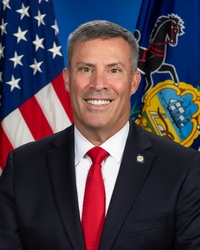
Lynda Culver
Lynda Culver Senate · District 27
R
Strong +
89% 64
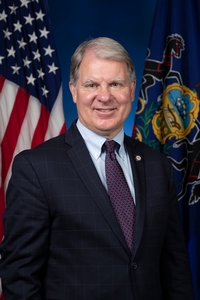
Greg Rothman
Greg Rothman Senate · District 34
R
Strong +
89% 58
Dave Argall
Dave Argall Senate · District 29
R
Strong +
89% 59
Kim Ward
Kim Ward Senate · District 39
R
Strong +
88% 78
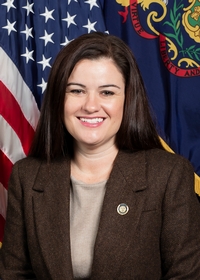
Regina Young
Regina Young House · District 185
D
Strong +
80% 195
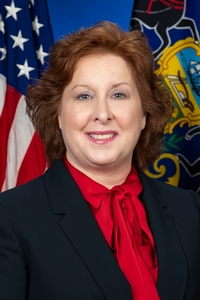
Barb Gleim
Barb Gleim House · District 199
R
Oppose
23% 155
Marc Anderson
Marc Anderson House · District 92
R
Oppose
25% 157
Joe D'Orsie
Joe D'Orsie House · District 47
R
Oppose
26% 159
Charity Krupa
Charity Krupa House · District 51
R
Oppose
32% 166
Brian Rasel
Brian Rasel House · District 56
R
Oppose
33% 157
Showing 331–340 of 388 bills

All education bills

in committee · Pennsylvania · House May 2, 2025

HB 1373: An Act amending the act of March 10, 1949 (P.L.30, No.14), known as the Public School Code of 1949, in high schools, further providing for assessment of civic knowledge.

HB 1373 requires Pennsylvania high schools to administer the United States Citizenship and Immigration Services Test as a civic knowledge assessment to students in grades 7-12 starting in the 2026-2027 school year. Students must score at least 60% on this test to meet a high school graduation requirement. Schools must report compliance data, including participation and passing rates, to the state education department every other year. The bill specifically exempts students with individualized education programs (IEPs) if their IEPs indicate they are not required to take the test.
in committee · Pennsylvania · House Jun 30, 2025

HB 1680: An Act amending the act of March 10, 1949 (P.L.30, No.14), known as the Public School Code of 1949, in terms and courses of study, providing for proposed curriculum changes and online curriculum availability.

HB 1680 requires school entities (including districts, charter schools, and cyber charters) to follow specific processes for curriculum changes and increase public access to course materials. It mandates that school boards present proposed curriculum changes at a regular meeting and cannot approve them until the next meeting. Starting in the 2026-2027 school year, schools must post online links to primary course resources, syllabi, and state standards within 30 business days of updates, without violating copyright laws. The bill applies to all public and private schools covered under Pennsylvania's Public School Code.
Sub-Topics Curriculum
in committee · Pennsylvania · House Feb 20, 2025

HB 613: An Act amending the act of March 10, 1949 (P.L.30, No.14), known as the Public School Code of 1949, in higher education accountability and transparency, further providing for comparison tool.

HB 613 amends Pennsylvania's Public School Code to require a public comparison tool for higher education institutions to include each school's endowment data. This change directly affects students, families, and researchers who use the tool to compare colleges, as it adds financial transparency about institutional resources. The bill mandates that the existing comparison tool must allow users to identify and compare institutions based on endowment size, alongside other metrics. It does not alter college operations or funding but expands available data for informed decision-making. The requirement becomes effective 60 days after enactment.
Sub-Topics Higher Education
in committee · Pennsylvania · House Feb 20, 2025

HR 80: A Resolution urging the Department of Agriculture and the Department of Education to collaborate on conducting a Statewide study of school cafeteria services provided to every school district.

This resolution urges Pennsylvania's Department of Agriculture and Department of Education to jointly conduct a statewide study of school cafeteria services across all school districts. The study would establish meal quality standards (including portion sizes and vegetarian/vegan options by grade level), compare current meals to those standards, analyze preparation and student meal costs, and recommend legislative actions to improve nutrition. It requires the departments to issue a public report with findings and recommendations within one year. The resolution directly affects all Pennsylvania public school districts by initiating a formal review of meal services and costs.
in committee · Pennsylvania · House Mar 11, 2025

HB 869: An Act amending the act of March 10, 1949 (P.L.30, No.14), known as the Public School Code of 1949, in terms and courses of study, providing for nonpublic school and home education program exemption.

HB 869 exempts nonpublic schools and home education programs in Pennsylvania from state emergency orders during disaster declarations, such as those issued by the Governor or the Secretary of Health under Pennsylvania law. This applies to institutions like church schools, home school groups, nonprofit schools, and one-room schools that meet legal requirements for educating students. The bill adds this exemption to the Public School Code of 1949, meaning these schools would not be required to close or follow specific health directives during declared emergencies. The law takes effect immediately upon enactment.
in committee · Pennsylvania · House Mar 3, 2025

HB 780: An Act amending the act of March 10, 1949 (P.L.30, No.14), known as the Public School Code of 1949, establishing the Early Childhood Educator Tuition Assistance Program and the Early Childhood Educator Tuition Assistance Fund.

HB 780 creates a tuition assistance program for early childhood educators in Pennsylvania. It provides grants to cover tuition costs (minus other financial aid) for individuals pursuing associate degrees or certifications in early childhood education, targeting those earning under 400% of the federal poverty level, enrolled in at least six credit hours per semester, and working 25+ hours weekly in approved early childhood programs. Recipients must agree to work in Pennsylvania early childhood education for two years after completing their program. Funding comes from a new state fund, with annual reports tracking enrollment, retention, wages, and job demand. The program aims to support workforce development in early childhood education through financial assistance tied to service commitments.
in committee · Pennsylvania · House Feb 4, 2025

HB 465: An Act amending the act of March 10, 1949 (P.L.30, No.14), known as the Public School Code of 1949, in school finances, providing for commercial property tax redistribution.

HB 465 (2025) amends Pennsylvania's Public School Code to redirect a portion of commercial property taxes collected by school districts to intermediate units for redistribution. School districts with commercial properties valued at $10 million or more must send increasing percentages of those taxes (starting at 10% in year one, rising to 70% by year seven) to their intermediate unit's commercial property tax group. The intermediate unit then redistributes these funds to school districts based on each district's average daily student enrollment relative to the total enrollment of all districts it serves. This bill directly affects school districts containing high-value commercial properties, changing how their commercial tax revenue is collected and allocated.
in committee · Pennsylvania · House Mar 19, 2025

HB 963: An Act amending the act of March 4, 1971 (P.L.6, No.2), known as the Tax Reform Code of 1971, providing for Apprentice Education Expense Tax Credit Program and for powers of the Department of Revenue.

HB 963 creates a new tax credit program in Pennsylvania for employers covering educational expenses of apprentices. It allows employers to claim tax credits for up to $3,500 per qualifying apprentice toward tuition, books, and lab fees at eligible PA schools. To qualify, apprentices must be PA residents, at least 16, enrolled full-time in a U.S. Department of Labor-registered apprenticeship program, and employed by the claiming employer in Pennsylvania. The Department of Revenue administers the program, requiring electronic applications and setting eligibility criteria for schools and apprentices. This policy directly affects PA employers in registered apprenticeship programs and their apprentices pursuing postsecondary training.
in committee · Pennsylvania · House Mar 3, 2025

HB 793: An Act amending the act of March 10, 1949 (P.L.30, No.14), known as the Public School Code of 1949, in terms and courses of study, further providing for Holocaust, genocide and human rights violations instruction.

HB 793 requires Pennsylvania public schools to post primary resources and course summaries about Holocaust, genocide, and human rights violations instruction on their public websites by the 2026-2027 school year. It directs the Pennsylvania Department of Education to develop curriculum guidelines within 12 months, encouraging coverage of Holocaust history, global genocides (like Rwanda), human rights violations, and anti-Semitism. The bill applies to all school entities (districts, charter schools, technical schools) and mandates transparency without requiring new content. The guidelines must specify minimum instructional time and be posted online, while respecting intellectual property rights.
Sub-Topics Curriculum
in committee · Pennsylvania · House Mar 6, 2025

HB 823: An Act amending the act of March 10, 1949 (P.L.30, No.14), known as the Public School Code of 1949, in terms and courses of study, further providing for fire and emergency evacuation drills.

HB 823 amends Pennsylvania's Public School Code to replace annual fire drills with "school security drills" in all public school buildings. It requires schools to conduct one security drill per year (after the first 90 days of school), with specific rules: drills must be age-appropriate, avoid violent simulations (like fake weapons or injuries), include mental health professionals, and require 7 days' advance notice to parents. Schools must also hold a debriefing period with mental health support immediately after each drill. This bill directly affects all Pennsylvania public schools and their students, shifting focus from fire safety to comprehensive security planning.
Sub-Topics School Safety
Showing 331 to 340 of 388 bills
Previous 1 33 34 35 39 Next