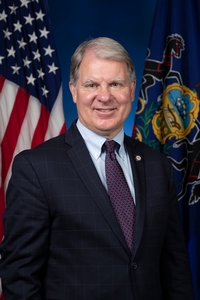
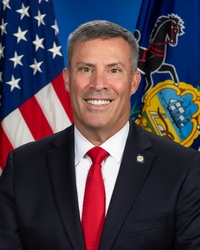
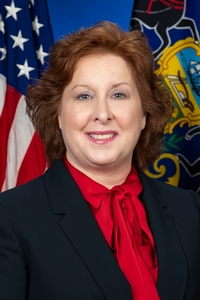
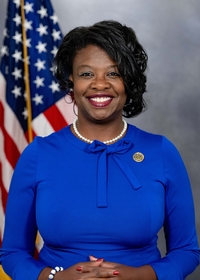
HB 1663 establishes Pennsylvania's Statewide Imagination Library Program under the Public School Code of 1949, creating a dedicated funding account managed by the Department of Education. The bill directly affects Pennsylvania children, particularly those from birth through age five, by providing free books through the program. Key provisions require the Department of Education to administer the program and manage the Imagination Library of Pennsylvania Restricted Account for funding. The bill is currently under review in the Children & Youth committee after being removed from the legislative table in November 2025.
HB 1421 allocates state funding for certain state-aided universities during the 2025-2026 fiscal year. It specifies the amount of funding, requires payments to occur at set intervals, and mandates detailed recordkeeping by the universities. The bill also imposes new duties on the Auditor General to review these records and requires universities to submit financial statements. Additionally, it includes restrictions on the use of funds and addresses the Agricultural College Land Scrip Fund.
HB 1701 amends Pennsylvania's Public School Code to change how school districts handle facility projects. It requires school entities to hold voter referendums or public hearings before constructing new buildings or leasing space, directly affecting school districts and communities. The bill establishes a Public School Facility Advisory Committee to advise on facility planning and repeals outdated requirements for schools to conduct building condition assessments. It also imposes new duties on the Department of Education to oversee school facility planning and funding. (HB 1701, passed October 2025)
HB 1445 requires health insurers in Pennsylvania to cover medically necessary health services provided in schools - such as mental health care, behavioral health services, and speech therapy - without denying coverage solely because the service occurs in a school setting. It prohibits insurers from excluding coverage based on location (e.g., through "school setting" or "place of service" exclusions), applying to public, charter, cyber charter, and private schools. Exceptions allow denials if services are provided by unlicensed individuals, are not medically necessary per insurer policies, or conflict with existing legal obligations (like IEPs). This law directly affects students receiving school-based care, insurers, and school entities, ensuring coverage parity for services delivered on school premises.
HB 191 updates Pennsylvania's school safety requirements by replacing outdated rules about CPR and defibrillator training. It repeals old teacher certification requirements for CPR instruction and school health service rules about automatic external defibrillators (AEDs). The bill now mandates new CPR and AED training for school staff, sets specific standards for AED availability and placement in schools, and establishes an official AED program. This directly affects public schools, teachers, and school health personnel by requiring updated emergency response protocols. The bill focuses on modernizing school health safety procedures rather than changing other aspects of education.
HB 1500 establishes a Cyber Charter School Funding and Policy Council to develop recommendations on funding, governance, and accountability for cyber charter schools by April 2026. The bill requires public school entities to report advertising and sponsorship spending annually, and mandates detailed cost-tracking for special education services based on individualized student plans. It also adds provisions for student wellness checks, enrollment notifications, and fund balance limits for cyber charter schools, while maintaining a moratorium on new cyber charter school approvals. The law directly affects cyber charter schools, public school districts, and students with disabilities in Pennsylvania.
HB 265 amends Pennsylvania's unemployment compensation law to change eligibility rules for workers at educational institutions, such as teachers or staff employed on a term-by-term basis. It removes a prior requirement that these workers must prove they would not return to the same institution for the next academic term to receive benefits during breaks between terms. This change applies to service performed after the bill's effective date and aligns with federal guidelines (26 U.S.C. § 3304(a)(6)). The bill directly affects temporary and part-time employees in schools and colleges who experience academic breaks.
HB 201 amends Pennsylvania's Public School Code to update how intermediate units (regional education agencies) manage facilities and receive state funding. It expands boards' authority to acquire land/buildings through purchase, lease, or gift (Section 914-A(11)), and requires pre-approval from the Secretary of Education for lease/loan agreements involving office, classroom, or warehouse space (Section 919.1-A(a)). The bill revises the capital subsidy calculation: the state will allocate funds based on each intermediate unit's student enrollment multiplied by the median per-student instructional cost across all districts, then applying a 0.03% rate. This directly affects intermediate units and school districts using their facilities, changing both facility management rules and state funding distribution.
HB 190 requires Pennsylvania schools to annually provide eating disorder awareness and education materials to parents, guardians, and key school staff (like counselors and principals) for students in grades 6-12. The bill mandates that schools share this information via email, mail, or website, using materials developed by the Department of Health in collaboration with an advisory committee of experts from groups like the National Alliance for Eating Disorders and school health organizations. These materials must explain warning signs, resources, prevention, and be available in multiple languages. The law directly affects all public, charter, cyber, and nonpublic schools in Pennsylvania, aiming to improve early recognition and support for students facing eating disorders.